Wenn Sie Probleme mit der Darstellung dieses Newsletters haben, klicken Sie bitte hier um ihn in einem neuen Browserfenster zu öffnen.
Newsletter der Leuphana // July 2026

Center of Evidence-based Entrepreneurship Development (CEED)

Welcome to the CEED newsletter, covering the latest news on the Student Training for Entrepreneurial Promotion (STEP) and Personal Initiative (PI) training!

If you want to contribute, please contact us via our CEED e-mail.

This newsletter informs you on a quarterly basis about current events, projects, and the implementation of both our training programs STEP and PI. On top of sharing news from our side, we would like to encourage you to contribute to this newsletter so that we can establish it as a medium for mutual updates. Because just like us, you’re gaining valuable experiences with the training programs. In fact, you run great projects that always amaze us and that the whole community should know about!

Topics of this Newsletter

  • Germany: Science Slam at Leuphana University
  • Philippines: Supporting Filipino Migrants Through Personal Initiative Training – Cooperation with Y-RISE
  • Research: Recent Publication in Journal of Applied Psychology
  • Democratic Republic of Congo: Completion of Personal Initiative (PI) Training mission within the TRANSFORME project
  • Togo: Training Provides Long-Term Support for Entrepreneurs

Germany: Science Slam at Leuphana University

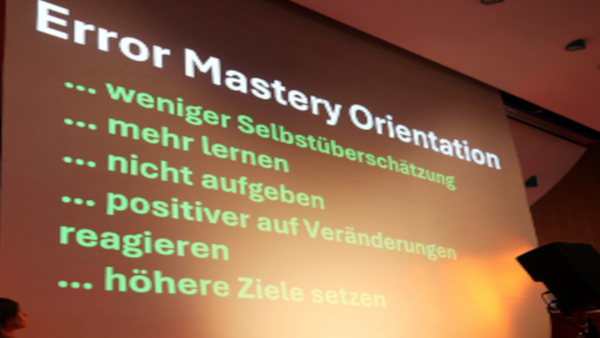
On 16 June 2026, Janina Peschmann and Paul Jasper Herrmann took to the stage at the Science Slam at Leuphana University, bringing their research on entrepreneurship to a broad audience. 

At the heart of their slam was a question that reaches far beyond founding a business: How do we deal with errors? In particular, they slammed on the topic of "Error Mastery Orientation," showing that it is not the error itself that matters, but how one deals with it. Those who see errors as an opportunity to learn engage with them more deeply, cope better with the frustration they cause, and are less likely to give up after setbacks.

That this applies not only to founders but also to researchers was made clear by Janina and Paul through some very honest anecdotes from their field experiments. The fitting action principle from STEP: "Errors are great because you can learn so much from them."

Philippines: Supporting Filipino Migrants Through Personal Initiative Training – Cooperation with Y-RISE

Doorways is currently working with the Yale Research Initiative on Innovation & Scale (Y-RISE) at Yale University and Innovation for Poverty Actions (IPA) Philippines to adapt and implement Personal Initiative (PI) Training for prospective Filipino migrants preparing for employment in Japan.

The PI Training is being integrated as an add-on to the migration preparation program of ONODERA USER RUN (OUR), which provides participants with Japanese language, vocational, and migration preparation training. 

The curriculum accompanies participants across different stages of their migration journey. During the intensive language-training period, participants engage in short, action-oriented PI sessions focused on applying Personal Initiative to their everyday learning experiences. Additional workshops support participants in showing PI during the job-matching phase and preparing for migration, while a post-training application and follow-up component encourages continued use of PI principles after matching and arrival in Japan.

The project represents an exciting opportunity to apply PI in a new context and explore how it can support migrants not only during preparation, but also throughout the transition to living and working abroad. We look forward to sharing further lessons and experiences as the implementation progresses.

Research: Recent Publication in Journal of Applied Psychology

Entrepreneurship training is effective in boosting participants’ motivation, but these short-term gains often vanish over time. An important question therefore arises: How can these effects be sustained in the long run? In a recent article published in Applied Psychology: An International Review, Michael M. Gielnik, Matthias Spitzmuller, Carina Bohlayer, and Fokko J. Eller investigated the long-term effects of the action-oriented entrepreneurship training STEP on business creation in Mexico and South Africa. Across the two countries, 384 undergraduate students participated in the program. The researchers found that STEP triggered a self-reinforcing action-motivation loop, which served as a force counteracting the typical long-term decay in motivation. The sustained motivation and behavior ultimately influenced STEP students’ success in launching a new business. In conclusion, entrepreneurship training needs to trigger both motivation and action to achieve lasting results. Because action and motivation reinforce each other over time, they create a self-sustaining path to entrepreneurial success.

Gielnik, M. M., Spitzmuller, M., Bohlayer, C., & Eller, F. J. (2026). Maintaining the impact of action-oriented entrepreneurship training: Extending the path-centric account. Applied Psychology: An International Review., 75(3), e70108. https://doi.org/10.1111/apps.70108
 

Democratic Republic of Congo: Completion of Personal Initiative (PI) Training mission within the TRANSFORME project

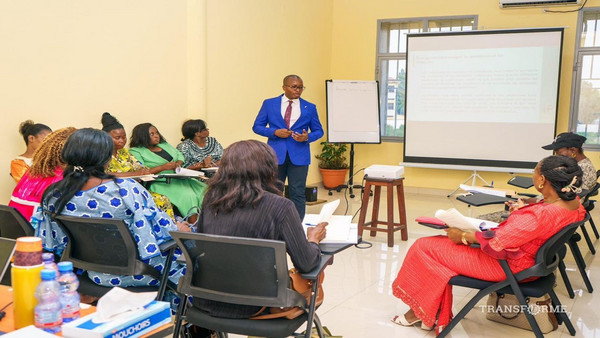
This month, move-eti marked the completion of its Personal Initiative (PI) Training mission within the TRANSFORME project in the Democratic Republic of Congo (DRC). This achievement was made possible through the commitment of women entrepreneurs, trainers, local partners, and project teams across the country.

Across the programme, 43,375 women micro-entrepreneurs participated in entrepreneurship training: 31,375 through PI/FIP and 12,000 through STEP/FOPE. The project also strengthened local delivery capacity through the certification of trainers and master trainers able to support high-quality, action-oriented training at scale.

A total of 378 trainers were certified: 216 in PI/FIP and 162 in STEP/FOPE. In addition, 12 master trainers were certified, including 7 in PI/FIP and 5 in STEP/FOPE.

For move-eti, the significance of this work goes beyond participant numbers. Personal Initiative Training supports entrepreneurs to identify opportunities, plan ahead, act independently, and persist in pursuing their goals, particularly in challenging circumstances.

The project reinforced an important lesson for large-scale entrepreneurship programmes: sustainable impact is not created through reach alone. It requires a rigorous, evidence-informed methodology, strong local delivery capacity, continuous quality assurance, and the ability to adapt responsibly to complex implementation realities.

The work in the Democratic Republic of Congo also highlighted the importance of treating implementation as an ongoing learning process. Security constraints, differing local contexts, and operational pressures required flexibility, while maintaining transparency and safeguarding training quality.

Togo: Training Provides Long-Term Support for Entrepreneurs

Thirty years ago, Prof. Dr. Michael Frese developed the Personal Initiative Training program, which is now internationally renowned. Unlike other training programs, it does not teach business management skills: “Our participants learn to actively identify opportunities, solve problems on their own, and overcome setbacks,” explains the professor of psychology, specializing in innovation and entrepreneurship. Thus, the training program focuses precisely on what Michael Frese sees as the key to success: personal initiative and self-efficacy. In 2017, the randomized controlled trial was published in the prestigious journal *Science*.

The latest follow-up to this study now confirms that the 32-hour training program continues to lead to higher profits, more investments, and greater business success even seven and a half years later: “This is an extraordinary long-term effect that we rarely see in entrepreneurship research,” he explains.

For the study, 1,500 small business owners in Lomé, the capital of Togo, were randomly assigned to different training programs: One group received traditional management training, a second group participated in the Personnel Initiative Program, and a third group received no training. The results show that the psychologically oriented training was significantly more effective in the long term than traditional training in accounting, marketing, or human resources management: After seven years, entrepreneurs who had completed the training earned an average of $91 more in profit per month than the comparison group. This represents an increase of about 52 percent compared to the control group’s average.

Nevertheless, it was disappointing for Michael Frese: women did not benefit from the training as hoped: “At first, we were still able to measure an increase. However, the long-term success seen among men did not materialize.” The researcher suspects differences in investment behavior: “Women are more likely to reinvest the profits they earn back into their families rather than into their businesses.”

The study concludes that targeted promotion of initiative and entrepreneurial thinking can have significant economic effects in the long term. According to the authors’ calculations, the additional profits exceed the cost of the training many times over. The program could thus serve as a model for future support measures in developing and emerging economies.

Campos, F., Frese, M., Iacovone, L., Johnson, H. C., McKenzie, D., & Mensmann, M. (2024). Long-Term and Lasting Impacts of Personal Initiative Training on Entrepreneurial Success. Washington, DC: World Bank. https://doi.org/10.1596/1813-9450-10938 

We’d love to hear from you! Send your feedback and thoughts to ceed@leuphana.de.

For more information follow us on social media,
for STEP: Facebook, Instagram,
 

KONTAKT: Leuphana Universität Lüneburg | Institut für Management und Organisation, Center of Evidence-Based Entrepreneurship Development | Universitätsallee 1 | 21335 Lüneburg | Fon 04131.677-2105 | ceed@leuphana.de

Copyright © 2026 Leuphana Universität Lüneburg | Verantwortlich für den Newsletter: Prof. Dr. Michael Gielnik, Leitung CEED | Paul Herrmann & Smilla Plate, Redaktion

Disclaimer: Die Inhalte unserer Seiten wurden mit größter Sorgfalt erstellt. Für die Richtigkeit, Vollständigkeit und Aktualität der bereit gestellten Inhalte können wir jedoch keine Gewähr übernehmen. Unser Angebot enthält Links zu externen Webseiten Dritter, auf deren Inhalte wir keinen Einfluss haben. Deshalb können wir für diese fremden Inhalte auch keine Gewähr übernehmen. Für die Inhalte der verlinkten Seiten ist stets der jeweilige Anbieter oder Betreiber der Seiten verantwortlich.

Widerrufshinweis: Sie erhalten diesen Newsletter, weil Sie sich auf dieser Seite zu unserem Newsletter angemeldet haben. Der Versand erfolgt entsprechend unserer Datenschutzhinweise. Wenn Sie den Newsletter künftig nicht mehr erhalten wollen, können Sie sich über den Link abmelden. Sie können uns dies auch per E-Mail an ceed@leuphana.de mitteilen.