Wenn Sie Probleme mit der Darstellung dieses Newsletters haben, klicken Sie bitte hier um ihn in einem neuen Browserfenster zu öffnen.
Newsletter der Leuphana // Oktober 2026

Center of Evidence-based Entrepreneurship Development (CEED)

Welcome to the CEED newsletter, covering the latest news on the Student Training for Entrepreneurial Promotion (STEP) and Personal Initiative (PI) training!

If you want to contribute, please contact us via our CEED e-mail.

This newsletter informs you on a quarterly basis about current events, projects, and the implementation of both our training programs STEP and PI. On top of sharing news from our side, we would like to encourage you to contribute to this newsletter so that we can establish it as a medium for mutual updates. Because just like us, you’re gaining valuable experiences with the training programs. In fact, you run great projects that always amaze us and that the whole community should know about!

Topics of this Newsletter

  • Germany: Leuphana University Honors STEP with Impact Award
  • Mozambique: Scaling Up PI Training under the ADIGR Program
  • Research: Recent Publication in Journal of Small Business Management
  • South Africa: STEP Train-the-Trainer Workshop at the University of Venda
  • Burundi: A Second Cohort of 2,000 Women, Youth and Refugees Trained in PI and STEP

Dies Academicus: Training Program for Sustainable Entrepreneurship Wins Transfer Award

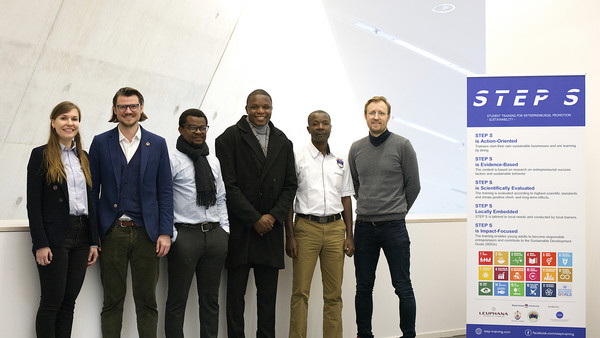
At the Dies Academicus of Leuphana University Lüneburg, the CEED team received the Leuphana University Impact Award for their work on the STEP training program.

The jury's decision was primarily driven by the reach and impact of the training: more than 60,000 people in the Global South have already participated in STEP or STEP Sustainability (STEP S). Randomized controlled trials demonstrate the program’s long-term success: two years after the training, business ownership among the training participants was 22% higher compared to the control group.

In particular, STEP Sustainability focuses on environmental and social responsibility. Initial evaluations show that the additional focus on sustainability does not diminish the participants’ economic success.

Moreover, STEP's "Train-the-Trainer" concept (TTT) creates further impact: partner universities are empowered to independently implement the programs over the long term and adapt them to different target groups. 

Mozambique: Scaling Up PI Training under the ADIGR Program

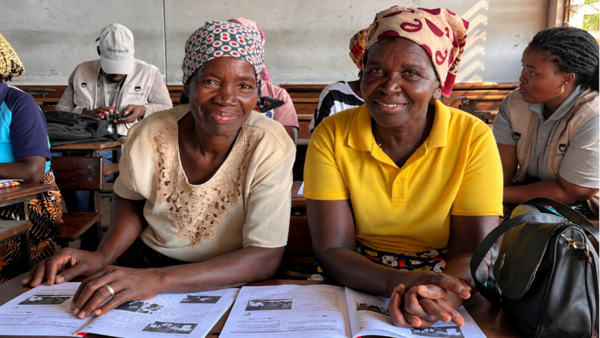
Doorways is expanding its engagement in Mozambique. Building on the successful collaboration with GiveDirectly and the National Institute of Social Action (INAS) earlier this year, we will support the next phase of the ADIGR (Support for the Development of Income Generation Initiatives) program by training more than 90 local trainers through a series of Train-the-Trainer (TTT) workshops in Quelimane.

The expansion is expected to bring PI Training to around 29,000 additional beneficiaries, on top of the approximately 44,000 beneficiaries targeted during the initial phase. The ADIGR program combines cash transfers with training to support beneficiaries in developing sustainable income-generating activities, strengthening their livelihoods and food security, and promoting gender equality. As the training component of the program, PI helps participants develop the mindset, skills, and practical tools to take initiative, overcome challenges, and actively pursue income-generating opportunities.

At the same time, Doorways and GiveDirectly are exploring an additional way of making PI accessible at scale: translating key elements of the training into a series of animated, edutainment-style videos. Together with video production experts, Doorways will support the development of scripts that bring PI principles and behaviors to life in an engaging and accessible format.

We are excited to continue working with GiveDirectly and INAS as the program grows – both by building a strong network of local PI trainers and by exploring new ways of bringing PI to participants at scale..

Research: Recent Publication in Journal of Small Business Management

Growth mindset interventions are effective in influencing entrepreneurial motivation and behavior across all stages of the entrepreneurial process. However, the theoretical understanding of such interventions remains limited. In a recent article published in the Journal of Small Business Management, Paul J. Herrmann, Michael M. Gielnik und Amelie L. Harm investigated the effectiveness of an entrepreneurial growth mindset intervention on entrepreneurial self-efficacy and active feedback seeking. In their study they adopted a person-intervention fit perspective to theorize about growth mindset trait as a boundary condition of such interventions. 112 entrepreneurs from northern Germany participated in their study. The researchers found that growth mindset trait moderated the intervention’s effect on active feedback seeking but not on entrepreneurial self-efficacy. Further exploratory analyses revealed that growth mindset trait also moderated the intervention’s effect on growth mindset states. The results showed that the moderating role of growth mindset trait changed from negative to positive along a sequence of intervention outcomes. 

Herrmann, P. J., Gielnik, M. M., & Harm, A. L. (2026). A person-intervention fit perspective on the effectiveness of growth mindset interventions for entrepreneurs. Journal of Small Business Management, 1–38. doi.org/10.1080/00472778.2026.2706142
 

South Africa: STEP Train-the-Trainer Workshop at the University of Venda

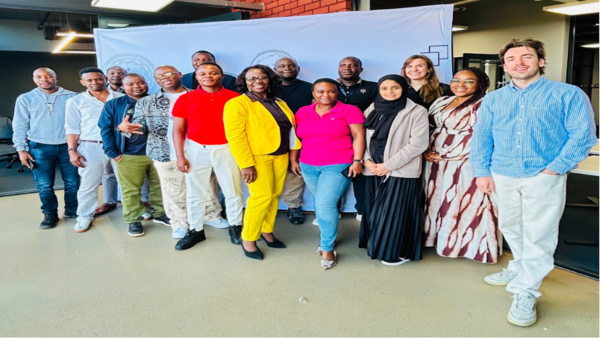
From 13 July to 17 July 2026, another Train-the-Trainer (TTT) workshop as part of the project “Sustainable entrepreneurship courses for under- and postgraduate students”, funded by the DAAD from 2024-2027, was conducted by master trainers from Mount Kenya University and Leuphana University. The TTT took place at the University of Venda, Thohoyandou, South Africa and was the 7th out of 9 TTTs in total planned for the project. The workshop was hosted by the university’s executive director Nditsheni Tshithavhane and the local project coordinator, Anyway Mikioni.

Twelve trainers were trained to facilitate STEP Sustainability for the target group of undergraduates. The STEP training consists of an introductory session and twelve training sessions covering content about starting a sustainable business. The training will be evaluated in a randomized controlled trial (RCT). Therefore, the applicants (N = 297) were randomly assigned to a training group or a non-treatment control group before the start of the first training session.

The training started on 8 August and was completed on 9 October. We thank everyone involved in this ambitious project for their continuing efforts!

Burundi: A Second Cohort of 2,000 Women, Youth and Refugees Trained in PI and STEP

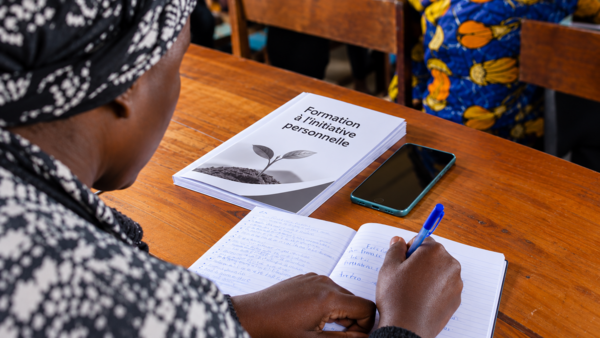
In Burundi, move-eti is working with the PACEJ project and the World Bank to improve the employability and economic prospects of women, youth and refugees. Over several cohorts, the project aims to reach 10,000 participants across the country with PI and STEP trainings. To make the trainings accessible to such a diverse target group, the materials were adapted into French, Swahili and Kirundi. Moreover, since participants receive smartphones through the project, STEP was extended with a component on digital skills and digital entrepreneurship, enabling participants to put these new tools to use in their businesses.

Before the second cohort began, the trainers took part in refresher sessions in June 2026. These were needed for two reasons: considerable time had passed since the initial Train-the-Trainer (TTT), and the first cohort had revealed areas for improvement. Drawing on the observations of the quality control team, the sessions helped trainers deepen their command of the content, align their facilitation approaches and better address the concepts participants had found difficult. Well prepared as a result, 17 PI trainers and 46 STEP trainers went on to train the second cohort of 2,000 participants (1,000 in PI and 1,000 in STEP) across the country, including in the Nyankanda and Bwagiriza refugee camps. The quality control reports confirm that participants were highly engaged and considered the training important for their future.

Building on this good cooperation, move-eti is now preparing the next phase: integrating PI and STEP into the Centres d'Enseignement des Métiers (CEMs), Burundi's public centres for trades and skills training. To this end, move-eti will organize further TTT workshops to train and certify new master trainers, who will in turn train new trainers within the CEMs. In this way, PI and STEP will reach even more women, youth and refugees and continue beyond the project.

For more than 10 years, move-eti has been adapting PI and STEP to diverse groups. Discover more of our projects at www.move-eti.com.

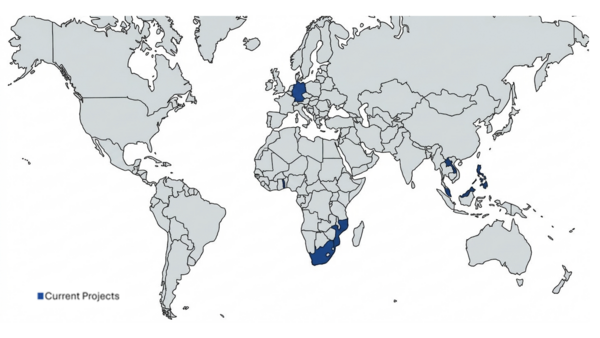
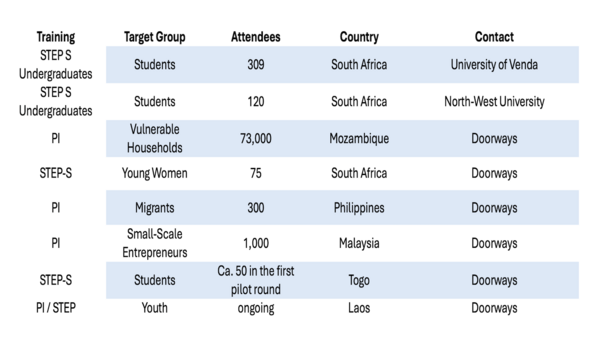
We would like to inform you about current training projects that have been conducted between October 2025 and October 2026. PI training was implemented in Mozambique, the Philippines, and Malaysia, while STEP projects were delivered in South Africa and Togo, with a combined PI/STEP project still ongoing in Laos.

Further Announcements

On 6 November 2026, a one-day STEP Research Conference will take place at Mount Kenya University in Thika, bringing together everyone who has worked with the STEP training and/or conducted research on it to share projects and insights. If you would like to participate and present your own work, please contact Janina Peschmann (janina.peschmann@leuphana.de) or Paul Herrmann (paul.herrmann@leuphana.de). We from the CEED Team at Leuphana University will also attend in person and would be delighted to welcome you to the conference.

We’d love to hear from you! Send your feedback and thoughts to ceed@leuphana.de.

For more information follow us on social media,
for STEP: Facebook, Instagram,
 

KONTAKT: Leuphana Universität Lüneburg | Institute of Management & Psychology, Center of Evidence-Based Entrepreneurship Development | Universitätsallee 1 | 21335 Lüneburg | Fon 04131.677-2105 | ceed@leuphana.de

Copyright © 2026 Leuphana Universität Lüneburg | Verantwortlich für den Newsletter: Prof. Dr. Michael Gielnik, Leitung CEED | Paul Herrmann & Smilla Plate, Redaktion

Disclaimer: Die Inhalte unserer Seiten wurden mit größter Sorgfalt erstellt. Für die Richtigkeit, Vollständigkeit und Aktualität der bereit gestellten Inhalte können wir jedoch keine Gewähr übernehmen. Unser Angebot enthält Links zu externen Webseiten Dritter, auf deren Inhalte wir keinen Einfluss haben. Deshalb können wir für diese fremden Inhalte auch keine Gewähr übernehmen. Für die Inhalte der verlinkten Seiten ist stets der jeweilige Anbieter oder Betreiber der Seiten verantwortlich.

Widerrufshinweis: Sie erhalten diesen Newsletter, weil Sie sich auf dieser Seite zu unserem Newsletter angemeldet haben. Der Versand erfolgt entsprechend unserer Datenschutzhinweise. Wenn Sie den Newsletter künftig nicht mehr erhalten wollen, können Sie sich über den Link abmelden. Sie können uns dies auch per E-Mail an ceed@leuphana.de mitteilen.