Wenn Sie Probleme mit der Darstellung dieses Newsletters haben, klicken Sie bitte hier um ihn in einem neuen Browserfenster zu öffnen.
Newsletter der Leuphana // Oktober2025

Center of Evidence-based Entrepreneurship Development (CEED)

Welcome to the CEED newsletter, covering the latest news on the Student Training for Entrepreneurial Promotion (STEP) and Personal Initiative (PI) training!

If you want to contribute, please contact us via our CEED e-mail

This newsletter informs you on a quarterly basis about current events, projects, and the implementation of both our training programs STEP and PI. On top of sharing news from our side, we would like to encourage you to contribute to this newsletter so that we can establish it as a medium for mutual updates. Because just like us, you’re gaining valuable experiences with the training programs. In fact, you run great projects that always amaze us and that the whole community should know about!

We would like to share successful STEP and PI implementations twice a year. In this newsletter, we want to present STEP at Mukuba University in Zambia. If you are interested in also presenting your successful training implementation, please contact us via our CEED e-mail.

Topics of this Newsletter

  • Zambia: Successful STEP Implementation
  • Research: Publication in the Journal of Applied Psychology and Small Business Economics
  • South Africa: Research Workshop at the University of Venda
  • Lebanon: STEP Sustainability Train-the-Trainer workshop at the Arab Open University (AOU)
  • Overview: Current PI and STEP Training


Zambia: Successful STEP Implementation

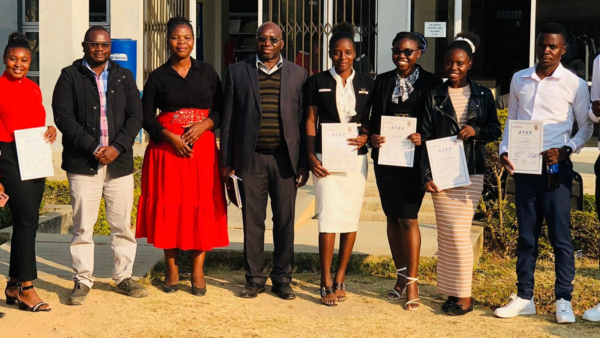
The STEP program has recently been implemented independently in Zambia since March 2024. Close to 90 students from the Mukuba University already participated in the first two cohorts. 

While still in its early stages, the program has generated a variety of small student-run businesses, ranging from peanut butter production to laundry services. What makes the implementation in Zambia stand out is its self-funding model: without access to external seed capital, students bootstrap their ventures by pooling personal resources and reinvesting their small profits. The program has been strongly supported by Mukuba University’s leadership and Grace Mwenya, a lecturer at the university who first encountered STEP during her participation in the Train-the-Trainer training in Malawi. The commitment of students and the supportive environment at Mukuba University have ensured this independent implementation of STEP. 

Looking ahead, ambitions include securing seed funding, training additional trainers, embedding the program more deeply in the academic and extracurricular structures and potentially extending it to other universities and secondary schools across Zambia.

For further information, please contact Grace Mwenya.

Research: Publication in the Journal of Applied Psychology and Small Business Economics

We are happy to announce that we recently published two articles describing post-training transfer processes that explain the impact of action-oriented entrepreneurship training.

In the first article published in the Journal of Applied Psychology, Janina Peschmann, Michael Gielnik, Michael Frese, and Kim Marie Bischoff analyzed the data of 18 field experiments with a sample of 6,257 young adults in 7 low- to middle-income countries. STEP increased self-employment by 22% and raised the participants’ total income by 10% two years after the training. The study finds that entrepreneurship training can have a “boosting effect” that emerges quickly in the short term and persists in the long term. But entrepreneurship training can also result in a “catch-up effect” on economic impact, such as business performance. This effect is characterized by non-significant or even negative effects in the short term that turn positive over time. The findings challenge how we evaluate training success and call for a holistic consideration of different training outcomes in combination with a dynamic perspective on training transfer.

Reference: Peschmann, J., Gielnik, M. M., Frese, M., & Bischoff, K. M. (2025). Overcoming poverty and unemployment: The transfer dynamics of entrepreneurship training. Journal of Applied Psychology. Advance online publication. https://doi.org/10.1037/apl0001300

The second article by Michael Gielnik, Blagoy Blagoev, and Lemayon Melyoki, published in Small Business Economics, is based on data from three randomized controlled trials with a baseline (N = 1156), a short-term (N = 872), and a 1-year follow-up measurement (N = 622) in Kenya, Tanzania, and Uganda. The study finds that participation in STEP increased the likelihood of being self-employed 1 year after training by 30%. This could be explained by a reciprocal and mutually stabilizing path-centric relationship between entrepreneurial motivation and action after training. 

Reference: Gielnik, M. M., Blagoev, B., & Melyoki, L. L. (2025). A path-centric account of action-oriented entrepreneurship training. Small Business Economics, 65, 1241–1282. https://doi.org/10.1007/s11187-025-01048-9



South Africa: Research Workshop at the University of Venda

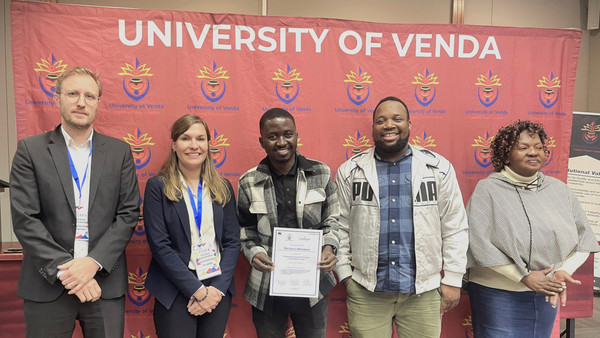
In the beginning of August, our second STEP research workshop took place at the University of Venda.

The research workshops are part of the SDG Partnerships project “Sustainable entrepreneurship courses for under- and postgraduate students”, funded by the DAAD from 2024-2027. They aim to equip post-graduate students with quantitative research skills. The participants received input on how to start and structure their research process, including efficient literature search and the development of a proper research question and study design. Furthermore, research methods were discussed and participants were introduced to descriptive and inferential statistics and the statistics software R. On the last day, everyone got to work on their academic writing skills and strategies for successful publication were discussed.

The research workshop was facilitated by Michael Gielnik and Janina Peschmann from Leuphana University. In total, 36 people successfully participated in the workshop, among them Joel Bonface Malala and Daniel Maina Gatungu from Mount Kenya University (who attended in person) and Christopher Chidiebere Uwakwe and Chisom Okoli from Godfrey Okoye University (who attended online). The workshop also enabled three participants from North West University to get to know our STEP Sustainability project better. 

Special thanks go out to Anyway Mikioni and everyone involved at the University of Venda for their successful organization of the workshop!

Lebanon: STEP Sustainability Train-the-Trainer Workshop

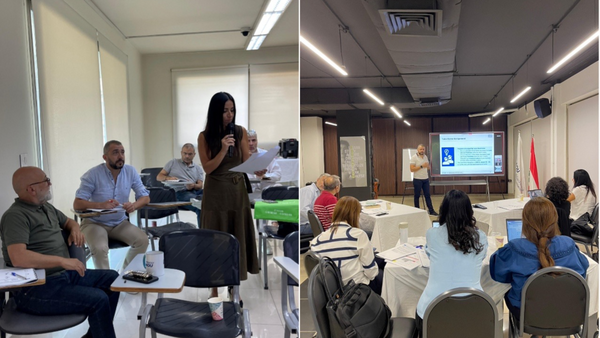
In September, Doorways and the Arab Open University (AOU) in Lebanon successfully conducted a Train-the-Trainer (TTT) workshop to qualify AOU lecturers in the STEP Sustainability methodology. 

STEP had already been implemented in Lebanon before and during the COVID-19 pandemic, and we are very pleased to now continue this journey with an extended focus through STEP Sustainability. The TTT marks the first milestone in this renewed cooperation. Next, the lecturers will pilot the STEP Sustainability course with a first student cohort, while AOU and Doorways continue to refine the program for long-term use. Doorways is proud to support this important step and to connect AOU with the wider international STEP network.

Acknowledgment: This project is funded by the German Academic Exchange Service (DAAD) with funds from the Federal Foreign Office (AA).

Current PI and STEP Training Projects

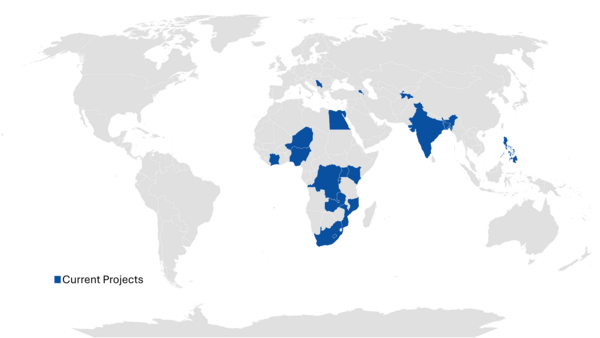
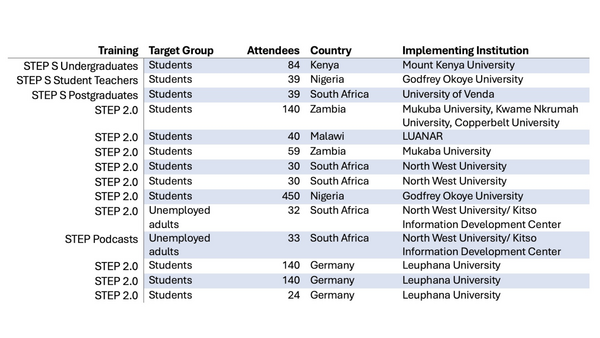
We would like to inform you about current training projects that have been conducted between October 2024 and October 2025. This is the third draft of our rubric, "Current PI and STEP training". Please assist us in creating this new rubric. So please update us on all the STEP and PI training you conduct yourself. We will then add them to our list.

We’d love to hear from you! Send your feedback and thoughts to ceed@leuphana.de.

For more information follow us on social media,
for STEP: Website, Facebook, Instagram,
for PI: Website.

KONTAKT: Leuphana Universität Lüneburg | Institut für Management und Organisation, Center of Evidence-Based Entrepreneurship Development | Universitätsallee 1 | 21335 Lüneburg | Fon 04131.677-2105 | ceed@leuphana.de

Copyright © 2025 Leuphana Universität Lüneburg | Verantwortlich für den Newsletter: Prof. Dr. Michael Gielnik, Leitung CEED | Paul Herrmann & Vera Degenbeck, Redaktion

Disclaimer: Die Inhalte unserer Seiten wurden mit größter Sorgfalt erstellt. Für die Richtigkeit, Vollständigkeit und Aktualität der bereit gestellten Inhalte können wir jedoch keine Gewähr übernehmen. Unser Angebot enthält Links zu externen Webseiten Dritter, auf deren Inhalte wir keinen Einfluss haben. Deshalb können wir für diese fremden Inhalte auch keine Gewähr übernehmen. Für die Inhalte der verlinkten Seiten ist stets der jeweilige Anbieter oder Betreiber der Seiten verantwortlich.

Widerrufshinweis: Sie erhalten diesen Newsletter, weil Sie sich auf dieser Seite zu unserem Newsletter angemeldet haben. Der Versand erfolgt entsprechend unserer Datenschutzhinweise. Wenn Sie den Newsletter künftig nicht mehr erhalten wollen, können Sie sich über den Link abmelden. Sie können uns dies auch per E-Mail an ceed@leuphana.de mitteilen.