
„Under Pressure“ – Concert with Johannes Obermeier
2026-07-16 In the summer semester of 2026, the students of the Concert Lab, in collaboration with Steinway & Sons and pianist Johannes Obermeier, impressively succeed in bringing the theme of performance pressure to life through a concert and exhibition.
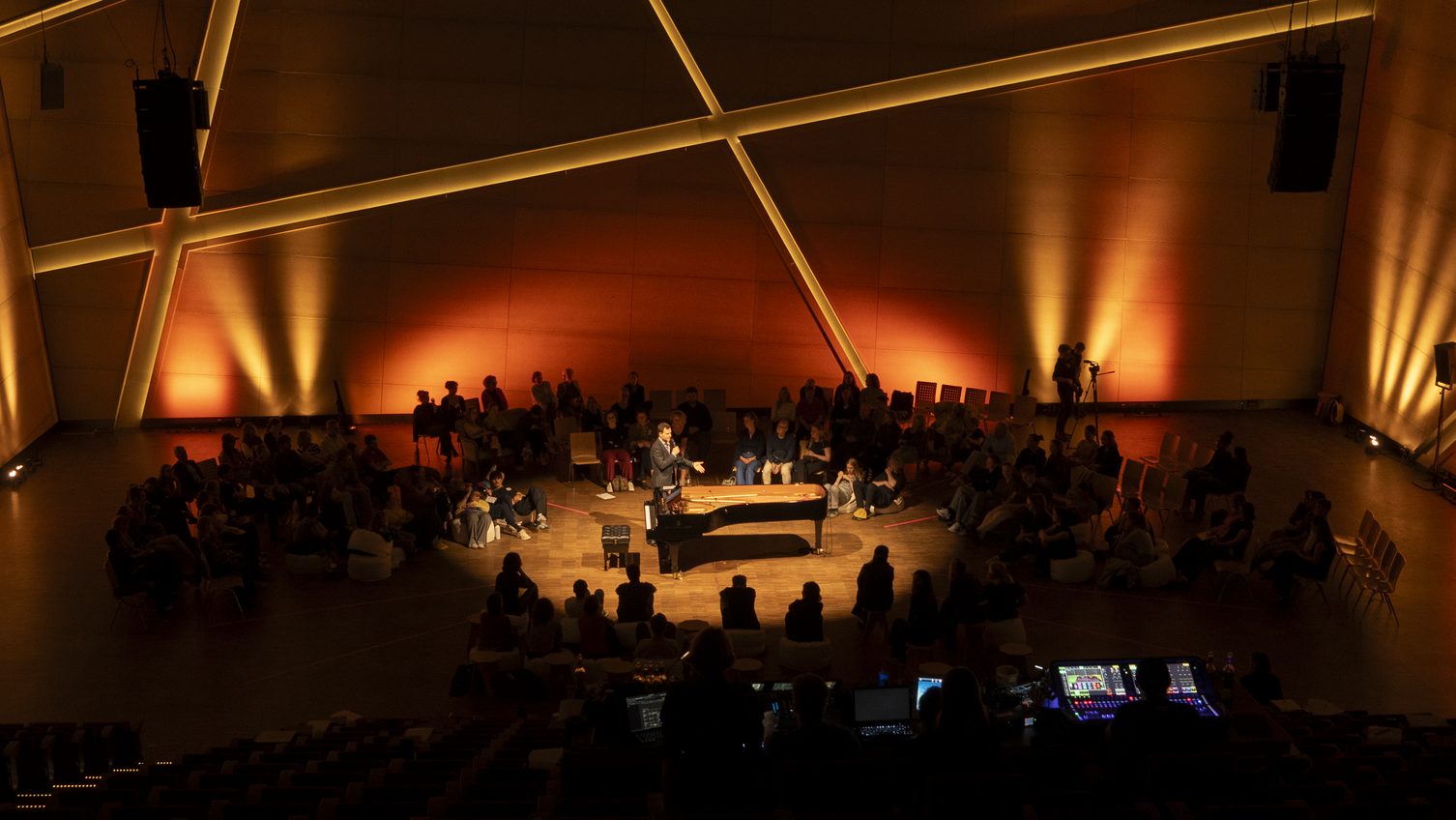
In the summer semester of 2026, an interdisciplinary group of students once again came together for the Concert Lab seminar “Artistic Citizenship and New Approaches to Concert Design: A Concert Lab with Steinway & Sons.” Together, they discussed the theme of “Performance and the Pressure to Perform” and organized an interdisciplinary concert evening with Steinway Prize winner Johannes Obermeier as the featured musician. From dramaturgy to spatial design, the seminar participants developed the concert and the exhibition “Under Pressure.”
Read on to find out how this evening – deliberately conceived as an experiment – succeeded in opening up new spaces for experience for the audience and inspiring reflection.
Prelude
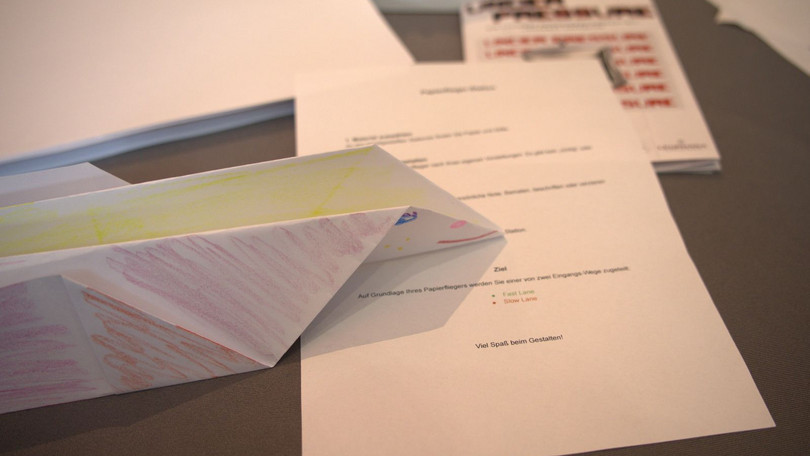
“Fold a paper airplane however you like. There’s no ‘right’ or ‘wrong.’” Anything but this (supposedly) easy task was to be expected for the concert’s prelude to the theme “Under Pressure.” An unusual welcome? Well – the evening was about to get even more unusual.
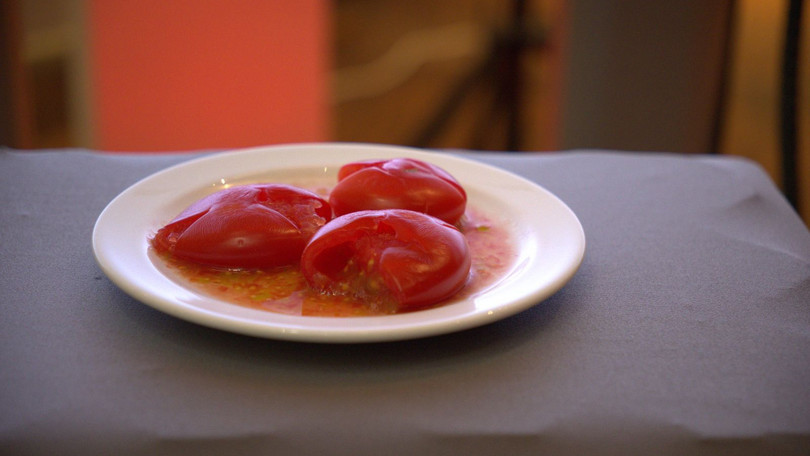
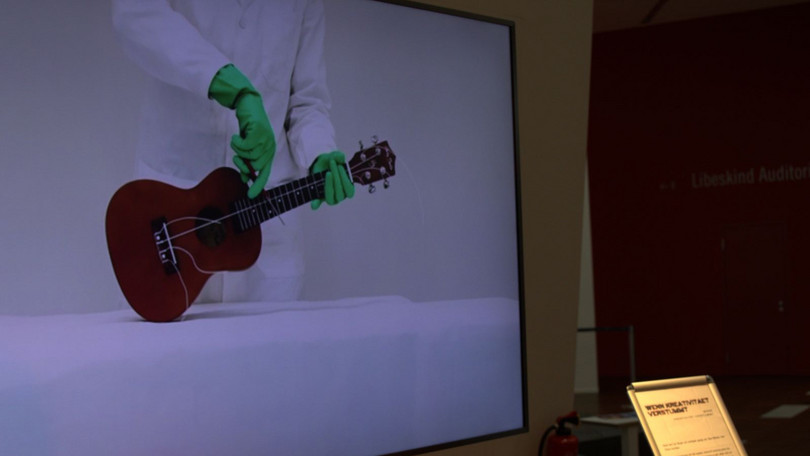
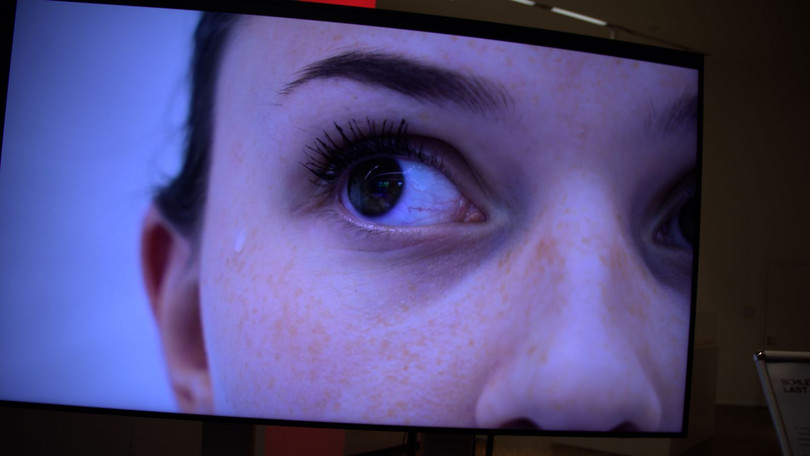
Video and object installations casually scattered throughout the foyer invited viewers to take a closer look: deformed PET bottles, burst balloons – anyone who was still smiling at the squashed tomatoes began to swallow hard at the latest upon seeing the smashed ukulele and the torn book. Short videos depicted the act of deformation, juxtaposed with a person visibly reacting physically to stress and the pressure to perform. This inevitably raised the question of what traces external stresses can leave on both objects and people.
Concert
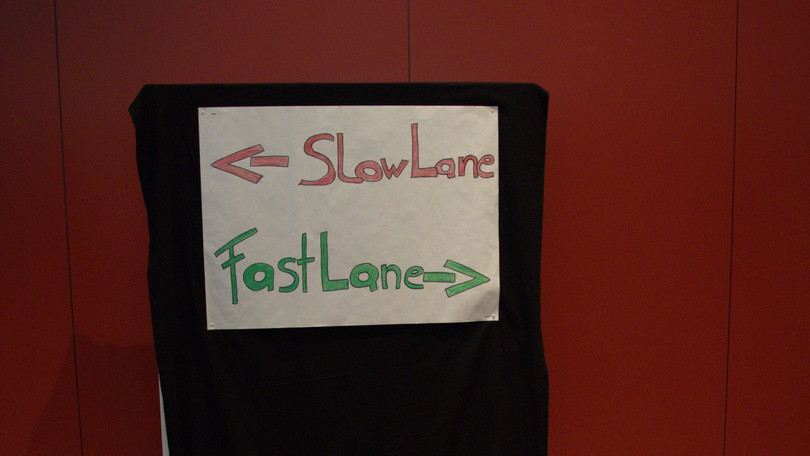
Fast lane or slow lane? Entry into the concert hall was subject to a strict evaluation of the freshly crafted paper airplane. Did it crash-land? So you deliberately followed the pink arrows, taking the long way through the stairwell to the auditorium—a heartbeat booming from the speakers and growing ever louder set your own heart racing.
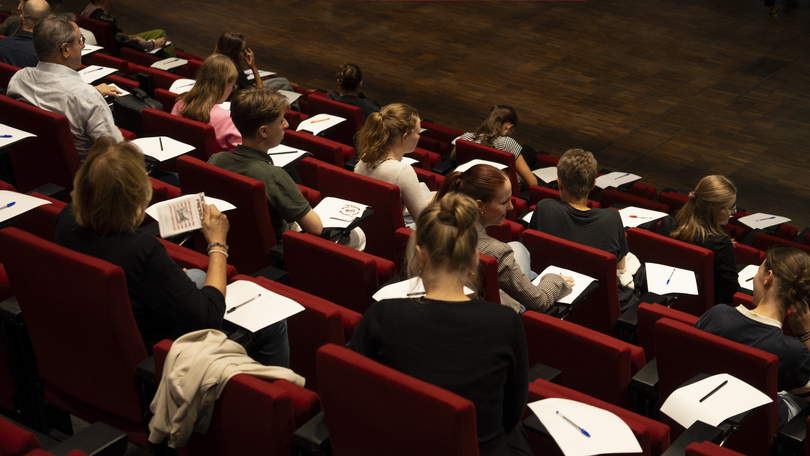
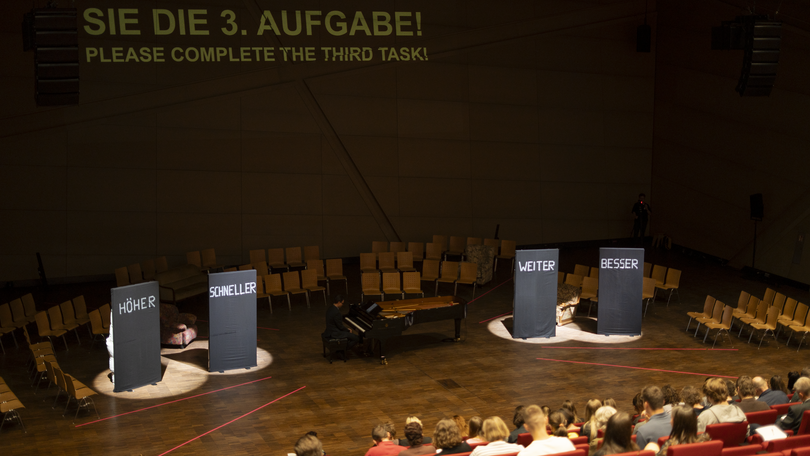
Once inside the auditorium, your gaze inevitably fell on the Steinway grand piano standing at the center of the stage, framed by banners bearing the words “higher,” “faster,” “further,” and “better.” You suddenly found yourself in an exam situation: A pen and exam paper were laid out, with the instruction to complete the first task—“Opening Remarks for the Concert Event”—within 90 seconds and (!) then deliver it immediately afterward. The relief in the hall was palpable when the spotlight “coincidentally” selected someone who could deliver the remarks fluently.
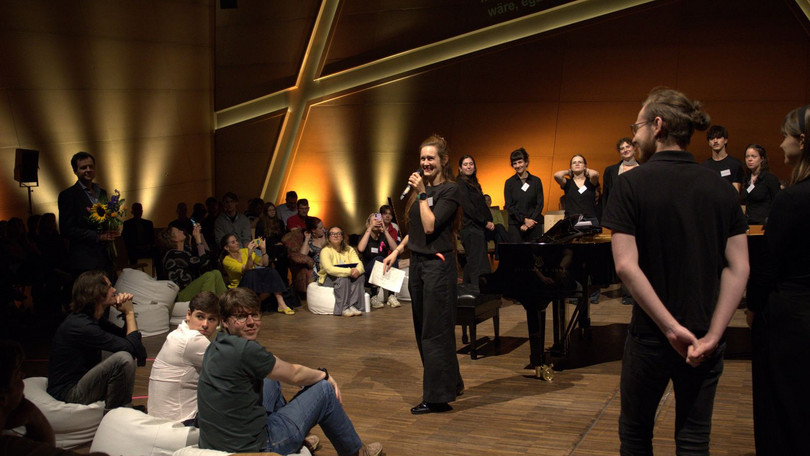
Anyone hoping to sit back and relax was in for a disappointment: further tasks followed between the complex pieces by Liszt, Scriabin, Prokofiev, and Chopin/Godowsky, which the pianist and composer Johannes Obermeier seemed to play with effortless ease. It wasn’t until the second part of the concert—which began with the submission of the exam papers—that the tense situation was resolved. The pianist invited his audience onto the stage, where they could follow the rest of the concert from chairs, armchairs, and cushions arranged around the grand piano in an atmosphere of cozy intimacy.
I live only in my music, and no sooner is one work completed than another is already in progress; as I write now, I often work on three or four pieces at the same time.
Obermeier prefaced the second part of the evening with this quote from Beethoven to remind the audience that a certain amount of pressure can, in a positive way, lead to a productive creative workflow.
This was followed by Obermeier’s own compositions, including a spontaneous improvisation whose theme –“stress and unease” – had been suggested by the audience. It was an interesting experiment and, as the composer emphasized, rather unusual for a classical concert. The mood shifted to one of relaxation with Amy Beach’s “Dreaming,” which the pianist later described as his favorite piece of the evening.
Postlude
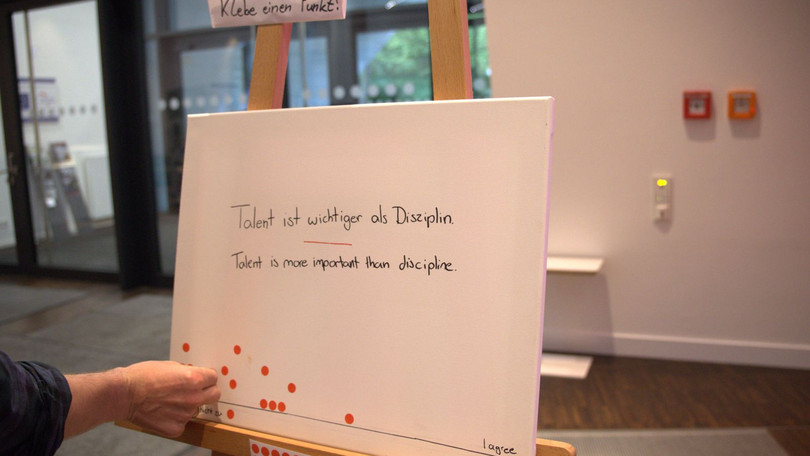
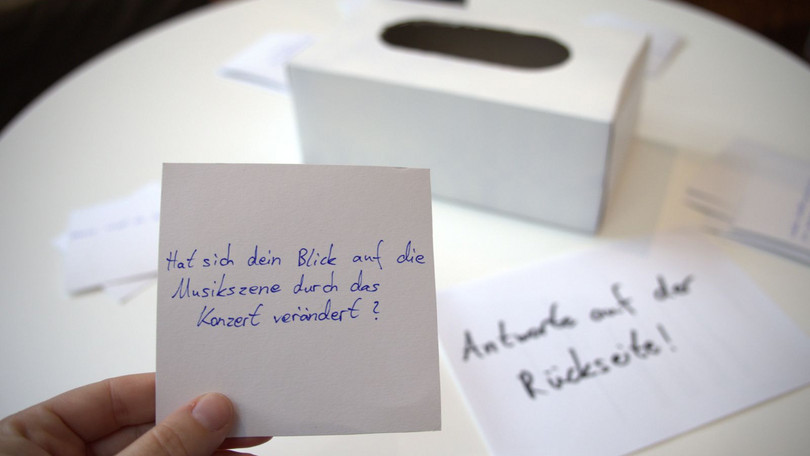
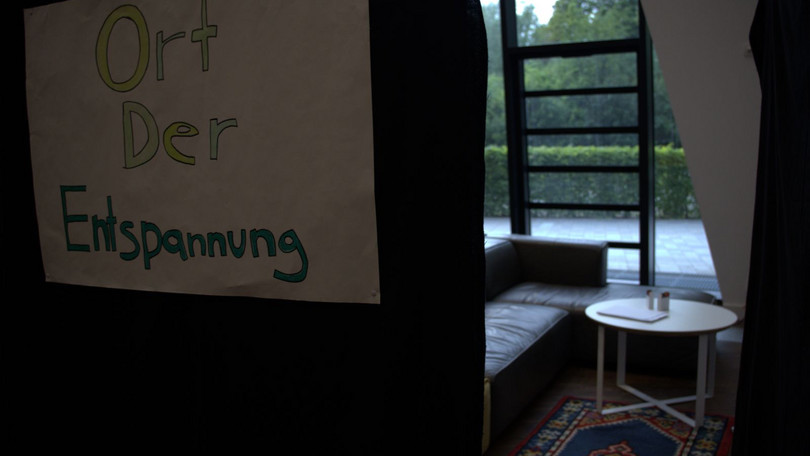
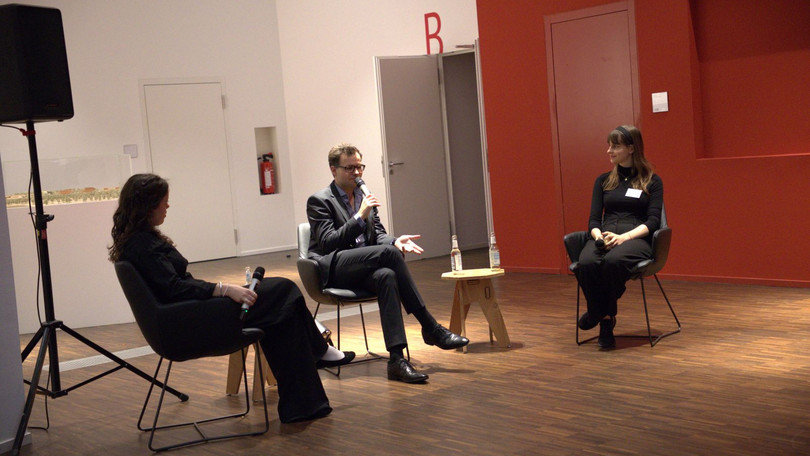
With Johannes Obermeier’s “Fledermaus Paraphrase” of the well-known Strauss piece still ringing in our ears, we then found the foyer transformed: Walking from easel to easel, attendees could, for example, vote on whether talent is more important than discipline, whether the music scene could function even without pressure, or whether imperfection belongs on stage. In secluded spaces designed for relaxation and reflection, attendees could reflect on the evening’s experiences before the audience discussion—the final item on the evening’s program—began.
Here, Johannes Obermaier explained that competitive sports had led him to the topic of “performance pressure,” a concept that is by no means unfamiliar in the world of music competitions. When asked how he personally deals with pressure, he referred to the kōan, a paradoxical question from Zen Buddhism. For him, this means simply letting the pressure be during meditation. Making the arduous appear effortless is one aspect of the pressure placed on musicians—something Obermaier only realized in hindsight when selecting the pieces for the concert. He described the second part of the concert as all the more enjoyable, as it allowed him to connect with the audience both physically and, consequently, emotionally.
Johannes Obermeier expressed his gratitude to the project director, Professor Dr. Sigrid Bekmeier-Feuerhahn, as well as to Steinway & Sons, for the opportunity to participate in the Concert Lab, and once again warmly thanked seminar leader Lea Jakob and the 25 seminar participants for their collaboration in shaping the concert evening; he noted that their unconventional and creative ideas had pleasantly surprised him. His hope that the intended sense of excitement for the evening had been conveyed to the audience was certainly fulfilled.
Thus came to a close a multifaceted and exciting evening that inspired reflection and will be remembered as a unique experience.
Brief Information on the Concert Lab with Steinway & Sons
In this transdisciplinary seminar, the Leuphana Concert Lab is once again collaborating with Steinway & Sons to explore, together with a Steinway Prize winner as a partner musician, how social issues can be presented through music. The focus is on the concept of Artistic Citizenship: It examines the role and responsibility of musicians in today’s society and seeks artistic ways to make current challenges tangible. In small groups, students develop concrete concert plans – including dramaturgy, audience interaction, and spatial design – as well as an interdisciplinary accompanying program, which will be performed publicly twice at the end of the semester. The seminar is open to students from all disciplines and requires no prior knowledge.