
“Klippo”: Leuphana Students and Young People from the Region Collaborate on a Feature Film
2026-11-10 Twelve days of filming, a 75-minute runtime, 120 people in front of and behind the camera—and all without pay: The film project “Klippo—Running Away Is Not an Option” is a joint production by Leuphana students and young people from the region. On November 17 and December 2, 2026, the film will be shown at 5 p.m. each day at the Scala arthouse cinema. What the Lüneburg-based initiative NullPunktNull, media practice seminars, and a shared kitchen have to do with the production.
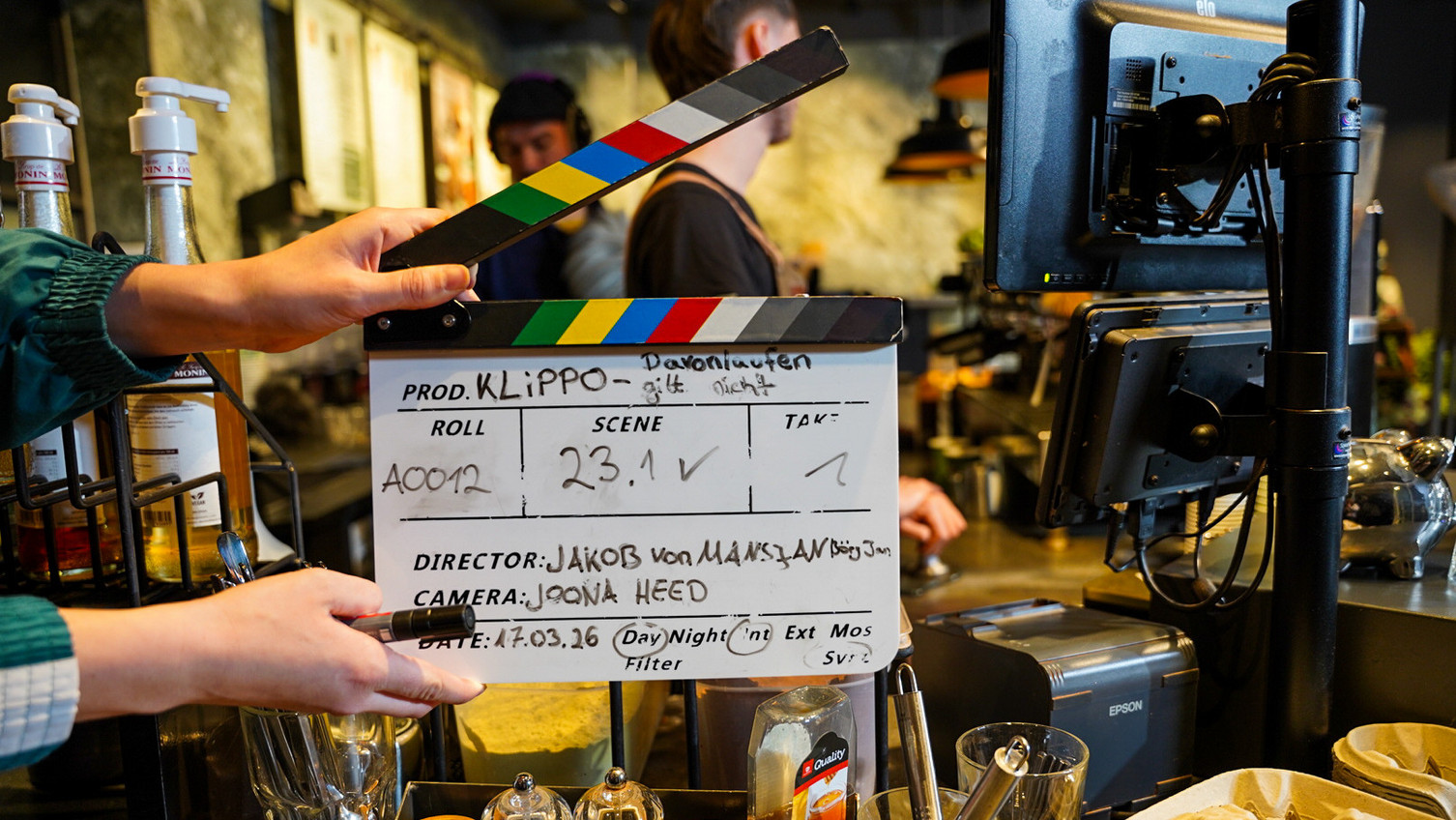
Tears flowed at the premiere: The theater was sold out. Over 300 people had bought tickets. And at the end, there was a lot of applause. “We put so much work into the film. It was an incredible moment,” say Jannes Schmidt and Joona Heed. The two Leuphana students are just two of the many young people who brought “Klippo” to the big screen.
It’s a word children shout when playing tag if they need a break. The film’s protagonists also take a break: After the sudden death of their parents, a world comes crashing down for two brothers. Together, they embark on a journey that their parents had actually planned to take. In the process, old conflicts resurface: One of the brothers begins to drift politically to the right. The story was written by 20-year-old Jakob von Mansberg from Lüneburg.
But a great deal of creative input also came from the “creative community” NullPunktNull. Like the film itself, the group—which is, among other things, a student initiative—brings together young (and older) people from the university and the city: “We now have a network of over 400 creative people,” says Joona Heed. The cultural studies student served as the cinematographer for “Klippo” and co-founded NullPunktNull. Through WhatsApp, events, and a website, people interested in film projects, exhibitions, or music come together. Producer Jan-Henrik Zabel also gained support for “Klippo” through this network.
For Joona and Jannes, this isn’t their first time on set. Both are frequently out and about with a camera—sometimes even at Leuphana: “We’ve both already shot short films in media practice seminars, explored visual design, and practiced working with professional equipment. Those are valuable experiences.” How do you ensure a scene remains spatially comprehensible? What kind of visual composition makes the distance between the brothers visible? How can the director’s vision be realized with the available resources? The AVM Service and the MIZ also provided resources to support the project.
Filming took place in Lüneburg pubs, in a church, at a shooting club, in the woods, and on campus. Even the director’s grandmother’s house became a filming location: “We organized everything ourselves because there was no budget.” A good friend, for example, prepared a meal for over 50 people in her shared apartment’s kitchen. “It was incredible how much work everyone managed to get done,” they both recall.
Costs were incurred nonetheless. They now hope to replenish the empty coffers through ticket sales for the upcoming theater screenings.
And after that? “The whole team agrees: We want to submit ‘Klippo’ to film festivals now.”
We’re keeping our fingers crossed.