
Political Education: “Democracy Doesn’t End at the Factory Gate”
2026-10-26 Work shapes a large part of our lives. Prof. Dr. Harald Hantke’s research project, “The Political-Democratic Dimension of Vocational Education and Training for Sustainable Development,” aims to strengthen the workplace as a space for democratic experiences. IG Metall is a strategic partner.
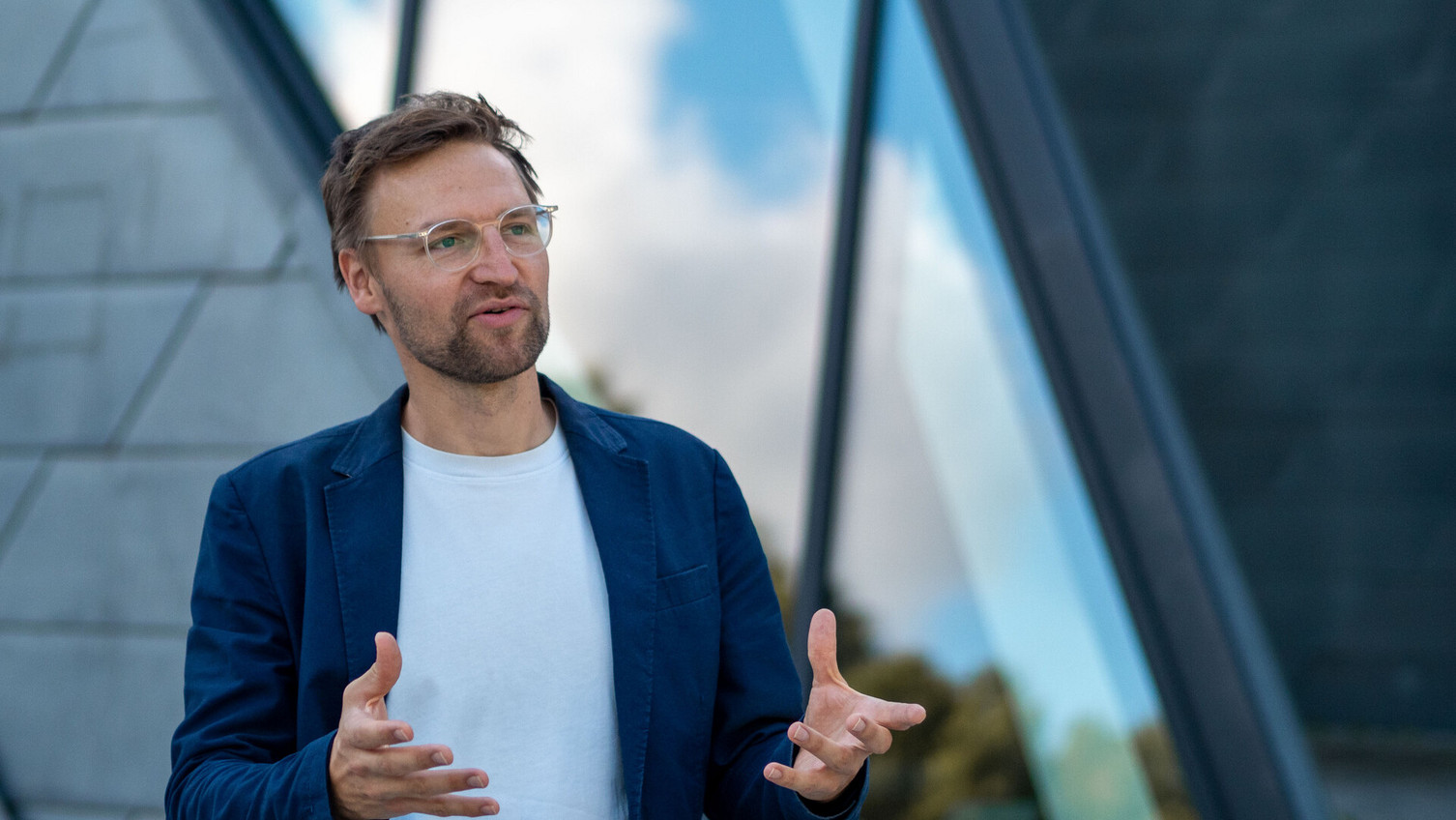
Monotonous tasks, the feeling of not being sufficiently involved, little room for initiative—and all of this for up to 40 hours a week. An apprenticeship in the metal and electrical industries should offer more. “People want to feel that they can make a difference—even during their vocational training,” says Harald Hantke, professor of social science education, specializing in political didactics. This experience is not merely a psychological issue, but also a political one: “Democracy does not end at the factory gate,” explains Harald Hantke.
During the first, two-year phase of the project, Harald Hantke and his team, in collaboration with Bielefeld University, developed, among other things, a handbook for apprenticeship practice with a focus on sustainable action in the workplace. The handbook centered on topics such as energy, human resources, supply chains, the circular economy, and automation, which are explored in a critical, reflective, and—above all—action-oriented manner. The material is now also being used by continuing education and professional development institutions.
In the second phase, which has now begun, this approach is being expanded. “Issues of sustainability in professional practice are often linked to political, ethical, and cultural conflicts. The focus is, for example, on which processes need to be changed and how, how such decisions are made, how differing interests are negotiated in the process, and what influence various stakeholder groups—including trainees—have in this process,” explains Hantke.
The project focuses on young people, who are meant to learn that democratic participation should not be limited to outside the workplace. Even within the workplace, they can learn to articulate their own interests—even in the face of resistance—to help make decisions, to deal with potential conflicts, and ultimately to help shape work and business processes. A central aspect of this is also the question of how seriously their perspectives are taken and how they can actually participate—that is, dealing with hierarchies and power.
The project draws on a so-called “train-the-trainer” approach: “We want to train the instructors to become advocates for this approach,” says Hantke. At the same time, vocational schools are to be more closely involved. While the first phase of the project focused primarily on the workplace component of training, the collaboration between businesses and schools is now taking center stage.
The researchers view the project as a contribution to fostering a democratic culture that should not be limited to civics classes or social life outside the workplace.
The project is funded with a total of approximately 511,000 euros by the European Union in collaboration with the Federal Ministry of Education, Family Affairs, Senior Citizens, Women, and Youth.