
After Utopia: Rethinking the Future and the Politics of Imagination
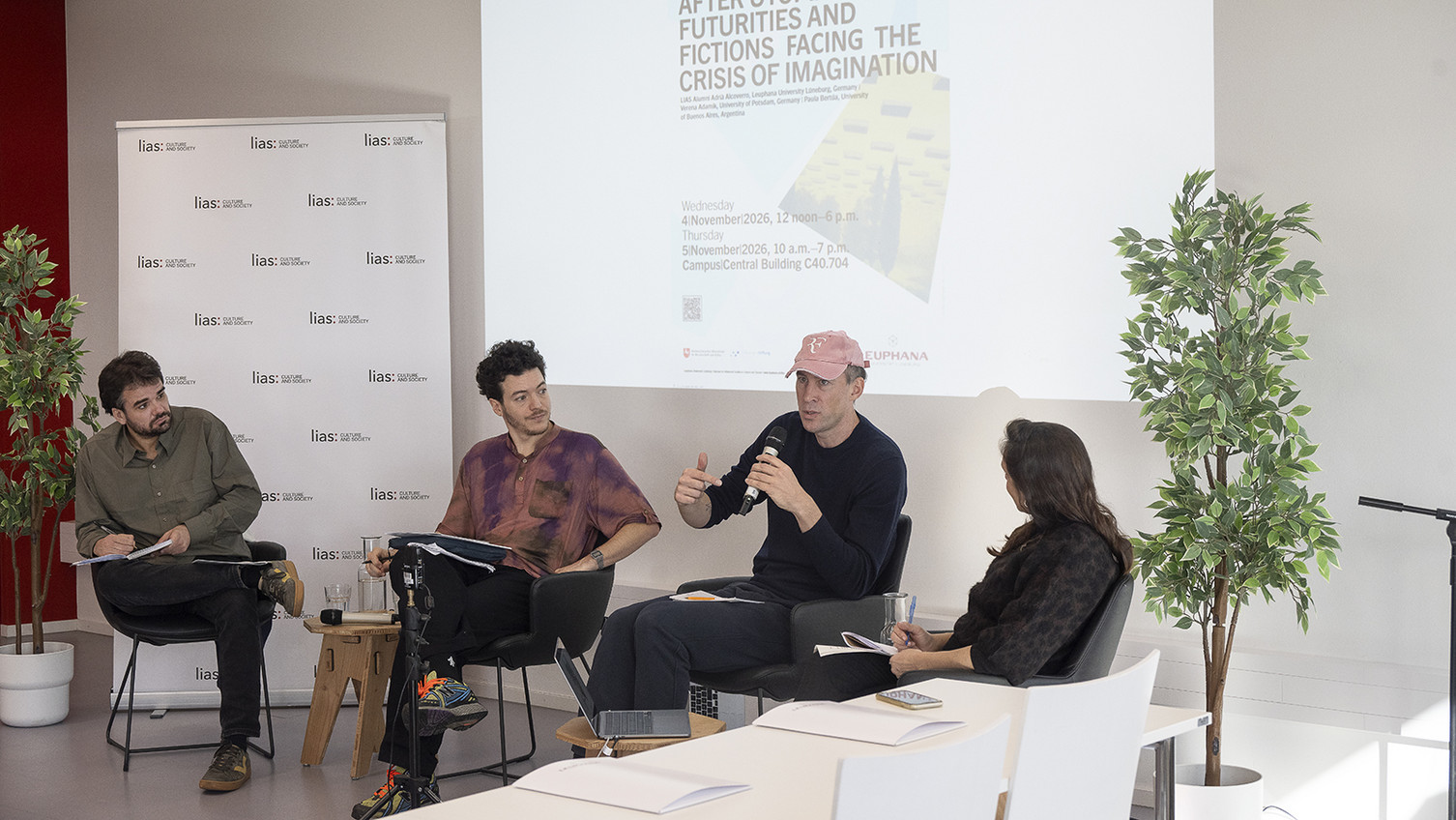
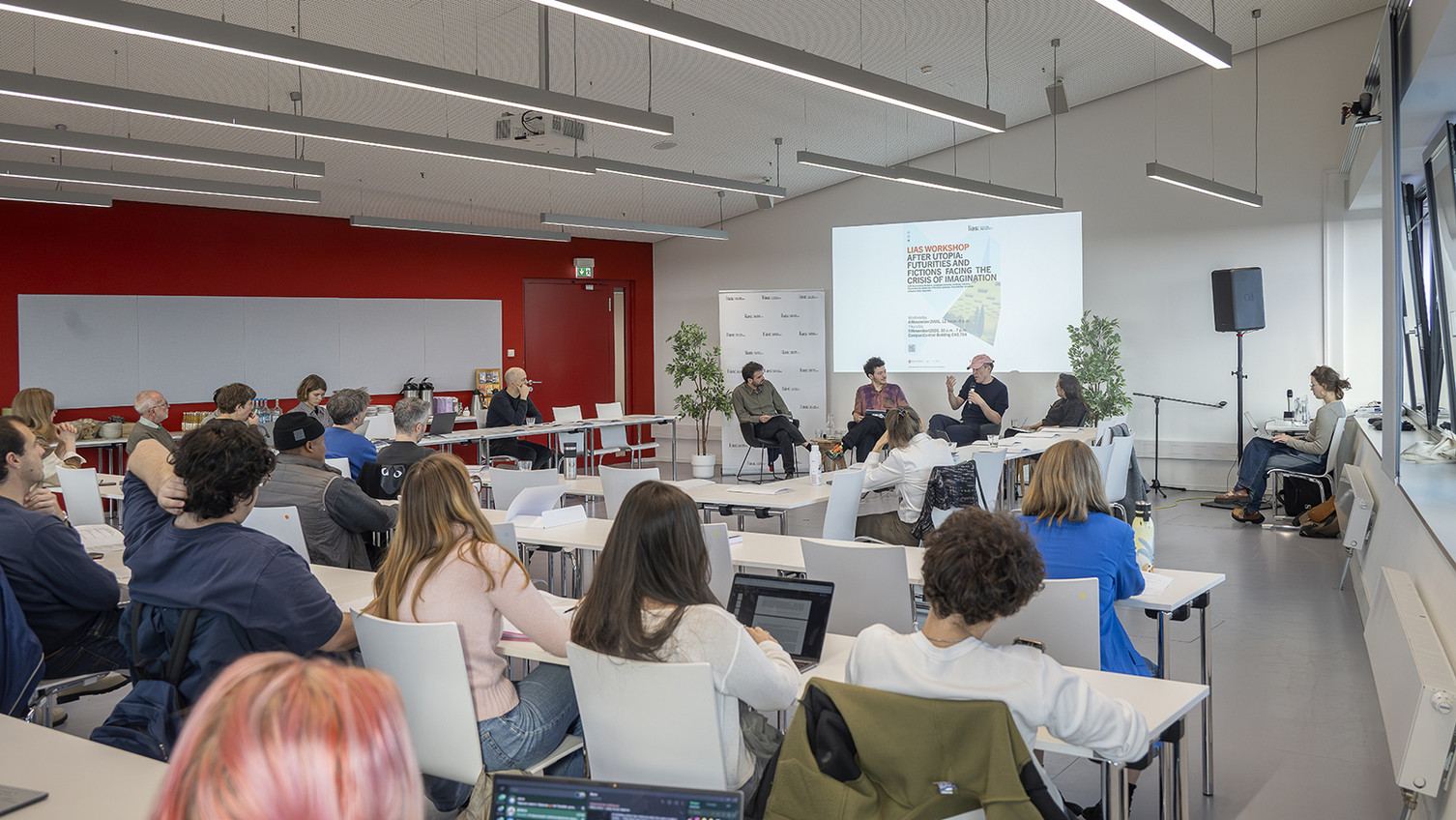
2026-11-18 Organised by LIAS alumni Adrià Alcoverro, Paula Bertúa and Verena Adamik, the workshop “After Utopia: Futurities and Fictions facing the Crisis of Imagination” highlighted the LIAS alumni network as a vibrant space for scholarly exchange: former LIAS fellows jointly shaped the programme, bringing their diverse research backgrounds and perspectives into dialogue. The workshop also welcomed two LIAS-affiliated guests: alumnus Egidijus Mardosas and current LIAS Fellow Maddalena Fragnito. At its centre was the question of how new visions of the future and alternative forms of utopian thought might emerge in the face of today’s ecological, political and technological crises.
 ©Julia Knop
 ©Julia Knop
 ©Julia Knop
 ©Julia Knop
 ©Julia Knop
 ©Julia Knop
 ©Julia Knop
 ©Julia Knop
 ©Julia Knop
 ©Julia Knop
 ©Julia Knop
 ©Julia Knop
 ©Julia Knop
 ©Julia Knop
What does it mean to think about utopia today, in a world shaped by ecological crisis, technological transformation and the apparent exhaustion of political alternatives? The LIAS Workshop “After Utopia: Futurities and Fictions facing the Crisis of Imagination” approached this question from a range of philosophical, political, literary and artistic perspectives. The contributions explored competing understandings of the future: as a political horizon, a temporal structure, a technological promise, a contested field of imagination and a practice of invention.
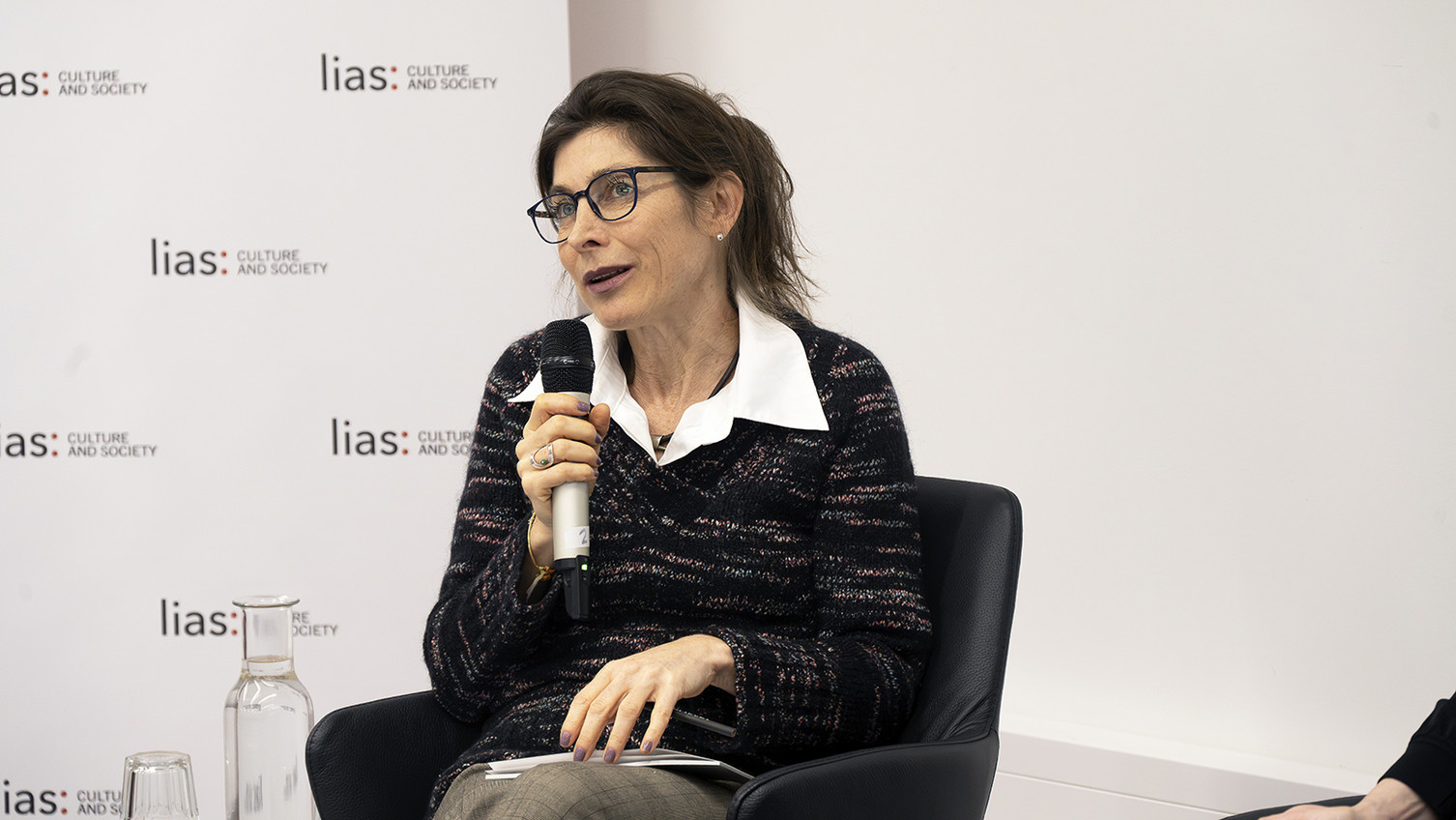
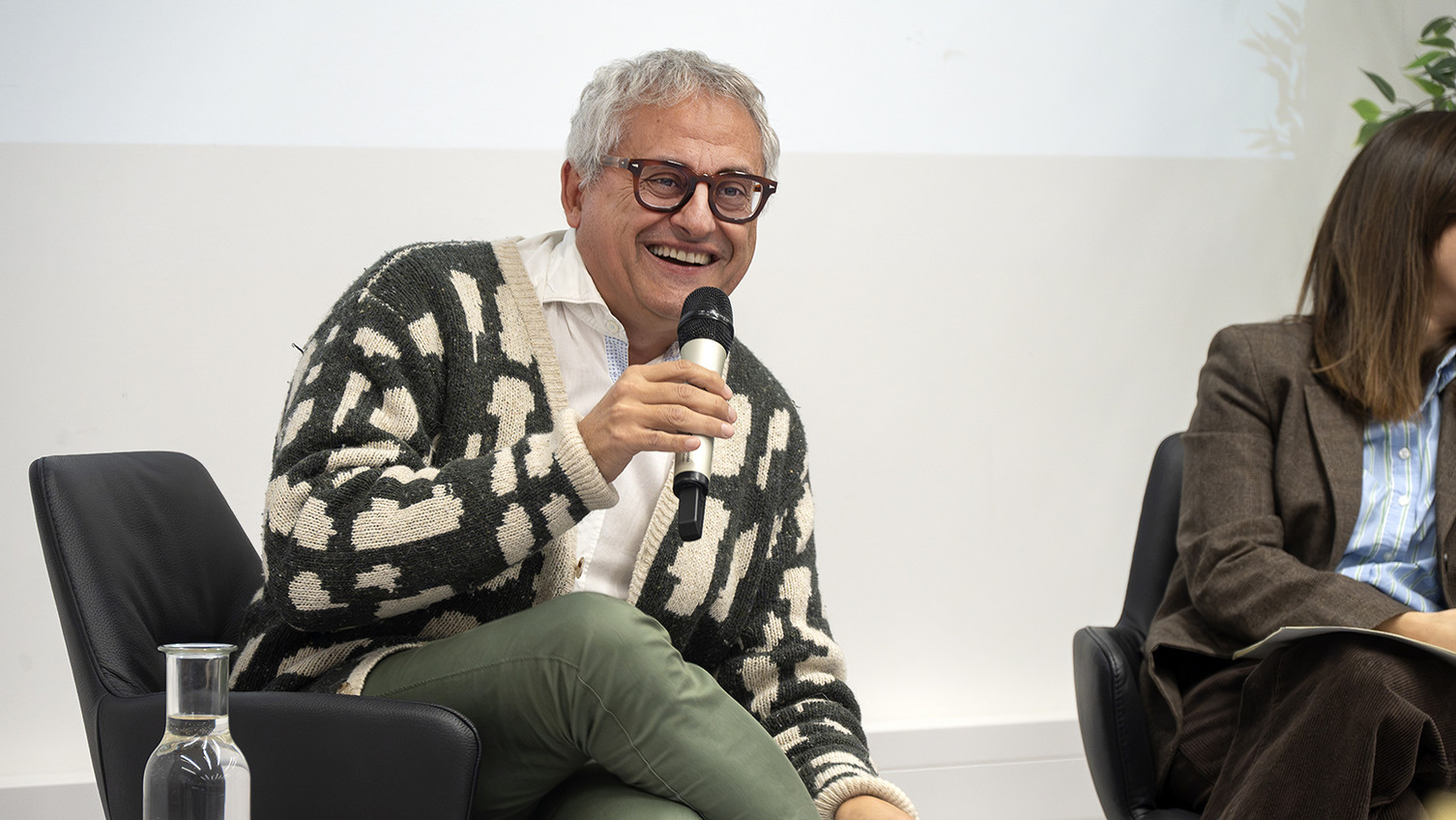
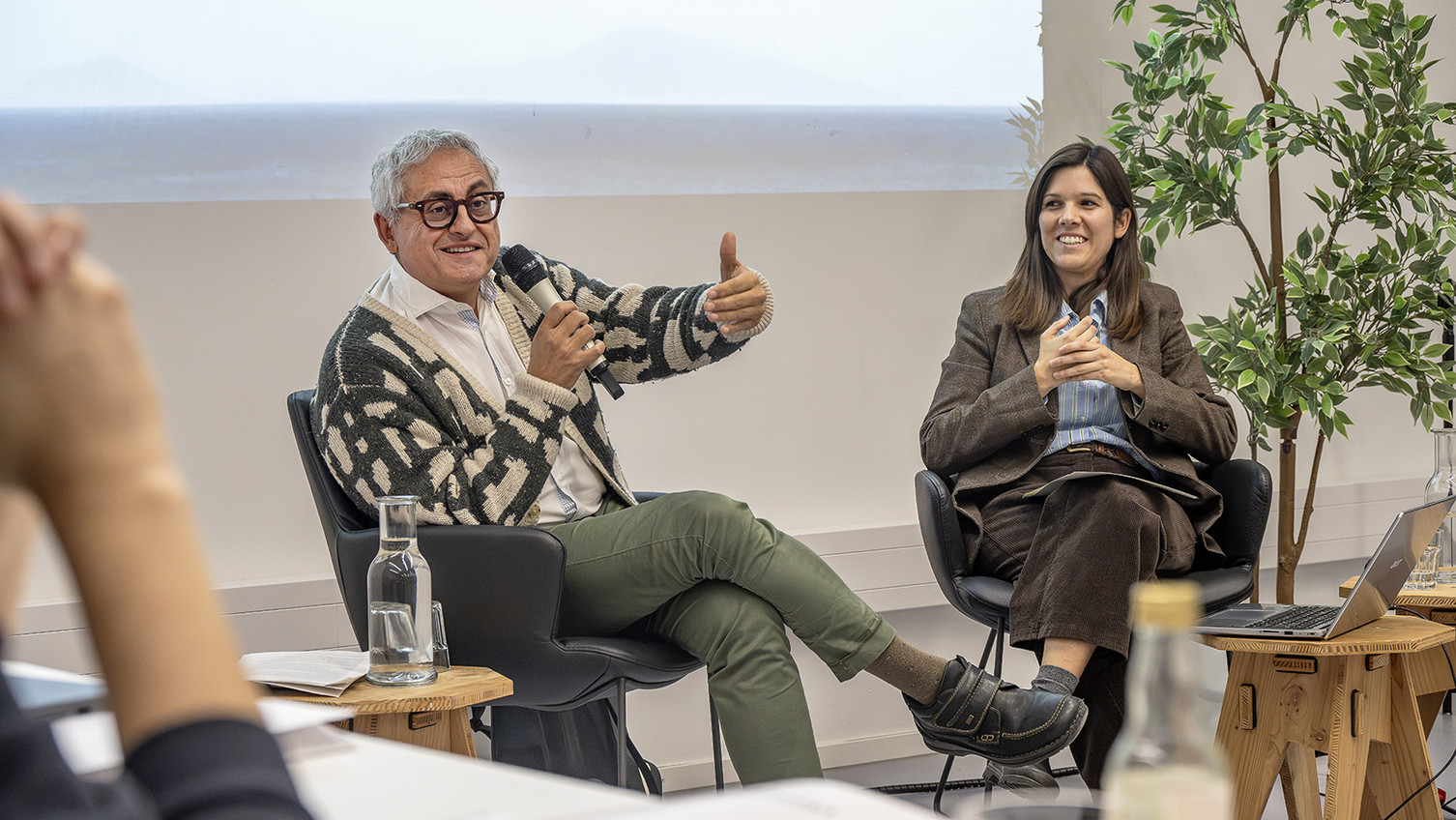
The discussions revealed that utopia has never had just one meaning. It can refer to an imagined better society, to literary projections and experiments in alternative ways of living, or to a political project shaped by collective ideals. These meanings also imply different relationships to time. While some approaches understand utopia as a distant destination or a model to be realised, others emphasise possibilities already emerging within the present. In a conversation on multitude and heterotopias, Roberto Nigro and Chiara Stefanoni (both Leuphana University Lüneburg) revisited the Marxist critique of utopianism and considered how imagination, political action and temporality might be connected. Drawing on Spinoza and Antonio Negri, they explored the potential of an immanent understanding of political transformation as communism might be seen not simply as an ideal to be reached, but as a movement taking shape in the present.
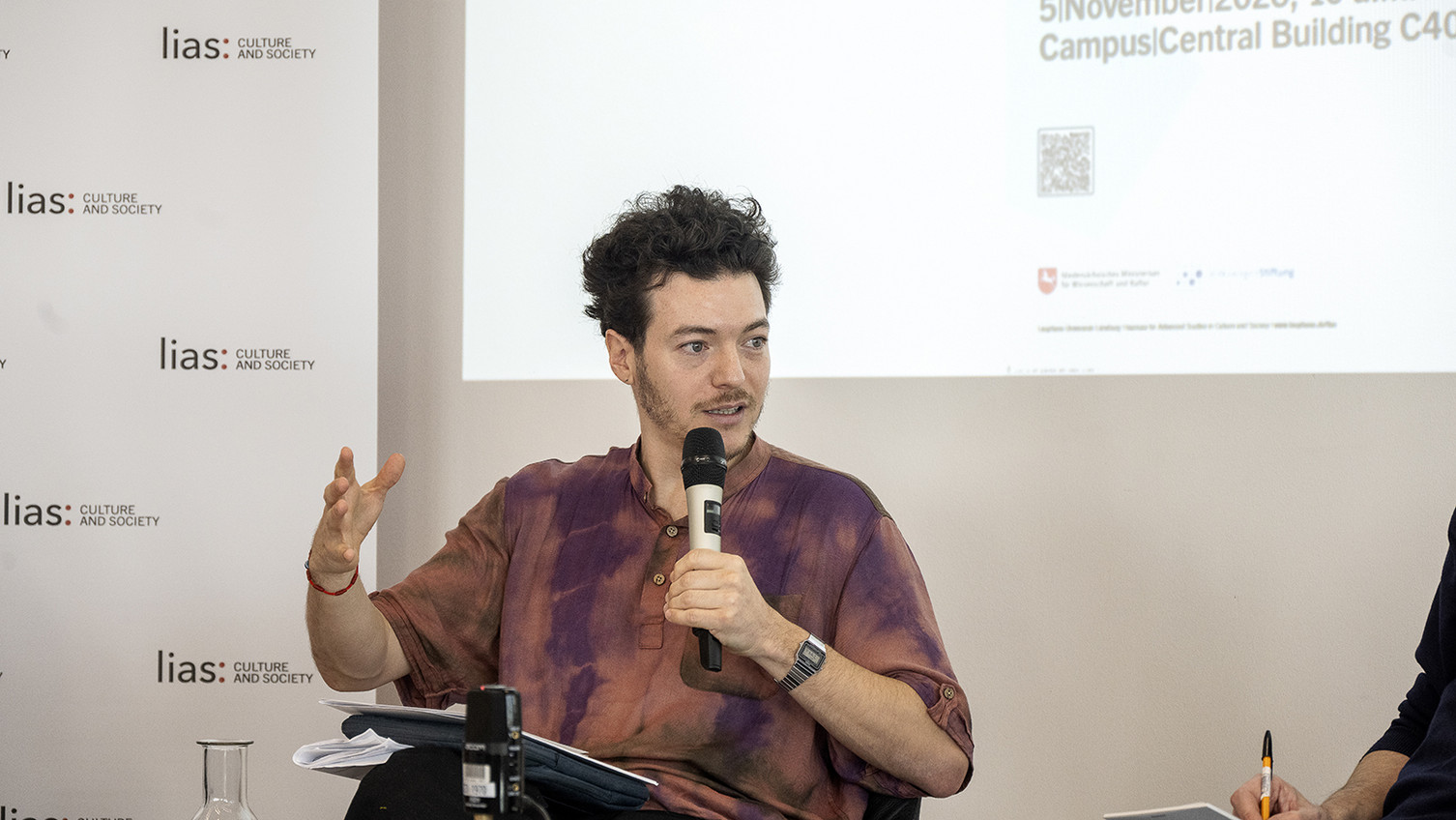
Ezequiel Gatto’s (University of Rosario, Argentina) contribution, “Moving Image: Post-utopia, Orientation, and Political Inventiveness”, offered a further way of thinking beyond the opposition between utopian hope and political resignation. He described a tension between the urgent need to think about the future and a widespread sense of powerlessness. At the same time, political and technological actors increasingly make prophetic claims about what lies ahead. Gatto argued that the task is to reconsider what counts as possible in the first place: to reconnect imagination with what remains unimagined, and projection with uncertainty. His concept of inventiveness points towards an ongoing practice of creating possibilities and renewing social cooperation, rather than pursuing a final image of a just society.
Who gets to imagine the future?
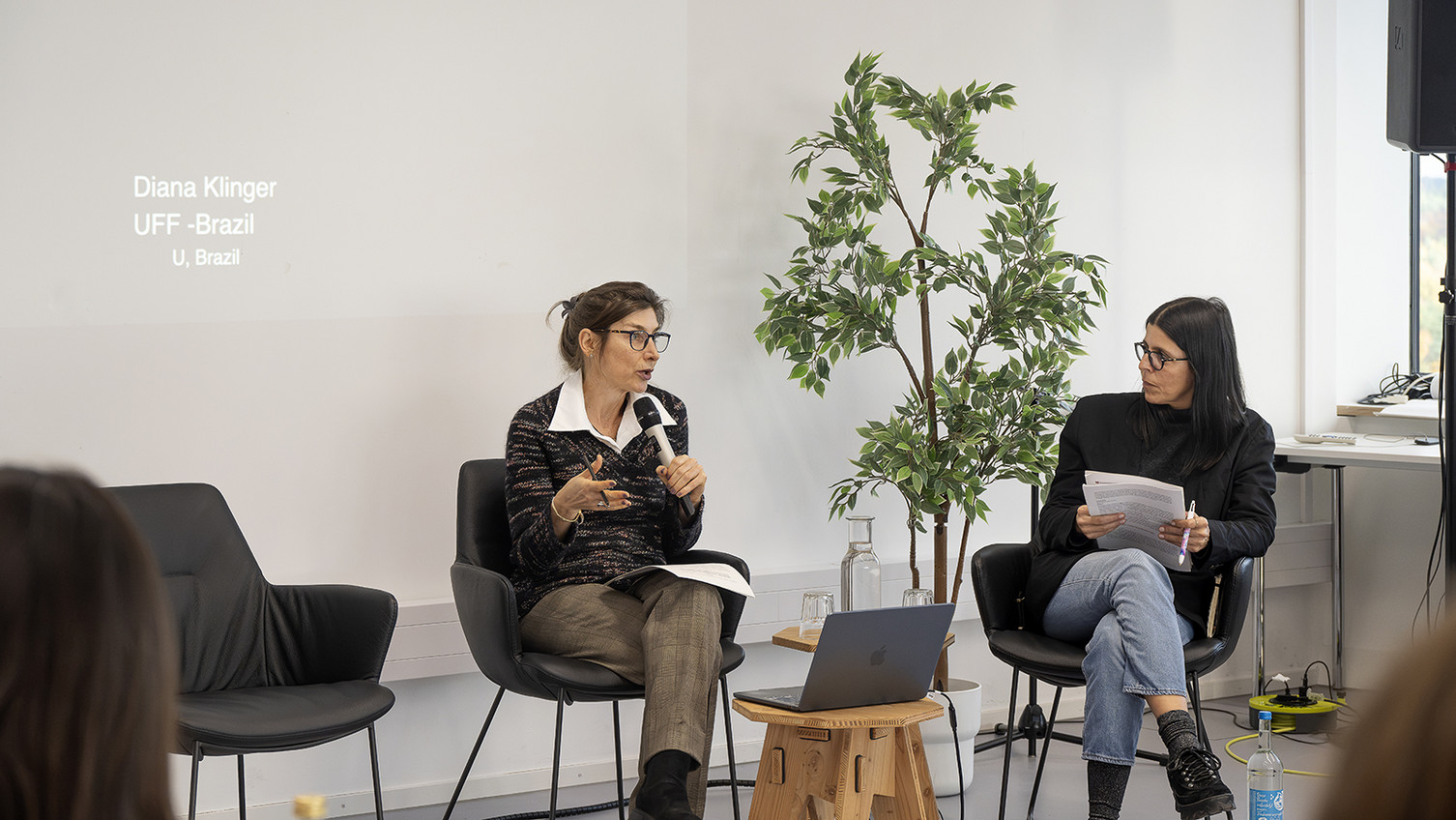
Several contributions examined how technological systems and capitalist structures shape the futures that can be imagined and whose visions acquire the power to become reality. Diana Klinger (Fluminense Federal University, Brazil) traced an unconventional history of algorithmic imagination, moving from Jonathan Swift’s (1667–1745) satirical machine in “Gulliver’s Travels” through Charles Babbage (1791–1871) , Ada Lovelace (1815–1852) and Alan Turing (1912–1954) to contemporary AI. Rather than presenting this history as a story of technological progress, she highlighted changing ideas of language, intelligence and cognition. Her reading of Lewis Carroll’s “Alice” books also suggested how nonsense and satire can challenge the claim that the world, human behaviour and the future can be made fully predictable.
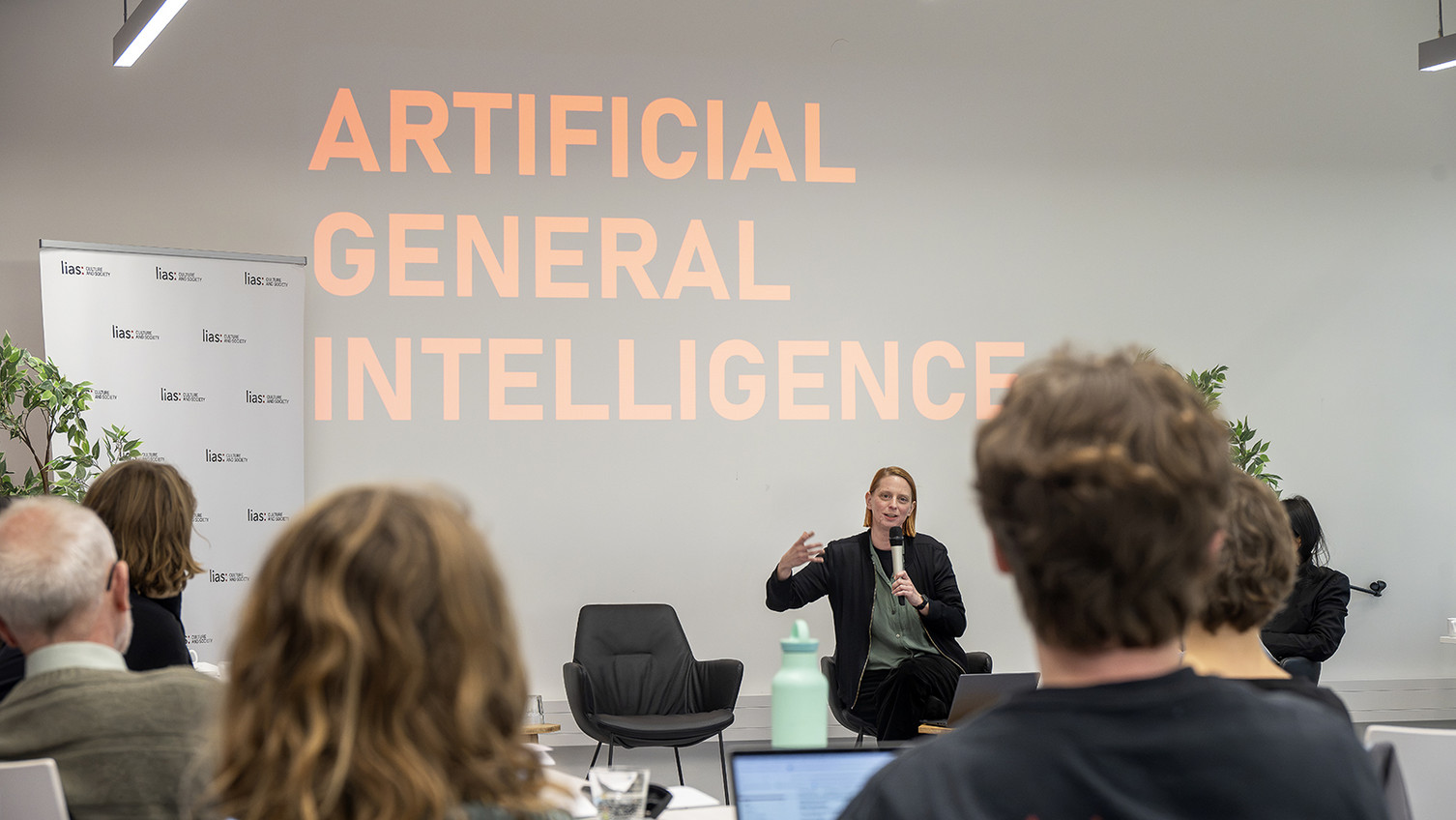
Laura Hille’s (University of Siegen, Germany) presentation “NOASIS” turned to the speculative futures promoted by Silicon Valley. She examined the coexistence of optimistic promises of technological transformation and apocalyptic scenarios, as well as the ideological networks and financial interests behind them. Her analysis raised questions about the relationship between AI, transhumanism, effective altruism and the concentration of technological power. The issue of who is included in these visions—and who is left out—also brought questions of race and gender into focus.
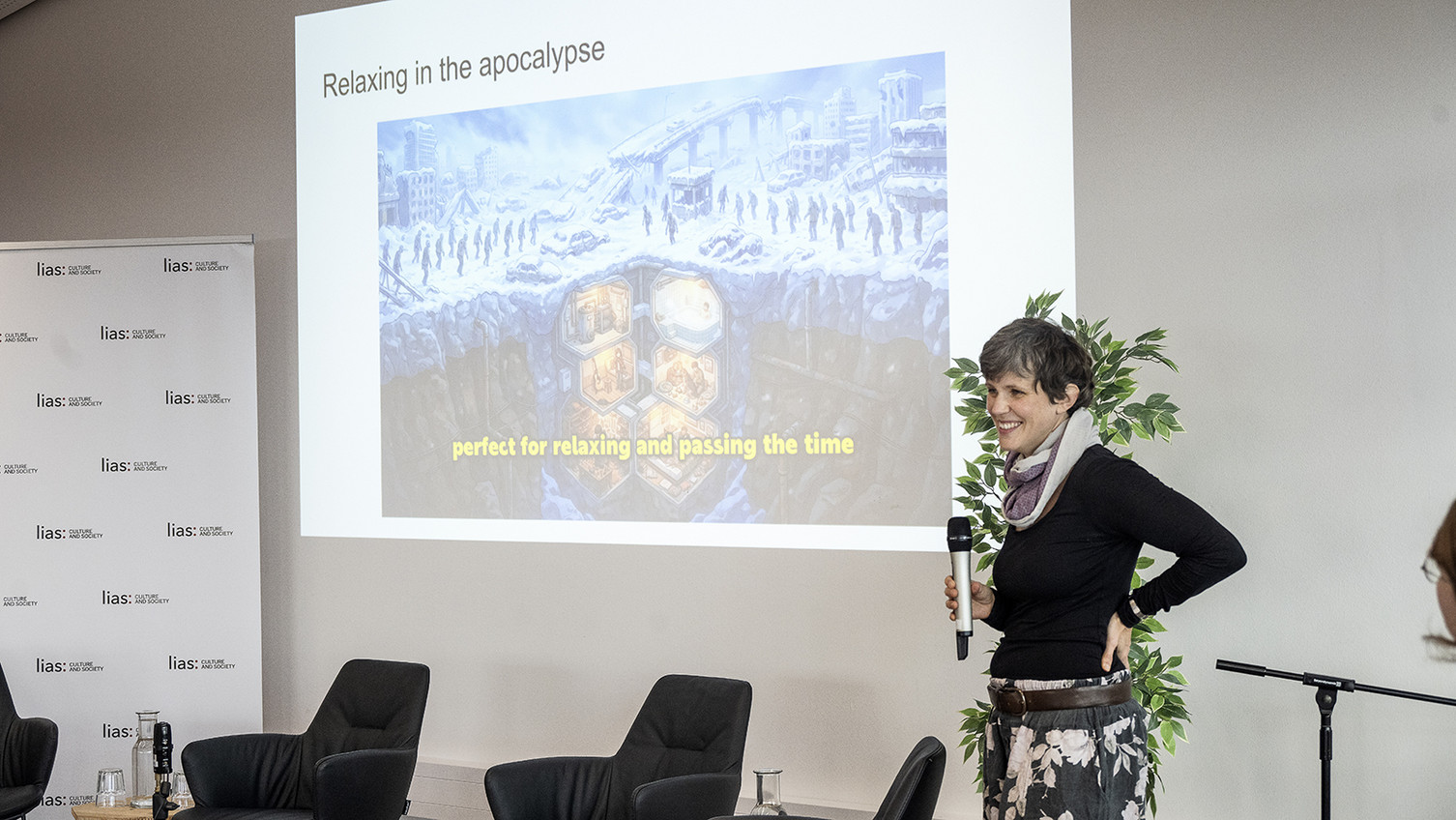
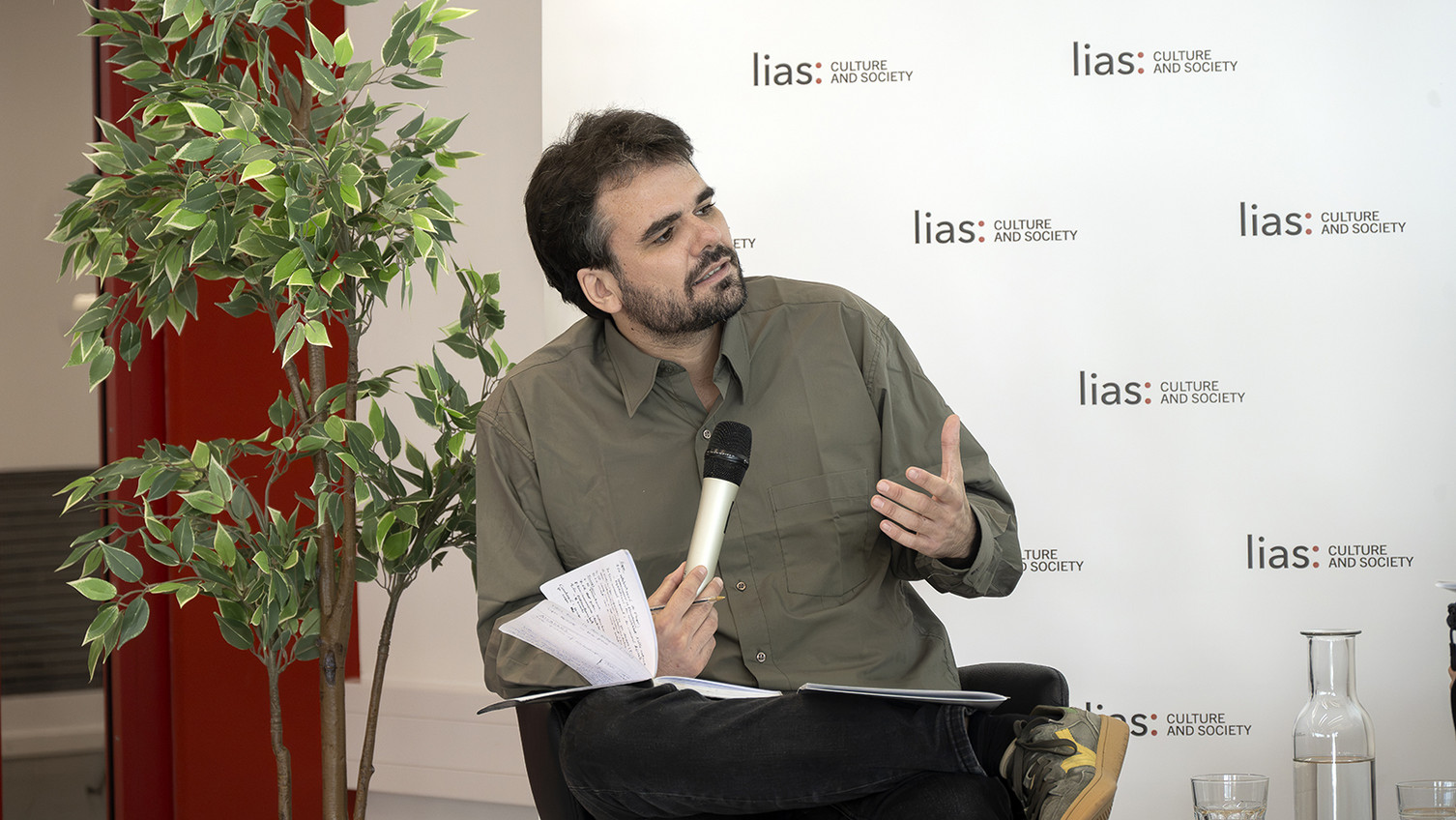
The political economy of futurity was central to Hernán Gabriel Borisonik’s (University of San Martín, Argentina) concept of “disimagination”. Although images and predictions of the future circulate in abundance, he argued, the range of futures that can be collectively imagined is becoming increasingly standardised. Technocapitalism does not simply produce visions; it also builds the infrastructures that organise them. Adrià Alcoverro examined a related dynamic in his analysis of the extreme right. He showed how contemporary capitalism can produce a “futurization without image”: an extension of the present without a convincing alternative horizon. The extreme right responds to the resulting desire for certainty and transcendence with political narratives that ultimately reinforce the conditions from which they emerge. Maddalena Fragnito, meanwhile, explored the privatisation of futurity through preparedness strategies, private bunkers and the growing role of tech elites. When the future is framed primarily as a catastrophe to survive, protection becomes a resource distributed unequally, and collective infrastructures risk being displaced by private solutions.
Other contributions challenged the assumption that the crisis lies simply in a lack of imagination. In their conversation, Nigro and Stefanoni referred to contemporary student protests and the imagery through which movements articulate political demands. The pirate flag associated with the Japanese anime “One Piece”, for example, became a point of reference for thinking about new forms of political identification. Their discussion suggested that political imagination is visible in the streets; what may be in crisis is the ability to interpret these movements beyond inherited categories.
Alternative temporalities, alternative futures
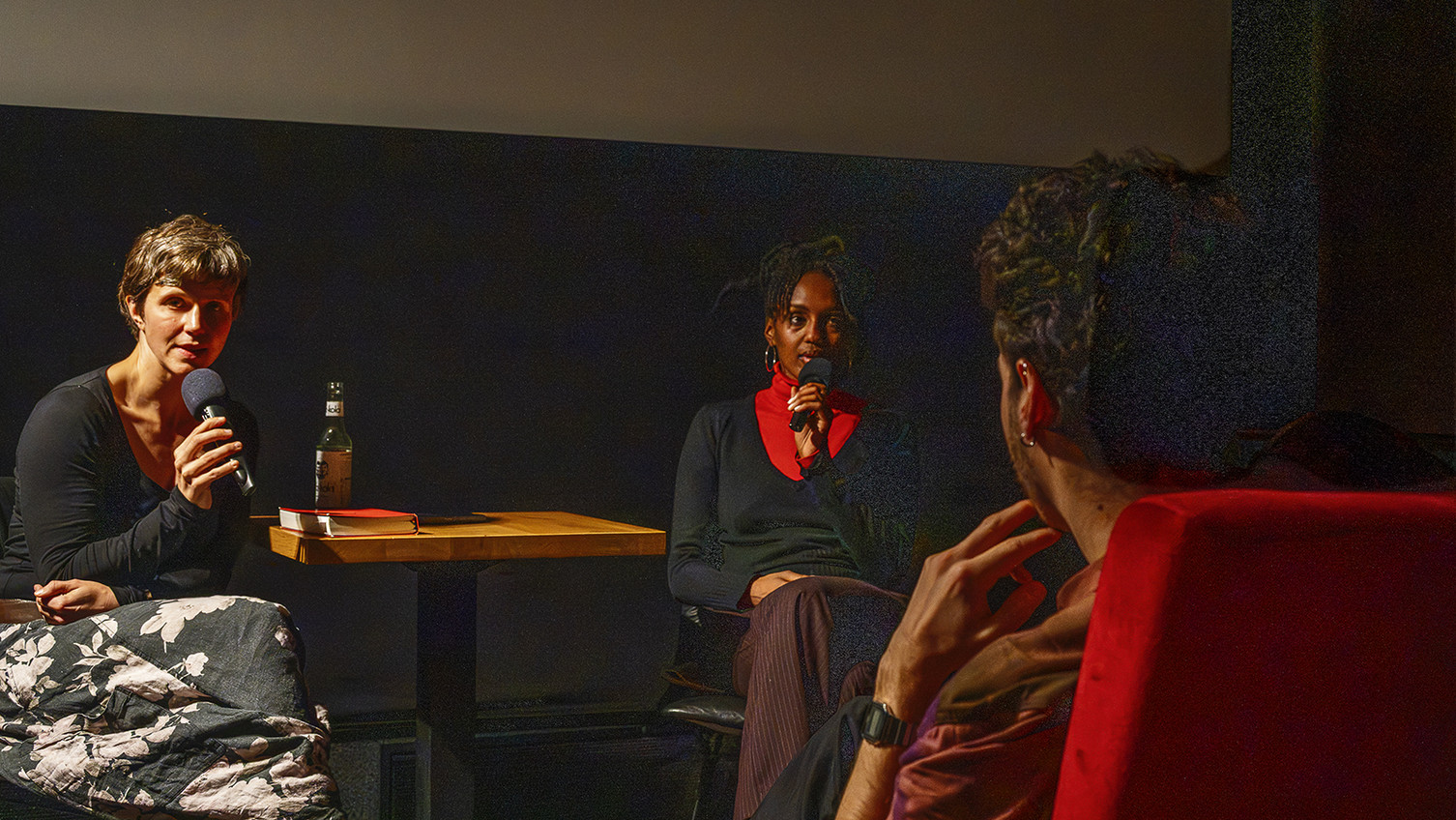
The workshop also explored how literature and artistic practice can unsettle dominant accounts of history and progress. Adyam Tesfamariam (Music curator and cultural producer Berlin, Germany) presented Afrofuturism not merely as a genre of science fiction, but as a cultural practice connecting history, technology, emancipation and speculative imagination. The screening of Sharon Lewis’s Brown Girl Begins in the SCALA Arthouse Cinema, together with Verena Adamik’s historical examination of Afrofuturism and white supremacist propaganda in the early twentieth-century United States, highlighted the political stakes of competing visions of the future. While white supremacist narratives mobilised myths of a lost past and perpetual conflict, African American literary strategies challenged linear histories and the exclusion of Black people from dominant imaginaries of progress.
Paula Bertúa (University of Buenos Aires, Argentina) turned to contemporary Latin American literature, art and philosophy to explore futures that resist Western, linear and often colonial conceptions of time. Drawing on Ailton Krenak’s idea of an “ancestral future” and Silvia Rivera Cusicanqui’s account of multilinear temporalities in Aymara culture, she showed how the future can become a site of decolonial intervention. Daniel Falb (Author, Berlin, Germany) and Michel Nieva (Author, New York, United States) likewise considered how speculative writing can engage with the Anthropocene, non-human agency and the deep timescales of environmental change. Their contributions highlighted science fiction’s capacity to connect technological questions with colonial histories, ecological transformations and alternative understandings of the human.
Egidijus Mardosas (Vilnius University, Lithuania ) brought these concerns together in a reading of Miguel Abensour and Ursula K. Le Guin’s novel Always Coming Home (1985). Against the idea that utopia must follow a linear narrative of progress, he proposed understanding it as an interruption of historical time that makes encounters with radical alterity possible. This perspective also complicates the question of utopian failure. In his keynote, Gregory Claeys (Royal Holloway, University of London, United Kingdom) distinguished between utopian theories, intentional communities and literature, arguing that the failure of particular political experiments does not invalidate the value of attempts to expand social experience. Utopian literature, moreover, cannot simply be judged by whether its imagined societies can be realised.
Taken together, the workshop did not offer a single answer to what comes after utopia. Instead, it opened up a field of questions about the ownership of the future, the limits of technological prediction, the persistence of colonial temporalities and the political possibilities of collective imagination. Gatto’s notion of inventiveness provides a fitting point of departure: rather than waiting for a definitive image of a better world, political practice can keep discovering and creating possibilities that were not previously visible. After utopia, the future remains unfinished—and open to invention.