
Prof. Dr. Christina Wessely
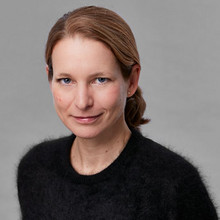
Vita
Christina Wessely is Professor of Cultural History as well as a member of the DFG Research Training Group "Cultures of Critique". Her teaching areas are in the field of cultural history and the history of knowledge. She is particularly interested in the cultural history of nature and the history of the life sciences, with a focus on the "long" 19th century. The history of ecological forms of knowledge, the history of human-animal relations and their institutions are also among her research interests.
Scientific Career
- since 10/2025: Dean of the Leuphana School of Culture and Society
- since 03/2016: Dean of Studies (Master) of the School of Cultural Studies
- since winter term 2014: Professor of Cultural History, Leuphana University Lüneburg
- 2014: Habilitation at the Humboldt University of Berlin, venia legendi for Modern and Contemporary History
- 2012 - 2014: Research assistant at the Chair for the History of Science, Institute of Historical Studies, Humboldt University of Berlin
- 2011 - 2012: Visiting Researcher at the Institute for Culture and Aesthetics of Digital Media, Leuphana University
- 2010 - 2011: Research Coordinator at the Doctoral Program "Natural Sciences in Historical, Philosophical and Cultural Context", University of Vienna
- 2010: Lecturer at the Seminar for Cultural Studies and Science Research, University of Lucerne
- 2009-2010: Postdoctoral Research Fellow at the Max Planck Institute for the History of Science, Berlin (Department III, Hans-Jörg Rheinberger)
- 2007-2009: Research Associate at the Institute of History, University of Vienna
- 2007: Visiting Fellow at the Department of the History of Science, Harvard University 2005-2006: Postdoctoral Research Fellow at the Max Planck Institute for the History of Science, Berlin (Department III, Hans-Jörg Rheinberger)
- 2004: PhD, thesis: "The Nature of the City. Zoological Gardens and Urban Modernity”, University of Vienna
- 2000 - 2004: Doctoral studies at the University of Vienna and at University College London
- Project assistant at the Institute of History, University of Vienna
- 1995 - 2000: Studies of History and German at the University of Vienna and the Free University of Berlin
Fellowships & Awards
- 10/2018 - 01/201: Senior Fellowship at the Internationales Forschungszentrum Kulturwissenschaften (IFK), Vienna
- 07/2018: Teaching Award of the Leuphana University Lüneburg (at the suggestion of the students, MA seminar: The Knowledge of Myth)
- 07/2015: Teaching Award of the Leuphana University Lüneburg (best teaching concept, BA seminar: Campus of Things)
- 10/2013: Nomination of the monograph "Welteis. Eine wahre Geschichte" for the longlist as "Science Book of the Year" of the Austrian Federal Ministry of Science, Research and Economy
- 06/2013: Winning the Otto-Hintze-Young Talent Award of the "Michael-und-Claudia-Borgolte-Stiftung zur Förderung der Geschichtswissenschaften an der Humboldt-Universität zu Berlin" for the monograph "Welteis. A true story"
- 2005-2006 & 2009-2010: Postdoctoral Research Fellowship at the Max Planck Institute for the History of Science, Berlin (Department III, Hans-Jörg Rheinberger)
- 2007: Visiting Fellowship at the Department of the History of Science, Harvard University
Membership in Advisory Boards and Juries
- Since October 2025: Chair of the Advisory Board of the Academy Project "Ernst Haeckel (1834–1919): Briefedition", Leopoldina National Academy of Sciences
- since 09/2021: Member of the Advisory Board of the Academy Project "Ernst Haeckel (1834-1919): Briefedition", Leopoldina National Academy of Sciences and Humanities
- 2021: Member of the International Advisory Board of 'INTRA - Angewandte Program for Trans- & Interdisciplinary Projects in Art and Science, University of Applied Arts - die Angewandte, Vienna
- 2017-2020: Member of the jury 'Opus Primum' of the VolkswagenFoundation
Projects
-
Dawn of the Doomed: The Religious and Political "Zombies' of the Anthropocene"
Christina Wessely (Project manager, academic) , Uwe Lindemann (Project manager, academic) , Christoph Asmuth (Project manager, academic) , Patrick Stoffel (Project manager, academic)
→Project: Research
-
Primeval Times and Environment. Staging Prehistory in Modern Age
Christina Wessely (Project manager, academic)
→Project: Research
Publications
Books and anthologies
- Liebesmühe
Christina Wessely (Author) , 2024 München , 174 p.Research output: Books and anthologies › Monographs › Transfer › peer-review
- Löwenbaby
Christina Wessely (Author) , 2019 Berlin , 68 p.Research output: Books and anthologies › Monographs › Transfer
- Im Vorraum: Lebenswelten kritischer Theorie um 1969
Denis Göttel (Editor) , Christina Wessely (Editor) , 2019 Berlin , 200 p.Research output: Books and anthologies › Collected editions and anthologies › Research
- Milieu.: Umgebungen des Lebendigen in der Moderne
Christina Wessely (Editor) , Florian Huber (Editor) , 2017 1 ed. Paderborn , 184 p.Research output: Books and anthologies › Collected editions and anthologies › Research
- Der Ozean im Glas: Aquaristische Räume um 1900
Christina Wessely (Editor) , Thomas Brandstetter (Editor) , 2013 Weinheim , 86 p.Research output: Books and anthologies › Special Journal issue › Research
Journal contributions
- Watery Milieus: Marine biology, aquariums, and the limits of ecological knowledge circa 1900
Christina Wessely (Author) , 01.05.2019 , in: Grey Room, 75 , p. 36-59 , 24 p.Research output: Journal contributions › Journal articles › Research › peer-review
- Hypothekentilgung
Christina Wessely (Author) , Christian Voller (Author) , 01.12.2018 , in: Berichte zur Wissenschaftsgeschichte, 41, 4 , p. 445-448 , 4 p.Research output: Journal contributions › Journal articles › Research › peer-review
- Raf De Bont: Stations in the Field. A History of Place-Based Animal Research, 1870–1930
Christina Wessely (Author) , 01.06.2016 , in: Berichte zur Wissenschaftsgeschichte, 39, 2 , p. 194-195 , 2 p.Research output: Journal contributions › Critical reviews › Research
- Wässrige Milieus. Ökologische Perspektiven in Meeresbiologie und Aquarienkunde um 1900
Christina Wessely (Author) , 01.06.2013 , in: Berichte zur Wissenschaftsgeschichte, 36, 2 , p. 128-147 , 20 p.Research output: Journal contributions › Journal articles › Transfer › peer-review
- Einleitung: Mobilis in mobili
Thomas Brandstetter (Author) , Christina Wessely (Author) , 01.06.2013 , in: Berichte zur Wissenschaftsgeschichte, 36, 2 , p. 119-127 , 9 p.Research output: Journal contributions › Journal articles › Research › peer-review
Contributions to collected editions/anthologies
- Ozeane hinter Glas: Zur materiellen Kultur der Meeresbiologie um 1900
Christina Wessely (Author) , 01.01.2026 1. ed. Berlin , p. 107-122 , 16 p.Research output: Contributions to collected editions/anthologies › Contributions to collected editions/anthologies › Research › peer-review
- Nationalökologie. Vielfalt und Verlust, ca 1871
Christina Wessely (Author) , 01.01.2026 1. ed. GöttingenResearch output: Contributions to collected editions/anthologies › Contributions to collected editions/anthologies › Research › peer-review
- Großstadtzirkus – Tierspektakel in der modernen Metropole: Zirkus, Zoo und »Völkerschau« — die Metropole und das »andere« der Moderne
Christina Wessely (Author) , 01.01.2025 München , p. 44-48 , 5 p.Research output: Contributions to collected editions/anthologies › Contribution of Exihibition catalogues › Research
- Lesezeichen
Christina Wessely (Author) , 01.01.2025 Göttingen , p. 108-110 , 3 p.Research output: Contributions to collected editions/anthologies › Contributions to collected editions/anthologies › Research › peer-review
- Ökologie
Florian Sprenger (Author) , Christina Wessely (Author) , 01.01.2025 Basel, Berlin , 26 p.Research output: Contributions to collected editions/anthologies › Contributions to collected editions/anthologies › Research › peer-review
Activities
-
Lesung aus „Liebesmühe“ auf Einladung der Jahreshauptversammlung der Deutschen Stiftung für Frauengesundheit
Christina Wessely (Speaker)
Activity: talk or presentation in privat or public events › Transfer
-
Podiumsdiskussion im Rahmen der Veranstaltung: Leere Orte, Inseln: Die Einsamkeit der Mutterschaft, Monom Stifung für Veränderung
Christina Wessely (Speaker)
Activity: talk or presentation in privat or public events › Transfer
-
Lesung aus „Liebesmühe“ und anschließende Podiumsdiskussion über Geschichte und Theorie der Mutterliebe
Christina Wessely (Speaker)
Activity: talk or presentation in privat or public events › Transfer
-
Podiumsdiskussion auf der Tagung Partikulare Poetiken. Funktionen und Zukünfte der Autofiktion,
Christina Wessely (Speaker)
Activity: talk or presentation in privat or public events › Transfer
-
Vortrag: Zweierlei Naturgeschichte. Biologie und Kritische Theorie am Mittelmeer.
Christina Wessely (Speaker)
Activity: talk or presentation in privat or public events › Transfer
Press / Media
-
Neapolitanische Moderne
1 Media contributionPress/Media: Press/Media
-
Neapolitanische Moderne. Alfred Sohn-Rethel und Das Ideal des Kaputten
2 Media contributionsPress/Media: Press/Media
-
Ball, Philipp: Curiosity. How Science Became Interested in Everything. Chicago 2013: University of Chicago Press
1 time citedPress/Media: Press/Media
-
Meeresbiologische Passagen
1 Media contributionPress/Media: Press/Media
-
Zeitspeicher: Zur Globalisierung und Ökonomisierung von Erdgeschichte
1 Media contributionPress/Media: Press/Media
Courses
Ausgehend von Claudia Honeggers Studie Die Ordnung der Geschlechter (1991) rekonstruieren wir die Genese moderner Zweigeschlechtlichkeit als wissenschaftliches Projekt der Aufklärung und des 19. Jahrhunderts. Dabei lesen wir klassische Texte der philosophischen Anthropologie und Medizin und analysieren, wie aus Differenzbehauptungen soziale Ordnungen legitimiert wurden – und lernen damit zugleich einiges über die Genealogien gegenwärtiger Geschlechterordnungen.