
Team Animal Ecology and Trophic Interactions
Professor: Prof. Dr. Michael Staab
Research Assistants: Julian Lunow, Joshua Spitz
Technical and Administrative Staff: Tanja M. Müller, Kerstin Strauß
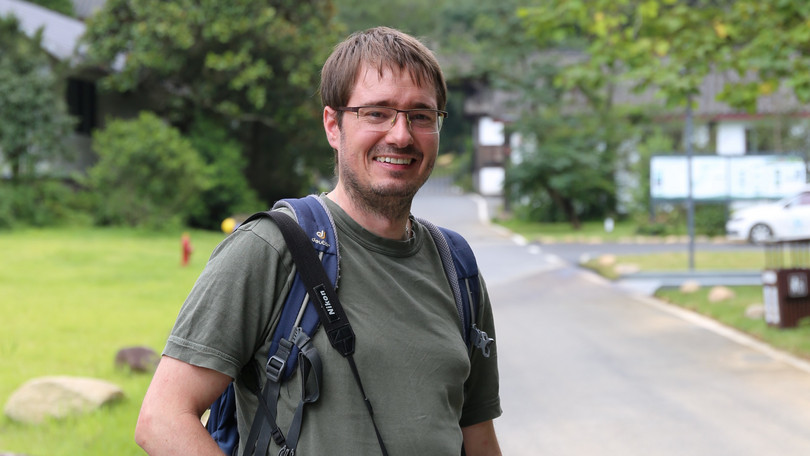
I am a zoologist and (animal) ecologist with a special interest in biodiversity research and insects. Originally, I have mostly focused on tropical ants, while in the last years I address questions related to community ecology and trophic interaction networks from a biodiversity-ecosystem functioning (BEF) perspective. Questions of global environmental change, especially microclimate, also increasingly play a large role in my work. Nevertheless, as long as animals are involved, I am fascinated by and engaged in many topics, from taxonomy and systematics, to host-parasitoid interactions, to (phylo)genetic diversity, among others.
https://www.leuphana.de/en/institutes/institute-of-ecology/team/michael-staab.html
Selected key publications
Staab M, Blüthgen N, Wehner K, Schall P, Ammer C (2026) Advancing the quantification of land-use intensity in forests: the ForMIX index combining tree species composition, tree removal, deadwood availability, and stand maturity. European Journal of Forest Research 145: 6.
Blüthgen N, Staab M (2024) A critical evaluation of network approaches for studying species interactions. Annual Review of Ecology, Evolution, and Systematics 55: 65–88.
Staab M, Pietsch S, Yan H, Blüthgen N, Chen A, Li Y, Zhang N, Ma K, Liu X (2023) Dear neighbor: trees with extrafloral nectaries facilitate defense and growth of adjacent undefended trees. Ecology 104: e4057.
Staab M, Gossner MM, Simons NK, Achury R, Ambarlı D, Bae S, Schall P, Weisser WW, Blüthgen N (2023) Insect decline in forests depends on species’ traits and may be mitigated by management. Communications Biology 6: 338.
Fornoff F, Klein AM, Blüthgen N, Staab M (2019) Tree diversity increases robustness of multi-trophic interactions. Proceedings of the Royal Society B: Biological Sciences 286: 20182399.
Staab M, Pufal G, Tscharntke T, Klein AM (2018) Trap nests for bees and wasps to analyze trophic interactions in changing environments – a systematic overview and user guide. Methods in Ecology and Evolution 9: 2226–2239.
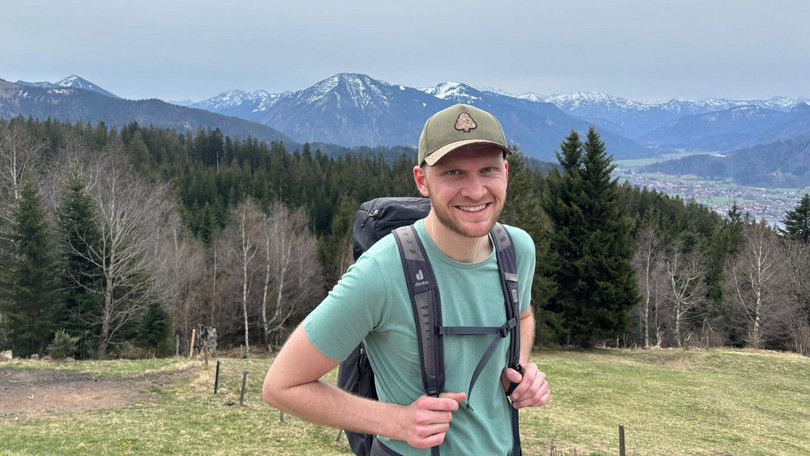
I am interested in ecological relationships in semi-natural habitats like forests and grasslands. My main focus is on the effects of land use change on communities of different organisms and the effect of these changes on ecosystem functions. Specifically, I am working on the diversity and ecology of insects (especially beetles) and the functions they provide.
https://www.leuphana.de/en/institutes/institute-of-ecology/team/julian-lunow.html
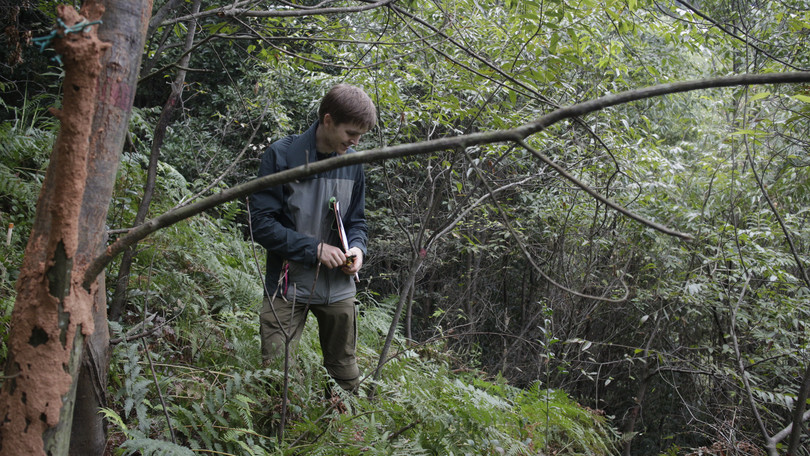
My DFG-funded PhD research at MultiTroph, supervised by Prof. Dr. Michael Staab and Prof. Dr. Heike Feldhaar, centers on diversity and ecological functions of ants within a tree diversity experiment at BEF-China. In my research, I am investigating how tree diversity, mediated by ant community, may influence ecosystem functioning. Thereby I am using integrated taxonomic and functional information to explain the impact of shifts in ant community.
https://www.leuphana.de/en/institutes/institute-of-ecology/team/joshua-spitz.html