
Scientific Network: Organizing Societal Transformation
About the Network
The DFG Scientific Network "Organizing Societal Transformation: A Process-Based Perspective" brings together scholars who study how organizations shape, and are shaped by, major societal transformations. From climate change and digitalization to increasing social inequality and technological change, today's transformations are complex, contested, and continuously evolving. Our network seeks to advance research by examining these developments through a process-based perspective, focusing on how organizations drive, respond to, and interact within ongoing societal transformation.
Over the course of three years, the network will convene five thematic workshops, each dedicated to a different dimension of societal transformation. Every meeting combines expertise on a specific transformation phenomenon with leading perspectives from process research, bringing together invited international scholars and network members to foster interdisciplinary dialogue and theoretical innovation.
Hosted at locations that reflect the themes under discussion, the workshops are co-organized by network members and designed to facilitate in-depth exchange, collaborative research development, and the formation of new scholarly partnerships. Together, these meetings provide a platform for developing a shared research agenda on organizing societal transformation and for strengthening an international community of scholars working at the intersection of organization studies, process theory, and societal change.
Beyond the workshops, the network aims to build a coordinated research programme, including collaborative publications, conference symposia, future research projects, and a vibrant academic community dedicated to advancing process-based perspectives on societal transformation.
Key Research Questions
To guide our process-based inquiry, our network addresses five interconnected questions:
- How does organizing shape and drive societal transformation?
- How do organizing processes adapt and respond to broader societal changes over time?
- How do transformation processes unfold and intertwine across different contexts?
- How is organizing used to navigate tensions between stability and change?
- How does organizing drive sustainability, social innovation, and regional transformation?
Funding
This scientific network is funded by the German Research Foundation (Deutsche Forschungsgemeinschaft – DFG) for a period of three years. We are grateful for their support in making this international research collaboration possible.
 ©© Colya Zucker for Ignas Bruder
© 2026 Laura Fey
© 2026 Alex Christian
©© Colya Zucker for Ignas Bruder
© 2026 Laura Fey
© 2026 Alex Christian
Members
Our network brings together 20 researchers from leading European universities:
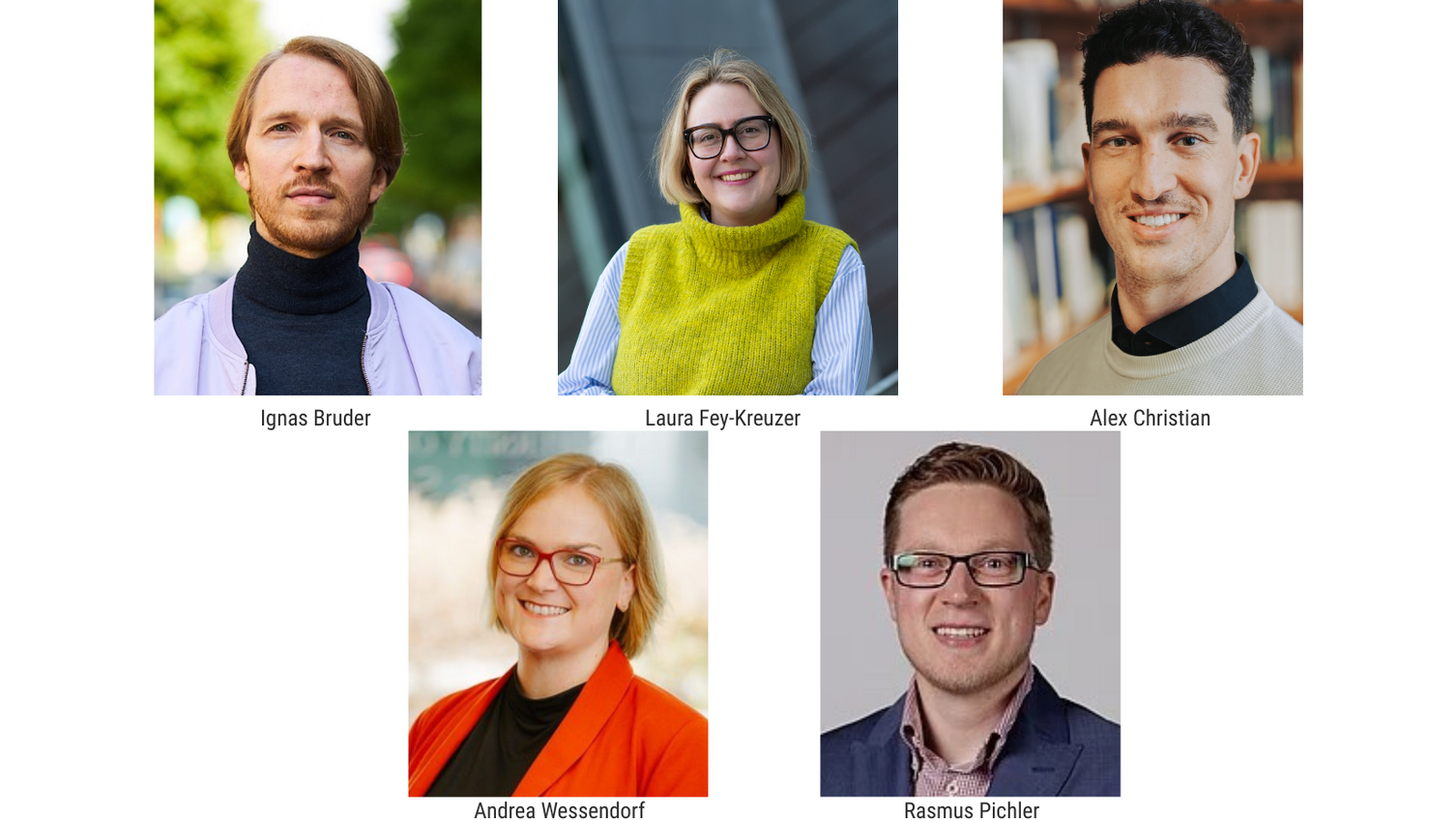
Laura Fey-Kreuzer · Ignas Bruder · Alex Christian · Rasmus Pichler · Andrea Wessendorf · Julia Bartosch · Stephan Bohn · Marian Gatzweiler · Daniel Geiger · Moritz J. Kleinaltenkamp · Florian Köhne · Jan Lodge · Nora Lohmeyer · Lillan Lommel · Johanna Mair · Monica Nadegger · Simone Schiller-Merkens · Hannah Schupfer · Anna Stöber · Hendrike Werwigk
Co-Organizer Academic Profiles:
Publications
Research Outputs and Future Agenda
A core objective of our network is to synthesize existing insights on societal transformation and enrich them with process research to establish a comprehensive international research agenda. Over our three-year funding period, the concerted efforts of our network scholars will culminate in collaborative research insights that bridge the gap between organizations acting as drivers of or respondents to change.
To scale our collective efforts and shape the future of societal transformation research, our upcoming key outputs will include:
- Book / Special Issue: A comprehensive book synthesizing insights from various transformation contexts to develop a holistic theoretical framework.
- Peer-Reviewed Articles: Joint papers focusing on the recursive, interconnected, and continuous nature of multiple, overlapping transformation dynamics.
- Working Papers & Policy Briefs: Accessible summaries translating our ongoing academic discussions into actionable insights for practice and policy.
As our research progresses, this section will serve as an open-access repository for all book chapters, journal articles, and project reports generated by the network.