
Senior Fellow 2026/27
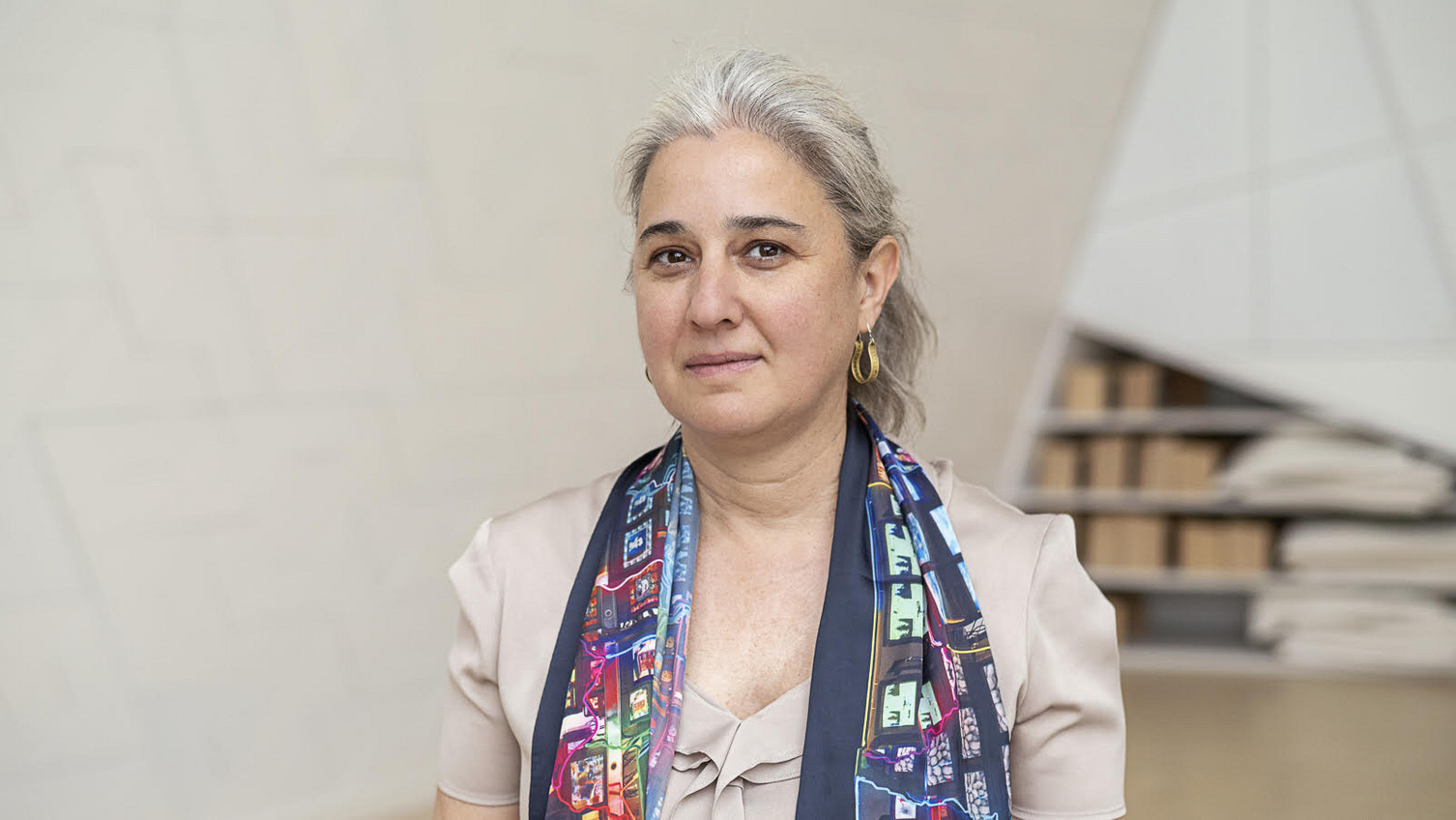
Ceren Özselçuk’swork focuses on the political economy of capital, psychoanalysis and subjectivity, diverse and community economies, and populisms. During her PhD studies in economics at UMass Amherst, she became involved in collaborative research on Marxian class analysis, diverse and community economies, and Freudo-Lacanian approaches to economic subjectivity. Over the last two decades, she has further developed this work together with Yahya Madra, focusing on the libidinal economies of capital and post-capitalist formations. Their work will appear in the forthcoming book Sexuating Class. Since returning to Türkiye in 2009, she has also worked with Bülent Küçük on the relations between the state and the Kurdish political movement, especially in relation to the contentious social claims of equal citizenship, democratic autonomy, and peace in Türkiye. More recently, together with Maliha Safri, she has been developing comparative research on coexistence in Türkiye and Kenya through the concept of the eco-commune. She is co-editor and managing editor of Rethinking Marxism and a long-standing member of the Community Economies Research Network.
Abstract
Co-existence in the Forms of the Commune: Diverse Economies of Subjectivity and Property in the Kurdish Regions and Nashulai Maasai
My research project at LIAS proposes a comparative analysis of two community economies in Kurdish-populated regions (Türkiye) and Nashulai Maasai (Kenya). Methodologically, it is based on diverse economies and community economies’ performative research lineage to establish new knowledge commons, using archival, libidinal, ethnographic materialities of analysis. Adopting the idea of the commune as an entry concept, my study distances itself from viewing it as a relic of the past or an episodic bond of insurgency.
The aim is to explore the forms of the commune organized around different regimes of property, modes of community appropriation, and practices involving human and more-than-human relations. Although the two places are embedded within nation-state-capital frameworks that exhibit significant macro and micro-scale social and economic differences – such as postcolonial versus decolonial historical memories and institutional structuring, regimes of populist authoritarianism, the interplay of tribalism and traditional livelihoods with modernity, community political and cultural organizations, gendered social reproductive roles, and state-mediated global and local interactions – the concept of the commune remains a shared reference point for both contexts. It signifies an imaginary of social transformation that informs daily eco-communitarian practices and recognition demands for autonomy. Above all, the idea of the commune provides a lens to explore how collective subjectivity is formed and how it plays a constitutive role in more than capitalist economies.
Education
2009 PhD Economics, University of Massachusetts Amherst
2000 MA Economics, University of Massachusetts Amherst
1996 BA Business Administration and Economics Boğaziçi University, Istanbul, Türkiye
Most Recent Academic Position
Associate Professor, Department of Sociology, Boğaziçi University, Istanbul, Türkiye
Most Recent Publications
with Bülent Küçük. “Beyond Rupture and Integration: Decolonial Recognition in the Kurdish Struggle.” New Perspectives on Turkey (2026): 1–21.
with Yahya M. Madra. “Le discours capitaliste: la valeur de la force de travail dans les liens sociaux.” Actuel Marx 77 (2025): 96–123.