
![[Translate to Englisch:] Kirsten Kamphuis, LIAS Fellow 2026/2027](/fileadmin/_processed_/8/6/csm__DSC9921_7eda3fbf56.jpg)
Fellow 2026/27
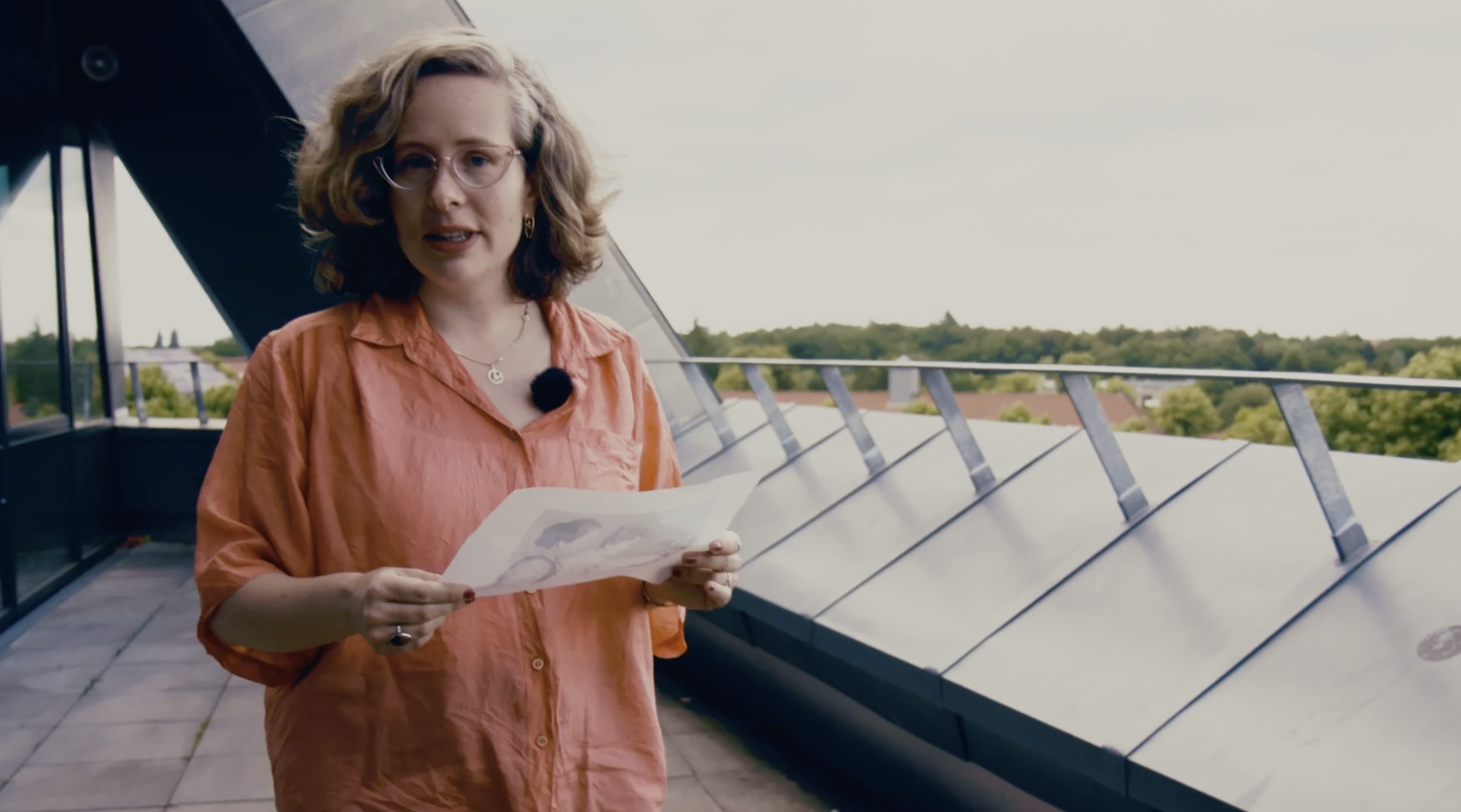
Kirsten Kamphuis focusses on the modern history of Indonesia, researching the history of social movements, gender, colonialism, and decolonization. Working between Europe and Southeast Asia, she shows how transnational networks and local actors shaped the political and social dynamics of the nineteenth and twentieth century. She is particularly interested in education, gendered print cultures, and women’s agency in social structures determined by colonial rule, religion, and social hierarchies. Her work on the education of girls and young women in the Dutch East Indies opens up new perspectives on the intersections of gender, religion, and education. In doing so, she makes an important contribution to the global and entangled history of gender and the reassessment of the role of women in social movements. Her approach is characterized by methodological diversity, combining postcolonial theories with archival work and cultivating a sensitive reading of sources “against the grain”
She is a member of the editorial board of the Yearbook of Women’s History.
Abstract
Networks of Solidarity beyond the Wall: The Demokratischer Frauenbund Deutschlands and Leftist Women’s Internationalism (1950s–1960s)
My research project explores and analyses the international network of the Demokratischer Frauenbund Deutschlands (DFD, Democratic Women’s League of Germany), the official mass women’s organization of the German Democratic Republic (GDR) during the 1950s and 1960s, the heyday of the global Cold War. While there have been several studies on the history of the DFD, they have so far not paid very much attention to the ways in which the organization engaged with women’s movements outside of the GDR. Yet, the archives of the DFD show that East German women extensively engaged with women’s groups from socialist as well as nonsocialist states. This project analyses this network of female leftist activists from all over the globe through the lens of solidarity, a concept that has recently sparked debate in the field of gender and feminist studies.
To obtain a good picture of the individual connections between the DFD and other women’s organizations abroad, I will initially focus on East German contacts with Gerwani, the Indonesian communist women’s movement. Contacts between German and Indonesian leftist activists can be traced back to the 1930s and intensified after the Second World War. Moving on from this case study, I will proceed to map the extensive international network of the DFD. The concept of solidarity will help me to clarify how and why leftist women built these networks in times of worldwide political turmoil, thus providing lessons for social justice movements in our current age.
Education
2019 PhD in History and Civilization, European University Institute, Fiesole, Italy
2015 MA in Global and Colonial History, Leiden University, Netherlands
2013 BA in History, University of Groningen, Netherlands
Most Recent Academic Position
Postdoctoral researcher, Cluster of Excellence “Religion and Politics”, University of Münster
Most Recent Publications
“Building Alternative Archives: A Reappraisal of Dwelling in the Archive by Antoinette Burton”. Women’s History Review 33, no. 1 (2024): 151–59.
With Ron Brand. “Sisters at Sea: Travel Experiences of Missionary Sisters to the Dutch East Indies and Indonesia in the Nineteenth and Twentieth Centuries”. International Journal of Maritime History 36, no. 2 (2024): 257–70.
With Sandra Swart, et al., eds. “Gender and Animals in History”. In Yearbook of Women’s History 42. Amsterdam: Amsterdam University Press, 2024.