
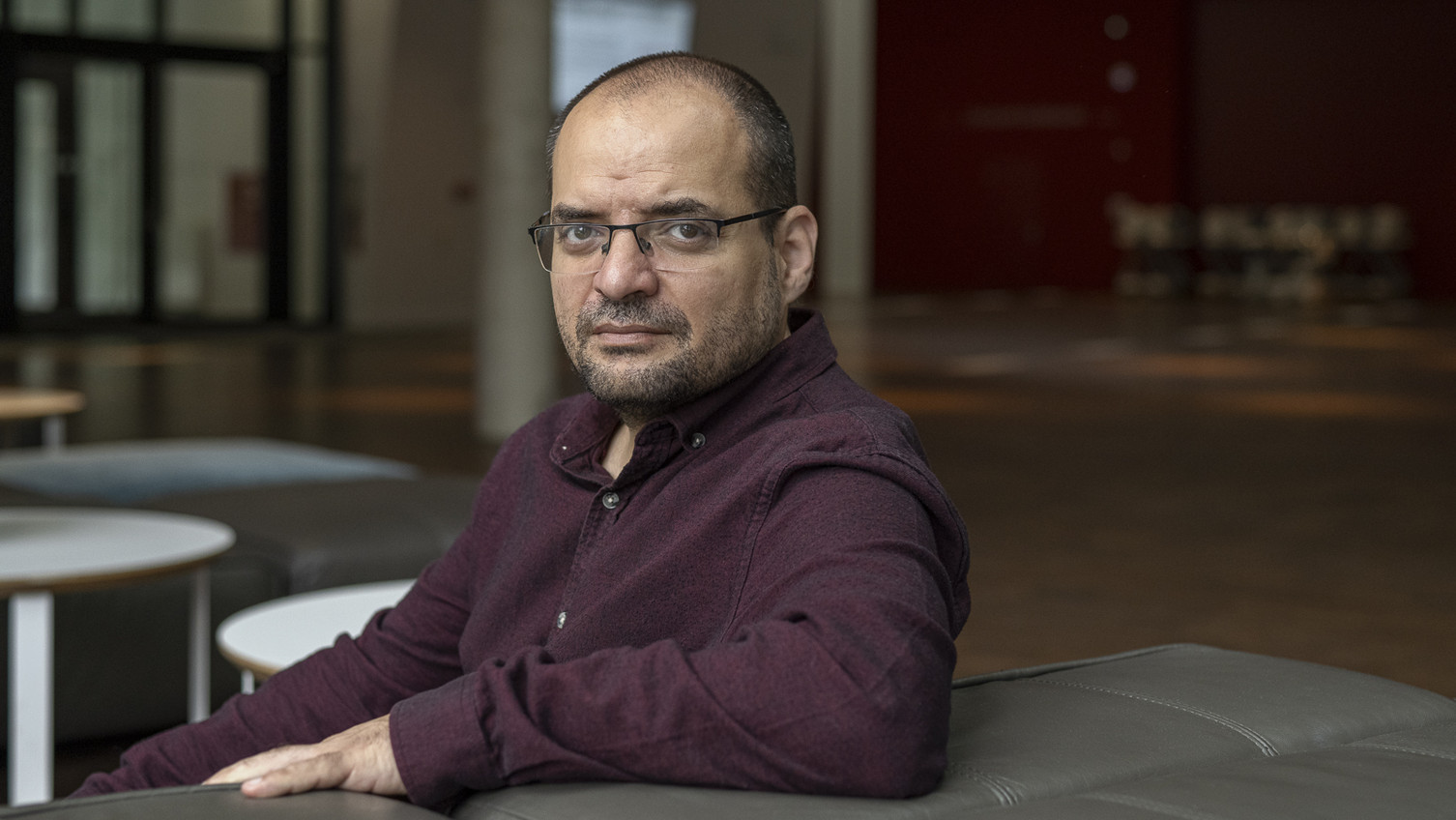
Fellow 2026/27
Mehmet Celil Çelebi is a political scientist whose research examines the crisis of democracy primarily from a theoretical and analytical perspective. He focusses on the question of how populist and authoritarian movements can be explained if they are understood as an expression of deeper psychological and sociological dynamics. In doing so, he develops an alternative interpretative model that comprehends populist politics as a form of collective narcissistic identification.
Çelebi analyses the way in which democratic orders are undergoing a creeping transformation, and how narratives, discourses, and symbolic practices are part of this process. He situates his research on Turkey in a comparative perspective that interprets authoritarian developments in the West and the Global South as expressions of a uniform “crisis of democracy”. He thus contributes to the further development of critical democracy theory and opens up new ways of understanding authoritarian dynamics conceptually.

Abstract
Beyond Ontological Security: Reassessing Populism’s Psychological Appeal Through Narcissism and Critical Theory
My project critically examines the psychological appeal of populism by questioning the concept of “ontological security”, which has come to dominate explanations for populism’s rise by framing it as a response to individual and collective insecurities in a rapidly changing world. Drawing on the Frankfurt School’s critique of existentialism and its psychoanalytic interpretation of fascism, this study proposes that populism resonates with its followers not simply because it addresses insecurities, but also because it appeals to narcissistic desires for superiority, identity, and power. By emphasizing collective narcissism, this research challenges the view that populism is primarily a reaction to social instability. Instead, it proposes that populism fulfils followers’ deeper psychological needs for power and identity.
The core research question is: Does populism stem primarily from existential insecurities, or do its psychological underpinnings align more closely with narcissistic desires for recognition and superiority? In examining this question, I argue that contemporary populism, like historical fascist movements, offers psychological gratification to followers by creating a sense of importance, moral superiority, and collective power through identification with the leader. By reevaluating the Frankfurt School’s critiques of existentialist psychology and its focus on narcissistic identification, the study situates populism as part of a continuum of movements that exploit psychological mechanisms associated with self-worth and power. My analysis focusses on how populist rhetoric, far from merely providing ontological security, activates latent narcissistic desires in followers, framing leader figures and movements as omnipotent entities with which followers identify.
Education
2016 PhD Political Science, University of Oregon, Eugene, Oregon, United States
2006 MA Media and Cultural Studies, Middle Eastern Technical University, Ankara, Turkey
2003 BA Political Science and Political Administration, Middle Eastern Technical University, Ankara, Turkey
Most Recent Academic Position
Assistant Professor of Political Science, Abdullah Gül University, Kayseri, Turkey
Most Recent Publications
“The Trajectory of ‘Tanpınar Studies’ from Post-Kemalism to Global Tanpınar.” Turkish Studies 27, no. 2 (2026): 314–344.
with G. Tarhan Çelebi. “Bölünmüş toplumlarda anayasa yargısı: İsrail Yüksek Mahkemesi kararları ışığında İsrail’de vatandaşlığın sınırları” (Constitutional Jurisprudence in Divided Societies: The Boundaries of Citizenship in Israel in Light of the Israeli Supreme Court Decisions). Legal Hukuk Dergisi 256 (2024): 1631–48.
Western Democracy and the AKP: A Dialogical Analysis of Turkey’s Democratic Crisis. London: Routledge, 2023.