
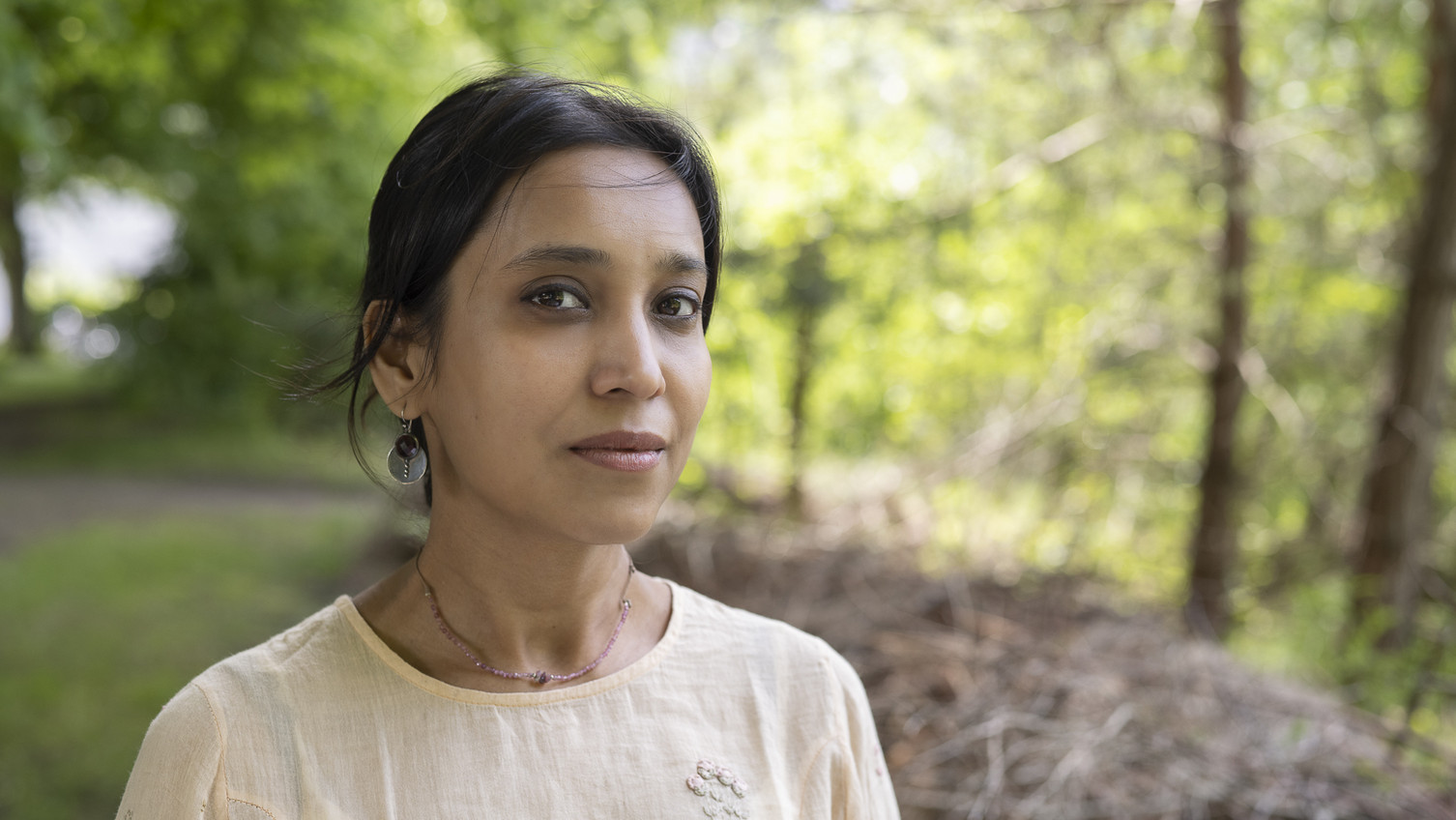
Fellow 2026/27
Prerna Agarwal’s research focusses on the social question at the point of intersection between social and global history. She is in interested in the role of work, labour movements, and the conditions of everyday life as a driving force for political transformation. This takes place above all in the context of modern Asian history and its interrelation with global political dynamics, and incorporates a reconstruction of local struggles with analyses of global economic cycles. On the one hand, she examines the concrete living conditions and conflicts of workers “from below”; on the other, she situates these processes in the broader context of the “Third World” or the Cold War. She thus works simultaneously on rediscovering the forgotten histories of subordinate actors and on critically reassessing political orders in postcolonial societies. In doing so, she makes an important contribution to redefining the role of work in understanding democracy, authoritarianism, and social crises.
Abstract
India’s Long Emergency: Postcolonial States, Labour, and Crises
The railway strike of 1974, involving over two million workers, brought India’s economy to a standstill and became a powerful symbol of national crisis. Soon after, Indira Gandhi declared the Emergency (1975–77), with suspended elections and constitutional rights, marking India’s first dictatorship. Nevertheless, the strike and the Emergency are rarely considered within a shared historical frame. My project develops a “long history” of the Emergency by centring labour, showing how state-making in postcolonial India was deeply entangled with the labour question. It situates the Emergency not as a sudden rupture, but rather as symptomatic of broader crises within the developmentalist state. By tracing these dynamics, my study clarifies the role of workers in postcolonial politics and explores the intersections of labour, progressivism, and authoritarianism.
Positioned in a comparative perspective, the project examines the 1970s as a decade of upheavals across the Global South, from Chile to Bangladesh, marked by coups, dictatorships, and transformations from progressive nationalism to authoritarian rule. The Indian case, which is distinct due to its brief duration and the marginal role of the military, highlights how a strong political leadership and bureaucratic apparatus was able to redirect postcolonial trajectories. This interlude also marked a deeper transformation: from Nehruvian progressivism to Hindu nationalism.
Education
2018 PhD in History and Contemporary India, King’s College London, United Kingdom
2012 MA in Political Economy of Development, School of Oriental and African Studies, United Kingdom
2010 MA in Philosophy, University College London
Most Recent Academic Position
Marie Curie Postdoctoral Fellow, Centre for Modern Indian Studies, University of Göttingen
Most Recent Publications
Prerna Agarwal. “‘Trains Were Running on Time’: Railway Strike of 1974 as a Prelude to the Indian Emergency (1975–77)”. In India’s Forces of Labour and the Limits of Democratisation: An Exploratory Compendium. Edited by Ravi Ahuja, forthcoming.
Prerna Agarwal. “Vers une histoire de Calcutta comme ville portuaire”. Le Mouvement Social 287, no. 2 (2024): 95–110.
Prerna Agarwal. “The War at the Workplace: Calcutta’s Dockers and Changing Labour Regime, 1939–1945”. International Review of Social History 67, no. 3 (2022): 179–207.