
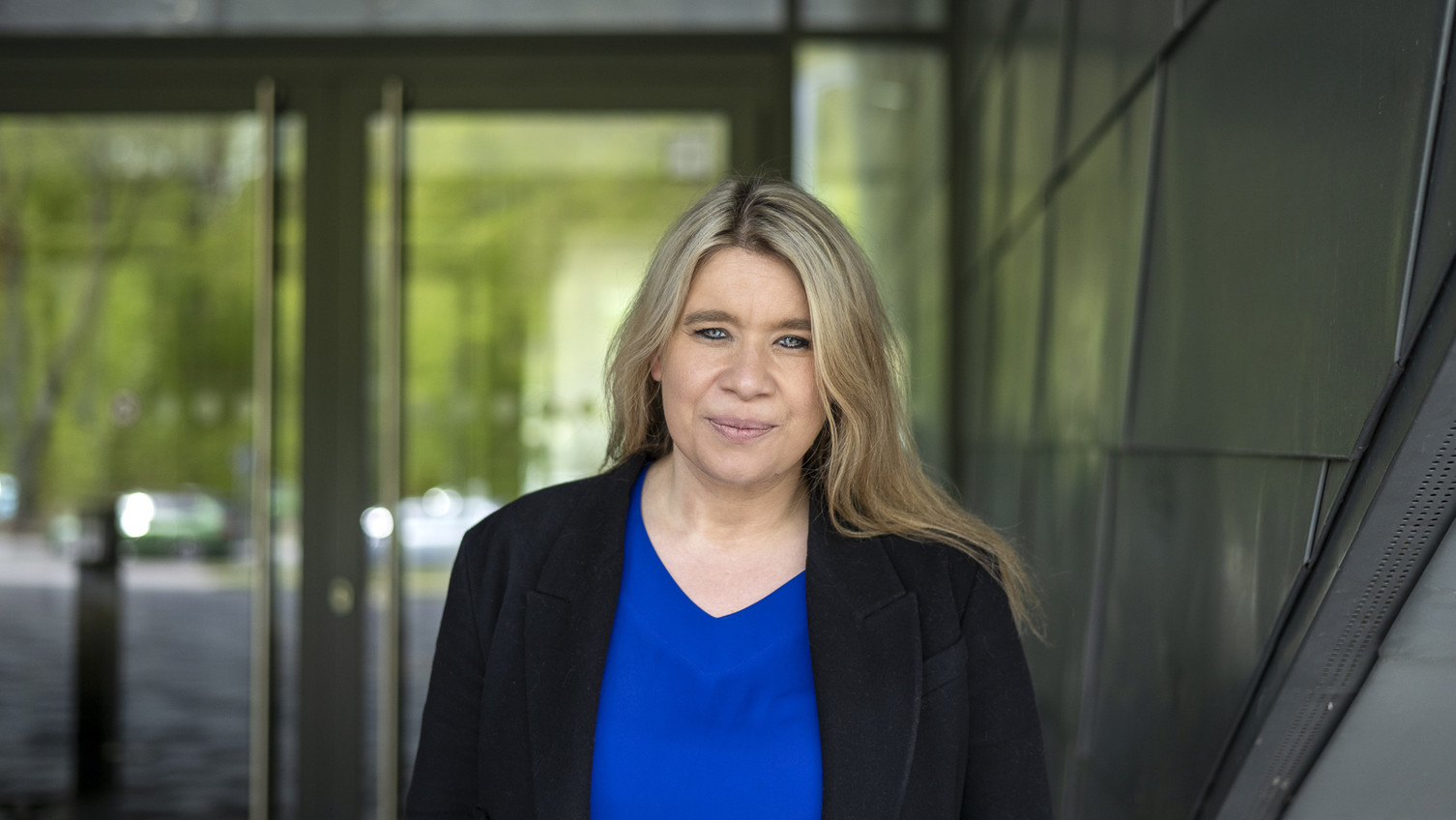
Faculty Fellow 2026/27
Vera-Simone Schulz is Junior Professor of Transcultural Art History at Leuphana University Lüneburg. She works at the crossroads of African, Islamic, and European art histories, critical museology, and the environmental humanities. Current research projects include a project funded by the Volkswagen Foundation on epistemologies of conviviality, temporalities, and aesthetics of the built environment across the Horn of Africa and beyond, and “Material Migrations”, a project about the mobility of material culture in Afro-Eurasian contexts, funded by the Gerda Henkel Foundation. She is cofounder and co-convener of a working group on plants in Africa and planetary entanglements, as well as of “Planetary Patchwork”. In these and other projects she is also sounding out possible alliances between academic and artistic research in collaboration with contemporary artists. She is academic coordinator of the Black Archive Alliance as a team member of The Recovery Plan, and works on questions of canon critique, on intersections between the precolonial, colonial, and postcolonial, on transcultural dynamics beyond notions of periphery and centre, and on epistemologies across hemispheres.

Abstract
East Africa’s Elsewheres – Archipelagic Thinking and Transcultural Art Histories
Coastal East Africa has long been understood as a space of encounters between people as well as between visual and material culture from the African continent and other regions of the world. Drawing on transcultural art history, critical heritage studies and critical museology, archaeology, literary studies, and the environmental humanities, this project examines the built environment and visual cultures beyond binary constructs such as centre/periphery and global/local. While scholarship has often focussed on networks in the Indian Ocean, this project expands this perspective to include dynamics of transfer across the Red Sea and the Indo-Mediterranean region as well as across the African continent. It highlights processes of aesthetic negotiation, epistemic resistance, spatial imagination, and intersections between the precolonial, colonial, and postcolonial. The project follows Édouard Glissant’s method of archipelagic thinking, understood here as a decolonial methodological framework for transcultural art histories. By emphasizing mobility, relationality, and spaces of the in-between, it reconsiders the East African coast as a key site for rethinking global art history through a multi-perspectival engagement with the world. At the same time, the project also discusses how transcultural connections have been imagined, appropriated, and contested. It interrogates how art history can make contributions regarding the built environment and the arts in coastal East Africa, and how analyses of East African art and architecture can contribute to current debates in transcultural, global, and planetary art histories today.
Ausbildung
2019 PhD in Art history, Humboldt University Berlin
2011 Magister Artium in Art History, Philosophy, and Russian literature, Humboldt University Berlin
Recent Academic Position
Junior Professorship of Transcultural Art History, Leuphana University Lüneburg
Most Recent Publications
“Against the Mirror of the Familiar: Coastal East African Aesthetics and Epistemic Restitution.” In Crossroads Africa. Edited by Sarah Guérin, Cécile Fromont, and Carlo Taviani. Cambridge, MA: Harvard University Press, forthcoming in 2026. “The Restitution of Dignity: Photography, Resistance, and Her-Stories in Maaza Mengiste’s The Shadow King”. Philosophy of Photography 17, no. 1 (2026): 1–26.
“Ecologies of Recovery: Mónica de Miranda’s As If the World Had No West”. Art Review Oxford 12 (2025): 31–37.
“‘Potentially the Pompeii of East Africa’: Histories of Archaeology, Colonialism, and Tourism in Swahili Stone Towns in the Nineteenth and Twentieth Centuries”. History of Humanities 6, no. 2 (2021): 427–448.