
LIAS Lecture: The Aesthetic Practice of Technology Between Criticism and Utopia
LIAS Lecture by Gertrud Koch
2026-01-12
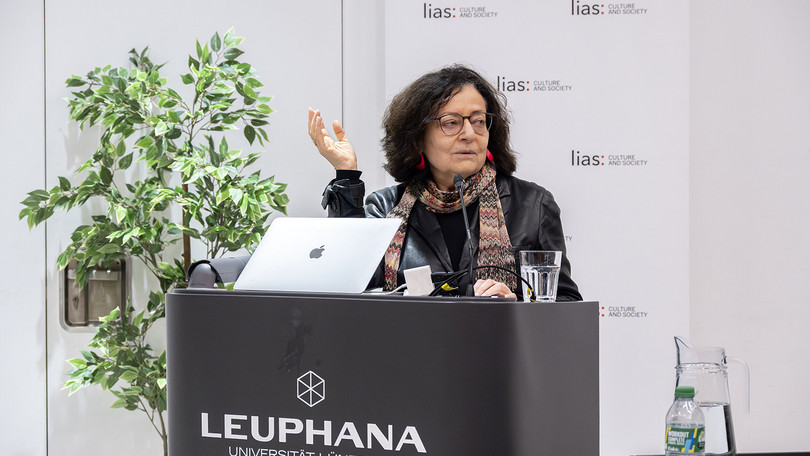
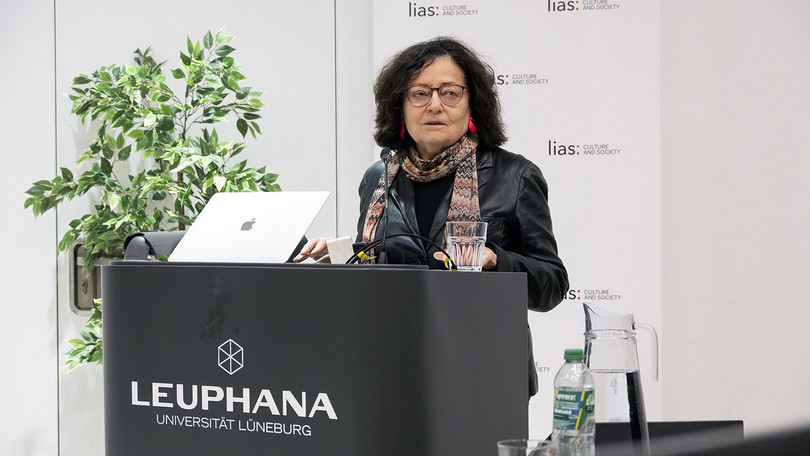
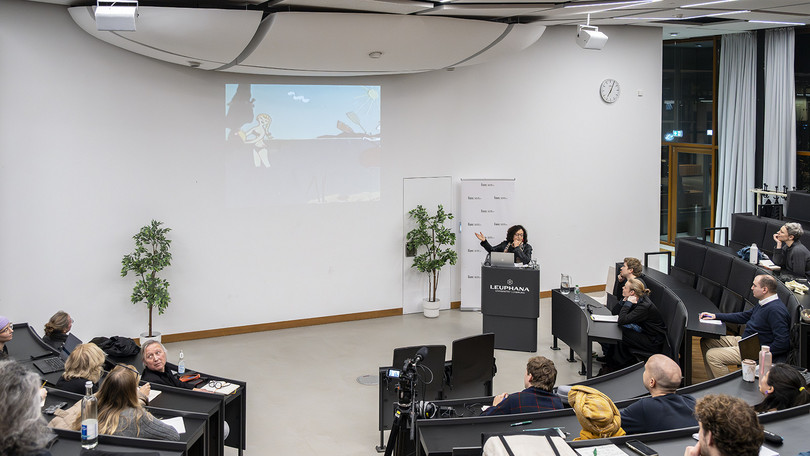
Gertrud Koch’s LIAS Lecture on 9 December 2025, titled “The Aesthetic Practice of Technology: Marcuse, Simondon and the Art of Technology”, focussed on the relationship between technology, aesthetics, and subjectivity in the context of critical theory and media aesthetics. Following an introduction by LIAS co-director Erich Hörl, Koch reconstructed the theoretical field in which the approaches of Herbert Marcuse (1898–1979) and Gilbert Simondon (1924–1989) converge, and related them to film, art and sociopolitical questions with respect to technological development.
Above all, she raised the question of the autonomization of technical processes and their effects on work, subject constitution, and aesthetic experience. While Marcuse criticizes technology as an instrument of domination within Marxist paradigms, Koch reads Simondon in a more utopian way: his thinking emphasizes relational processes, the continuous reformation of the subject from the pre- to the transindividual, and the productive role of technical objects. The materiality of aesthetics plays a key role in this.
Using film examples – including Buster Keaton films and Once Upon a Time in the West (1968) and the television show Breaking Bad (2008–13) – Koch sought to show how film technologies expand perception and at the same time reflect their own mediality. The depiction of a bowtie in both Sergio Leone’s film and Vince Gilligan television show functions as a marker of technological possibilities and as a metalevel of authorship. Film thus appears as an aesthetic practice that makes human-machine relationships visible.
The discussion explored the question of when technical objects can be experienced aesthetically and whether art solves problems or instead opens up new ways of experiencing them. Against the backdrop of stable, profit-oriented capitalism, Koch advocated a critical, non-resigned attitude, because aesthetics can help to reflect on technology, humanize it, and interrogate existing structures.