The World-Making Promise of Literary Imagination
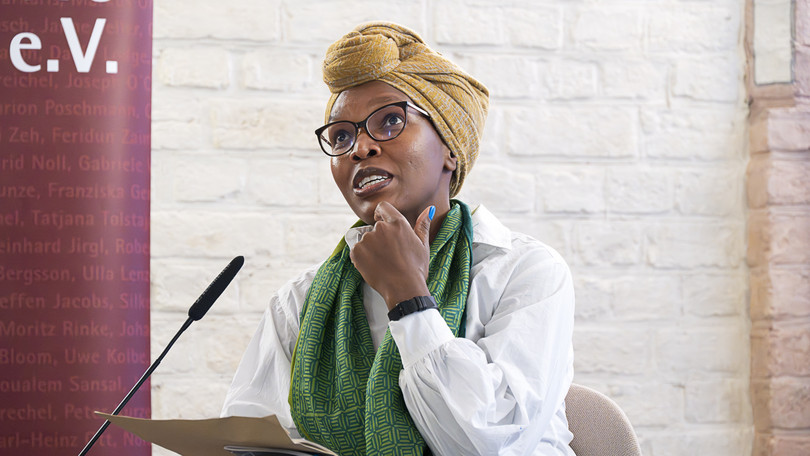
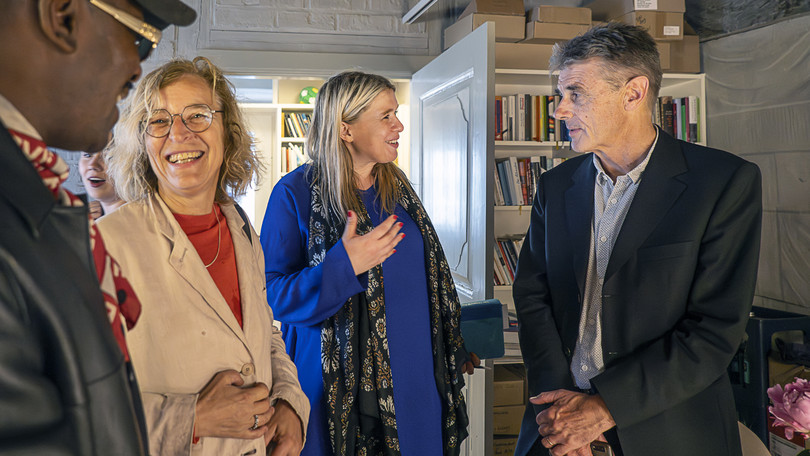
2026-06-10 The event in Heinrich-Heine- Haus opened a two-and-a-half-day workshop hosted by the Leuphana Institute for Advanced Study (LIAS) and partners in Lüneburg. LIAS Faculty Fellow Vera-Simone Schulz introduced the two guests of honour: Zimbabwean writer and filmmaker Tsitsi Dangarembga and Kenyan author Yvonne Adhiambo Owuor. The talk between Vera-Simone Schulz and Yvonne Adhiambo Owuor focused primarily on Owuor’s novel "The Dragonfly Sea".
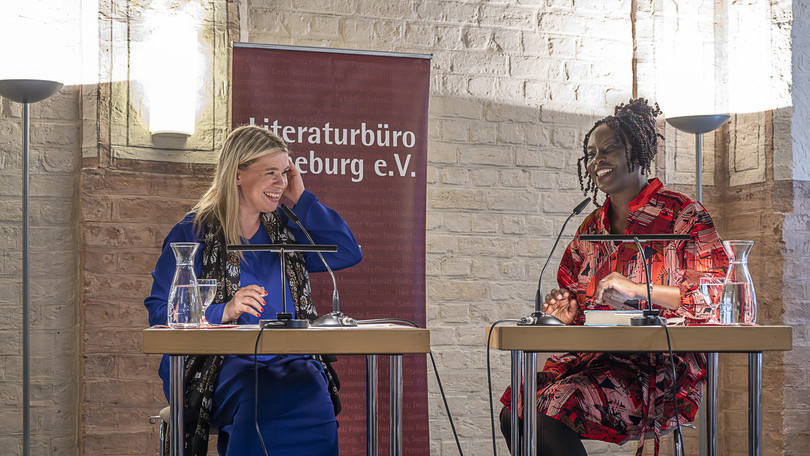
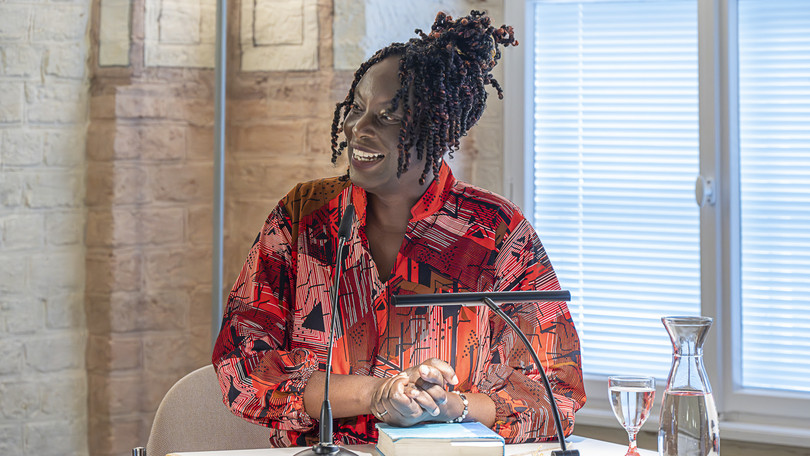
In conversation with Schulz, Owuor discussed the novel’s central character, Ayaana, whose journey across the Indian Ocean (which Owuor prefers to call the “Swahili Seas”) challenges male-dominated maritime narratives. She emphasized the often-overlooked role of women as ship owners, traders, travellers, and cultural agents in East African coastal history. The novel seeks to recover these neglected histories and to restore African agency within maritime worlds.
A major theme was the importance of material and visual culture. Owuor explained that objects such as chests, textiles, porcelain, architecture, and photographs function not merely as background details but as evidence of historical connections and submerged histories. She argued against narratives that reduce African relationships with the ocean to slavery or coastal subsistence, highlighting instead traditions of trade, exploration, migration, and navigation. Schulz and Owuor also explored long-standing links between East Africa and China, including memories of the voyages of Zheng He (1371–1435) and the descendants of sailors who settled on Pate Island. Owuor reflected on how local oral histories and family genealogies are often dismissed by outside scholars despite living evidence and community memory.
Environmental and more-than-human perspectives formed another important topic. Owuor described her writing as shaped by African ecological sensibilities and by a worldview in which humans exist in relationship with other forms of life. She rejected purely extractive understandings of nature and spoke of literature as a means of reclaiming ancestral ways of understanding interconnected existence. Owuor described her research as deeply immersive, involving travel, oral histories, and collaboration with scholars and cultural practitioners. She concluded by explaining that The Dragonfly Sea was written in Kenyan English and that its multilingual Swahili dimensions make translation particularly complex.
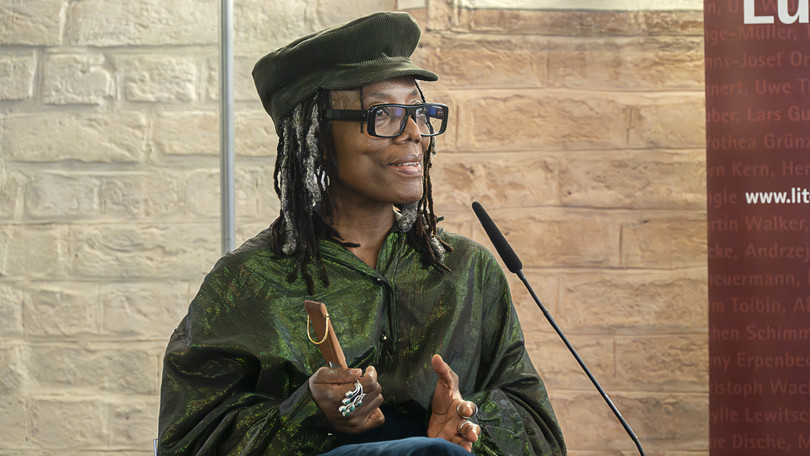
In the second part of the evening, LIAS Alumna Grace A Musila spoke with Zimbabwean writer and filmmaker Tsitsi Dangarembga about artistic practice, political responsibility, and the role of imagination in times of crisis. Dangarembga reflected on her work across multiple media, including drama, fiction, memoir, and film. Rather than emerging from artistic experimentation alone, these shifts were often responses to structural barriers facing African women writers and filmmakers. She described moving between genres out of necessity, seeking spaces where her work could be realized and published. Her transition from drama to prose eventually led to the publication of Nervous Conditions, while later work in film exposed her to persistent racial and institutional inequalities within the international film industry.
Musila and Dangarembga explored the relationship between literature and autobiography. Dangarembga explained that her memoir Black and Female emerged from practical publishing circumstances but became an important space for self-reflection during a period of political conflict with the Zimbabwean government. These experiences prompted fundamental questions about citizenship, national identity, and belonging. Grace A Musila situated Dangarembga’s celebrated trilogy – Nervous Conditions, The Book of Not, and This Mournable Body – within Zimbabwe’s political history and Dangarembga responded by describing the difficulties of nation-building in a postcolonial and post-genocide society, arguing that political identities often eclipse broader notions of national community.
Dangarembga argued that rising authoritarianism, nationalism, and exclusionary politics worldwide demand new forms of collective imagination, to “begin the world again”. While acknowledging widespread pessimism, she emphasized the importance of building alliances across borders and developing alternative visions of society. Literature, art, and public dialogue, she suggested, create spaces in which such futures can be imagined.
The discussion also addressed translation, particularly the challenges of translating works shaped by Shona linguistic structures and cultural references. Dangarembga praised translators who engage deeply with these complexities. Being asked about artistic collaboration, cultural funding, and the decline of creative infrastructures in Zimbabwe, Dangarembga highlighted the fragility of artistic ecosystems, the dependence on external funding structures, and the need for stronger African-led support systems.
![[Translate to Englisch:] Heinrich-Heine Haus Lesung, Ein Abend mit Tsitsi Dangarembga und Yvonne Adhiambo Owuor“](/fileadmin/_processed_/3/f/csm__DSC6720_3d4ae97f3d.jpg)