
Planetary Perspectives: Rethinking Archives, Ecology and Decolonial Futures
LIAS Symposium "From the Global Toward the Planetary"
2026-07-15 From 1 to 3 July 2026, scholars, artists, curators and writers invited by Faculty Fellow Vera-Simone Schulz gathered for the LIAS symposium “From the Global toward the Planetary” to explore how contemporary research and artistic practice can respond to the intertwined legacies of colonialism, environmental crisis and social inequality. Rather than treating the planetary as another synonym for globalization, the speakers proposed it as a framework that foregrounds relationships: between humans and more-than-human worlds, between memory and materiality, and between historical responsibility and future imagination.
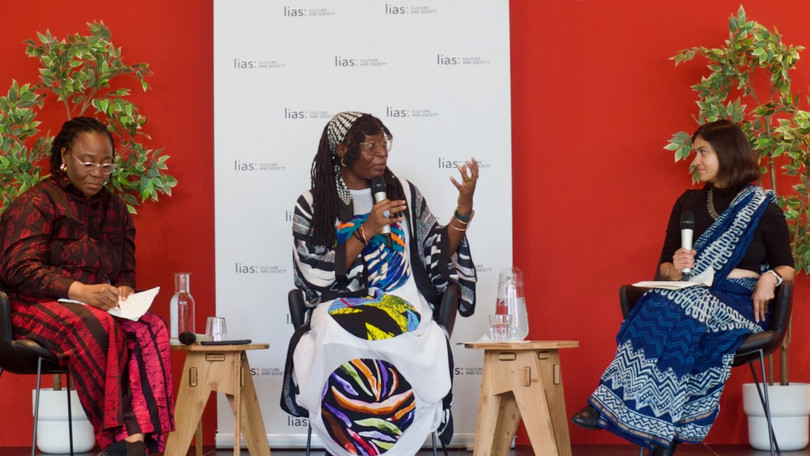
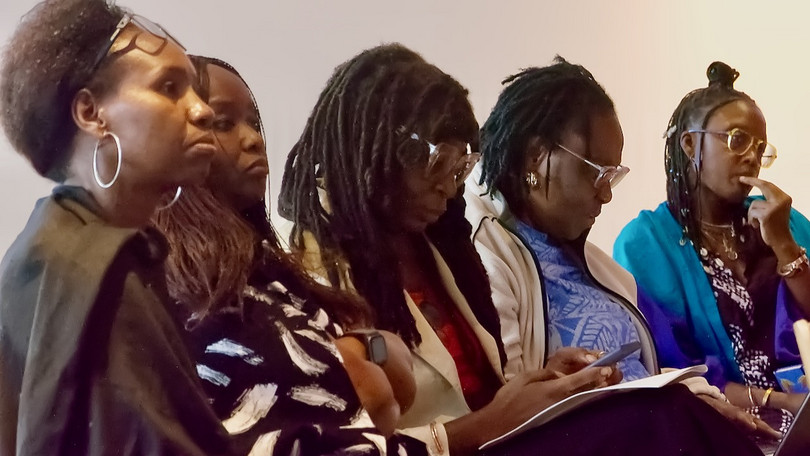
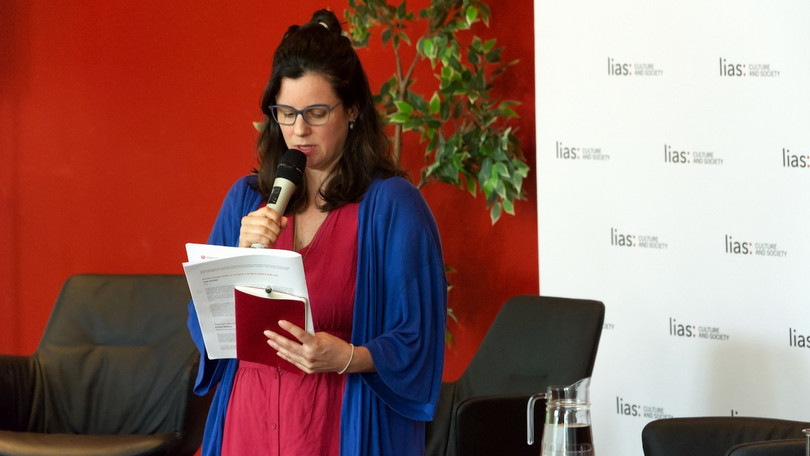
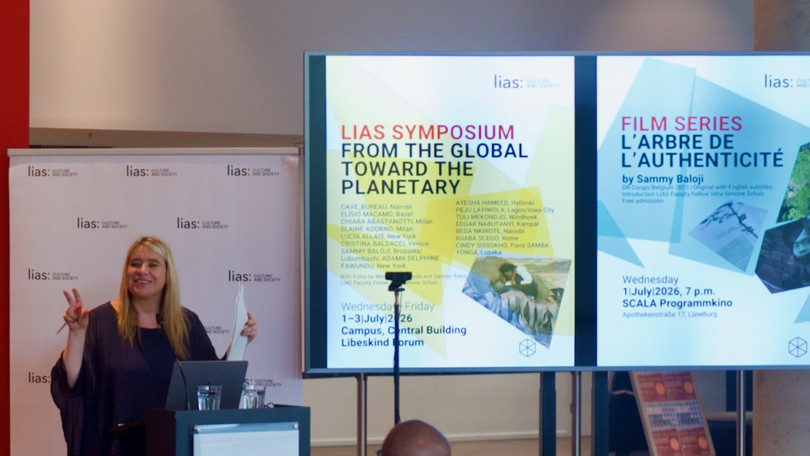
Across lectures, panels and conversations, recurring themes emerged. Archives were no longer understood as static repositories of documents but as living systems that include landscapes, rivers, forests, bodies and oral traditions. Artistic practice was discussed as a method of historical inquiry, while indigenous knowledge challenged dominant Western epistemologies. Questions of restitution, environmental justice and collective memory connected contributions from Africa, Europe and the Americas, revealing how colonial histories continue to shape present ecological and political realities. Planetary thinking thus calls for new ethical relationships, new forms of listening and a willingness to recognize multiple ways of producing knowledge.
cave_bureau: Nairobi Eulogy to Architecture: Return to Earth Spirit Practices
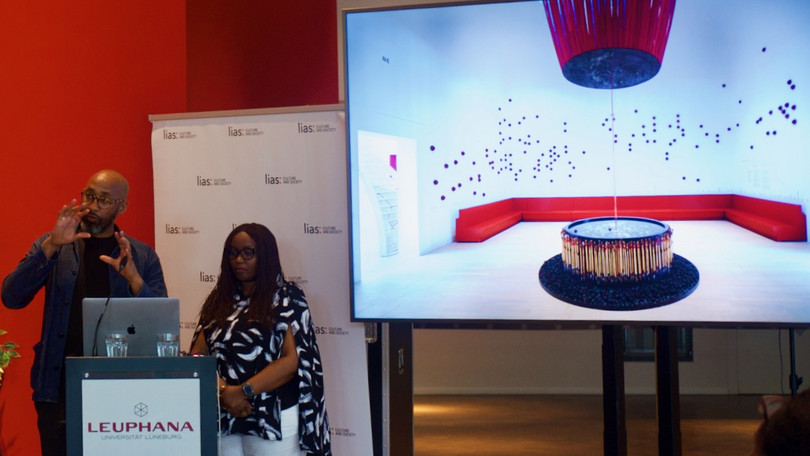
In their keynote, “The Eulogy to Architecture – Return to Earth Spirit Practices,” Stella Mutegi and Kabage Karanja from cave_bureau (Nairobi), argued that architecture, shaped by colonialism and extractive practices, has lost its ethical and ecological purpose. Cave Bureau advocated a return to Indigenous knowledge systems and earth-centred ways of building. Through projects ranging from the Venice Architecture Biennale to the exploration of Kenyan caves and collaborations with Maasai communities, the speakers demonstrate how architecture can become a reparative, ecological, and community-driven practice. Their work emphasizes cooperation, decolonization, environmental stewardship, and solidarity with both human and non-human life as the foundation for a more just and sustainable future.
Cindy Sissokho: Ecological Justice Beyond Colonial Borders
Afterwards, curator and researcher Cindy Sissokho (Paris) introduced Mónica de Miranda's film As if the World Had No West (2024), situating it within debates on ecological and decolonial justice. The film reveals how colonial histories, environmental destruction and unequal access to resources remain closely intertwined. Built around the concept of “affective ecologies”, it explores relationships among humans, landscapes, plants and spiritual worlds, presenting nature as both witness and archive. Structured around the four classical elements, it reimagines earth as lived territory, water as memory, air as an archive and fire as transformation. Set in Namibia, the film replaces political borders with ecological relationships, proposing care as an ethical responsibility shared by human and more-than-human worlds.
Cristina Baldacci: Natural Archives and Planetary Time
Cristina Baldacci (University of Ca' Foscari of Venice) argued that planetary thinking requires archives to be understood across geological rather than merely human timescales. Ice cores, soils and sediments preserve environmental histories without human intervention, expanding the concept of the archive beyond institutions. Linking environmental science with artistic practice, she discussed works by Thomas Demand (*1964, Germany), Mark Dion (*1961, USA), Susan Schuppli (*1967, UK) and Wayne Binitie (UK). Their projects demonstrate that landscapes themselves function as archives, requiring new approaches that connect cultural history with planetary processes.
Chiara Abastanotti and Igiaba Scego: Reclaiming Forgotten Lives through Graphic Narrative
Writer Igiaba Scego (Rome) and illustrator Chiara Abastanotti (Milan) presented their graphic novel Children of the Forest (BeccoGiallo), reconstructing the lives of two Central African children trafficked to Italy after the death of explorer Giovanni Miani (1810–1872). While archival research provided the historical foundation, colonial sources largely excluded the children's own voices. The authors therefore combined documented history with visual and narrative reconstruction. Abastanotti used colour to express memory and loss, while Scego emphasized that recovering forgotten biographies also illuminates Italy's colonial legacy and contemporary debates on migration, race and belonging.
Sammy Baloji: Giving Voice to the Forest
Congolese artist Sammy Baloji (Brussels, Lubumbashi) introduced his film L'Arbre de l'Authenticité (2025), developed through exchanges surrounding the Belgian and Congolese pavilions at the Venice Biennale. The project links colonial extraction, environmental destruction and the climate crisis, arguing that ecological degradation cannot be separated from centuries of imperial exploitation. Rather than treating archives as institutional repositories, Baloji foregrounds oral traditions, community knowledge and living memory. Trees become witnesses to history, while songs preserve knowledge across generations. The film ultimately proposes an alternative ecological archive in which landscapes themselves become historical actors.
Peju Layiwola: Beyond the Return of Objects
Artist and scholar Peju Layiwola examined the restitution of the Benin Bronzes as a question of cultural renewal rather than ownership alone. Recalling the British invasion of the Kingdom of Benin in 1897, she stressed that looting severed communities from both artworks and systems of knowledge. Drawing on projects including Whose Centenary?, Layiwola showed how contemporary artists reconnect cultural heritage with living traditions. She also challenged Western museums' arguments for retaining African collections, insisting that restitution must restore relationships between objects and the communities that created them.
Samba Yonga: From Colonial Collections to Living Knowledge
Samba Yonga described many African collections in Swedish museums as “petrified archives”: objects preserved materially but detached from the knowledge systems that once gave them meaning. Museums, she argued, often protect artefacts while erasing their social and cultural contexts. Restitution alone cannot repair this loss. Instead, Yonga proposed “epistemic repair”, combining provenance research, community participation and collaborative interpretation. Museums should shift from displaying isolated objects to supporting the living knowledge systems to which they belong.
Tuli Mekondjo: Performing Memory and Healing Colonial Landscapes
Artist Tuli Mekondjo (Windhoek), born in a refugee camp in Angola during the Namibian struggle for independence (1978–1988), reflected on memory, displacement and colonial legacies. She argued that Namibia has yet to fully confront its colonial and apartheid past, particularly the continuing ownership of ancestral land established during German colonial rule (German South-West Africa, 1884–1915). Using food, textiles and domestic objects, Mekondjo creates performances that reconnect bodies, landscapes and ancestral memory. Although she welcomed the restitution of Namibian cultural artefacts, she stressed that historical justice requires more than the return of objects; it also demands new relationships between memory, place and community.
Elaine Adorno: Ritual Cartographies of Belonging
Brazilian artist Elaine Adorno (Milan) approached the planetary through the body rather than abstract theory. Beginning with a guided exercise, she argued that colonialism disrupted relationships between body, land and ancestry, making their restoration an act of resistance. Introducing the Yoruba concept of Ori (literally ‘head’), she described it as a spiritual principle connecting individuals with ancestral knowledge. Preserved in Brazil despite the transatlantic slave trade, Oriremains a source of identity and collective memory. Through participatory performances, Adorno maps relationships between body, territory and memory, concluding that the planetary is rooted in care, responsibility and interconnectedness rather than ownership.
Élisio Macamo: Planetary Responsibility and the Ethics of Understanding
In the keynote lecture, sociologist Élisio Macamo (University of Basel) argued that the planetary is not primarily a geographical concept but an ethical one. Knowledge, he suggested, always emerges from particular historical contexts, yet genuine understanding requires dialogue rather than the mere coexistence of multiple perspectives. Rejecting Eurocentrism as a geographical category, Macamo described it instead as a contradiction between Europe's universal claims and its colonial practices. He proposed an “ethics of intelligibility” based on openness to other forms of knowledge. Africa's intellectual traditions, he concluded, illuminate dimensions of the human condition often overlooked by dominant narratives.
Freda Nkirote: Indigenous Stewardship as Planetary Knowledge
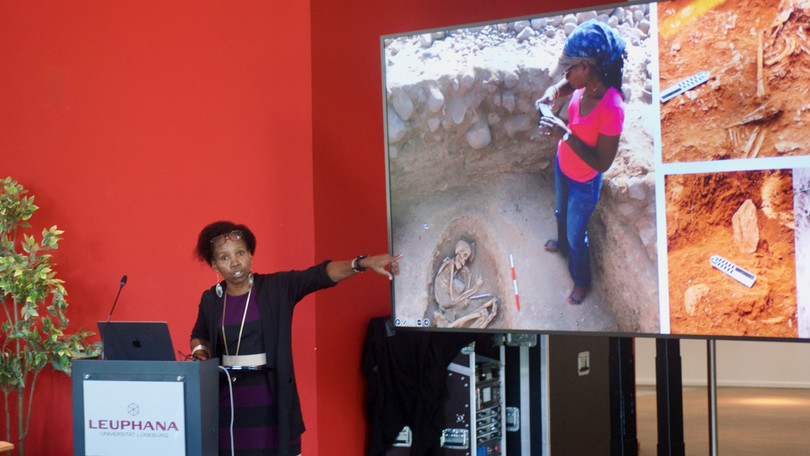
Archaeologist Freda Nkirote (The National Museum of Kenya, Nairobi) demonstrated how indigenous environmental knowledge among the Gabra and Borana communities of northern Kenya offers practical models for sustainability. Archaeological evidence, sacred “singing wells” and material culture document centuries of ecological adaptation in which ritual, social organization and environmental stewardship are closely linked. She criticized development projects that replace local knowledge with external technologies, arguing that they frequently weaken sustainable systems. Indigenous expertise, Nkirote concluded, is essential for addressing contemporary ecological challenges.
Adama Delphine Fawundu: Art, Ancestry and Collective Healing
Artist Adama Delphine Fawundu (Columbia University, New York) presented artistic practice as a process of collective healing. Her textile project Kpoto Patchwork gathers fragmented histories of colonial violence into new forms of shared expression. Using performance and the body as a living archive, Fawundu explored slavery, resilience and ancestral memory. Participatory rituals, including a cleansing ceremony on a former site of enslavement, transform places of violence into spaces of remembrance. Healing, she argued, emerges through community, creativity and renewed connections with ancestral knowledge.
Ayesha Hameed: Writing Across Oceans
Artist and researcher Ayesha Hameed (Goldsmiths, University of London; University of the Arts Helsinki) explored writing as a way of navigating fragmented histories. Her long-term project Black Atlantis (based on Paul Gilroy, 1993) traces the routes of enslaved people through exhibitions, radio, books and performances, presenting the ocean as both an ecological space and a moving archive. Combining text, sound and visual media, Hameed develops narrative forms capable of expressing histories shaped by displacement, interruption and transformation, demonstrating that artistic research extends beyond documentation to create new ways of understanding the past.
Edgar Nabutanyi: Science Fiction and Ecological Imagination in Uganda
Edgar Nabutanyi (Makerere University, Kampala) examined contemporary Ugandan science fiction as a response to environmental crisis. Against the backdrop of rapid deforestation, writers such as Charles Onyango-Obbo (*1958, Uganda) and Immaculate Acan (*1996, Uganda) connect ecological degradation with colonial exploitation and unequal development. Their speculative narratives question technological solutions while emphasizing care, community and environmental responsibility. Nabutanyi argued that African science fiction offers distinctive perspectives on global ecological challenges grounded in local realities.
Lucia Allais: Colonial Architecture and the Politics of Mobility
Architectural historian Lucia Allais (Columbia University, New York) concluded the symposium with an analysis of air-supported dome architecture developed during the late colonial period. Focusing on structures promoted by American architect Edwin Wallace Neff (1895–1982), she showed how supposedly innovative housing projects became instruments of colonial planning and labour control. Examples from Dakar illustrated how architecture reinforced social hierarchies while supporting imperial expansion. Even though many of these projects failed, they remain material evidence of colonial ambitions. Allais argued that architecture itself constitutes a planetary archive, exposing the enduring links between infrastructure, empire and environmental transformation.
Conclusion
Across disciplines ranging from archaeology and architecture to contemporary art, literature and museum studies, the symposium demonstrated that the planetary is best understood as a framework of relationships rather than territories. Archives emerged not only as institutional collections but also as landscapes, bodies, objects, rituals and oral traditions. Together, the speakers showed that confronting colonial histories requires ecological thinking, restitution, indigenous knowledge and new forms of collaboration. Rather than proposing universal solutions, the symposium advocated a planetary ethics grounded in dialogue, historical responsibility and care for both human and more-than-human worlds.