
LIAS Fellow Ini Dele-Adedeji in profile: “The real work begins when the violence is over”
Ini Dele-Adedeji in profile
2026-08-25 What happens when the violence ends? For LIAS Fellow Ini Dele-Adedeji, this is where some of the most difficult questions begin. His research into Boko Haram and the aftermath of violence has taken him from the headlines into communities in northern Nigeria, where he encountered a reality far more complex than the familiar categories of victim and perpetrator suggest. Today, he examines how people rebuild trust where formal institutions reach their limits – addressing questions of justice and the conditions necessary for peace.
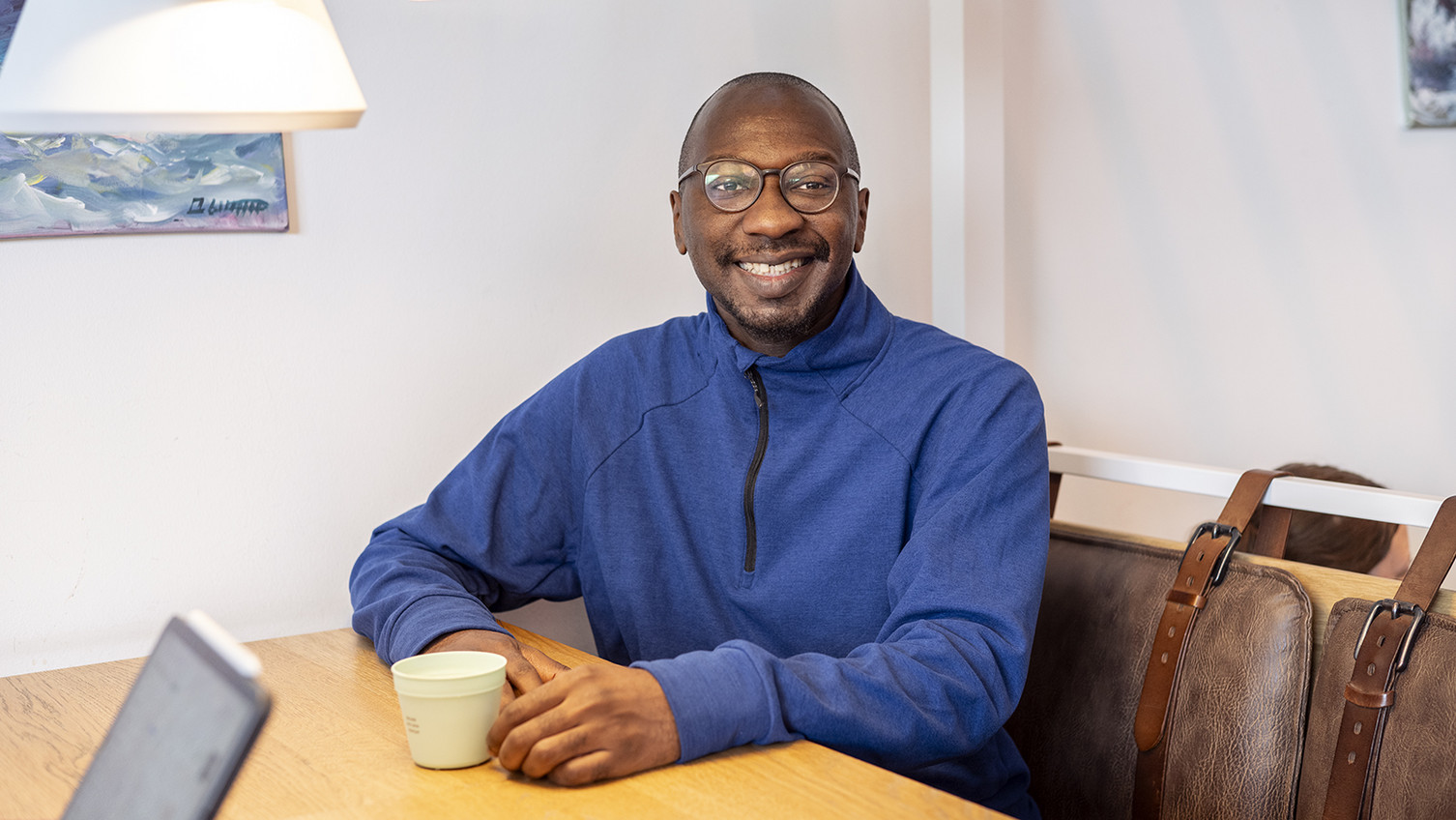
For LIAS Fellow Ini Dele-Adedeji, his engagement with Boko Haram did not begin with a defining moment but rather developed gradually from his natural curiosity. During his Master’s degree, he regularly read Nigerian newspapers in 2011, when Boko Haram – the Islamist armed group that has been active primarily in north-eastern Nigeria since the 2000s and has destabilised large parts of the region through attacks, abductions, and other forms of political violence – was not yet portrayed as a global synonym for terrorism, but as a national phenomenon. His initial interest centred on a simple question: why did this movement find an audience at all?
That question took the researcher, who is based at the School of Oriental and African Studies (SOAS), University of London, from reading about the conflict into the field. During his doctoral research, the British scholar conducted fieldwork in Borno and Kano between 2013 and 2016. There, he encountered people whose experiences had little in common with the images that shaped the public perception of Boko Haram: families who had sent their children to schools run by the movement, people who had made use of its social services, and women who had been forced into the organisation’s structures. How could people live in communities in which this terrorist organisation was present? “The tension between the material conditions of people’s lives and the categories we use to explain conflicts continues to occupy me,” says Dele-Adedeji. This tension led him to shift his research perspective: his work on political violence developed into a focus on Transitional Justice and the question of how societies can come back together after experiencing mass violence.
Sources of societal resilience
It did not take long for the young researcher to reconsider his own categories: victim or perpetrator? Voluntary or coerced? Guilty or innocent? In the field, seemingly clear-cut distinctions began to blur: “These categories are far too neat for what I actually encountered,” he says. A person can become part of a violent organisation under coercion, survive, and subsequently still be regarded exclusively as a threat by the state and society. Dele-Adedeji’s research interest has therefore increasingly turned to what happens “afterwards”. “I am interested in the post-conflict phase because that is where the long-term political challenges lie.” For Dele-Adedeji, peace means more than the end of fighting. It has to be sustained in everyday life, when former combatants return, neighbours begin living alongside one another again, and communities have to decide whom they can trust.
Transitional Justice addresses precisely this point: courts and criminal proceedings can establish guilt, but they cannot, on their own, restore relationships destroyed by violence. “When a community that is living together again has to rebuild trust, it involves questions of relationships and legitimacy, not just judgements,” Dele-Adedeji explains, summarising the underlying idea of Transitional Justice. He therefore focuses on what official programmes tend to overlook: councils of elders, religious authorities, women’s groups, and informal forms of communication. They mediate conflicts, support returnees, create spaces for remembrance, and assist displaced people. “It is patient and unspectacular work,” he says. Yet he sees precisely this work as a crucial source of societal resilience.
Between the categories of perpetrator, victim, and suspect
For him, conducting fieldwork in a former conflict zone means constantly questioning his plans. “You are constantly assessing your own risks – but even more important are the risks faced by the people you speak to, because they remain behind when you leave.” Dele-Adedeji combines his attentiveness to nuance with a fundamental scepticism towards simple solutions. He regards neither Western models of Transitional Justice nor supposedly authentic local traditions as universal remedies. What matters, he argues, is who benefits from a particular process – and who is left out. Perhaps this also explains why his perspective on northern Nigeria is different today from when he began his research: “I want people to stop seeing northern Nigeria exclusively as a place of violence, and instead to recognise it as a place where people are actively – if imperfectly – engaged in the difficult work of rebuilding.”
At LIAS, Dele-Adedeji is now examining specifically how community-led forms of Transitional Justice can contribute to lasting peace and societal resilience in northern Nigeria. Among other things, he is looking at government measures to address the legacy of the Boko Haram conflict and the controversial trials of alleged supporters of the organisation. He asks what happens when people fall between the categories of perpetrator, victim, and suspect. Comparing these experiences with those of Kenya, he also examines the role played by women, young people, and religious actors in rebuilding trust and social cohesion after violence. For him, transformation therefore means actively shaping change. This is precisely where Dele-Adedeji sees the connection with Leuphana’s university-wide focus on transformation research: “People do not wait for peace. They try to make it themselves.”