Graduation Ceremony in June 2026
2026-06-16 After semesters and years of learning, exploring, researching, and writing—and perhaps a few small setbacks and many moments of perseverance—the time had finally come: By the summer semester of 2026, approximately 600 graduates from the College, 400 from the Graduate School—including 70 doctoral candidates—and 150 graduates from the Professional School had completed their respective programs. Before putting their ideas and skills to practical use or even pursuing further qualifications, the graduates attending the commencement ceremony took the opportunity to celebrate this achievement together with family and friends.
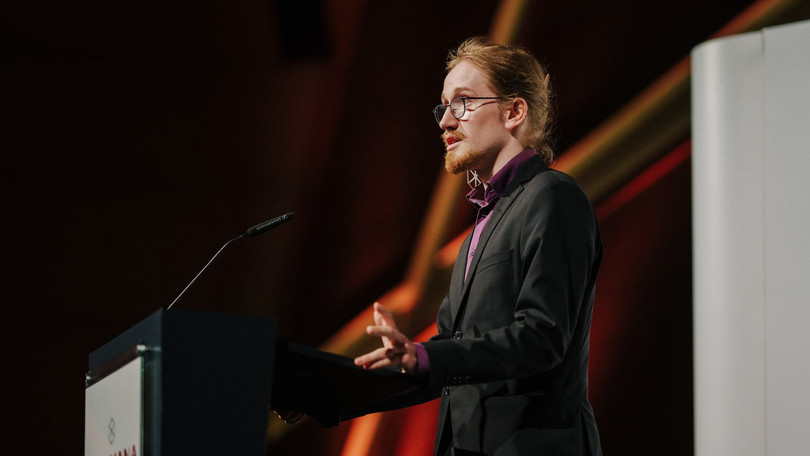
“The Better Generation”: The College's Graduation Ceremony
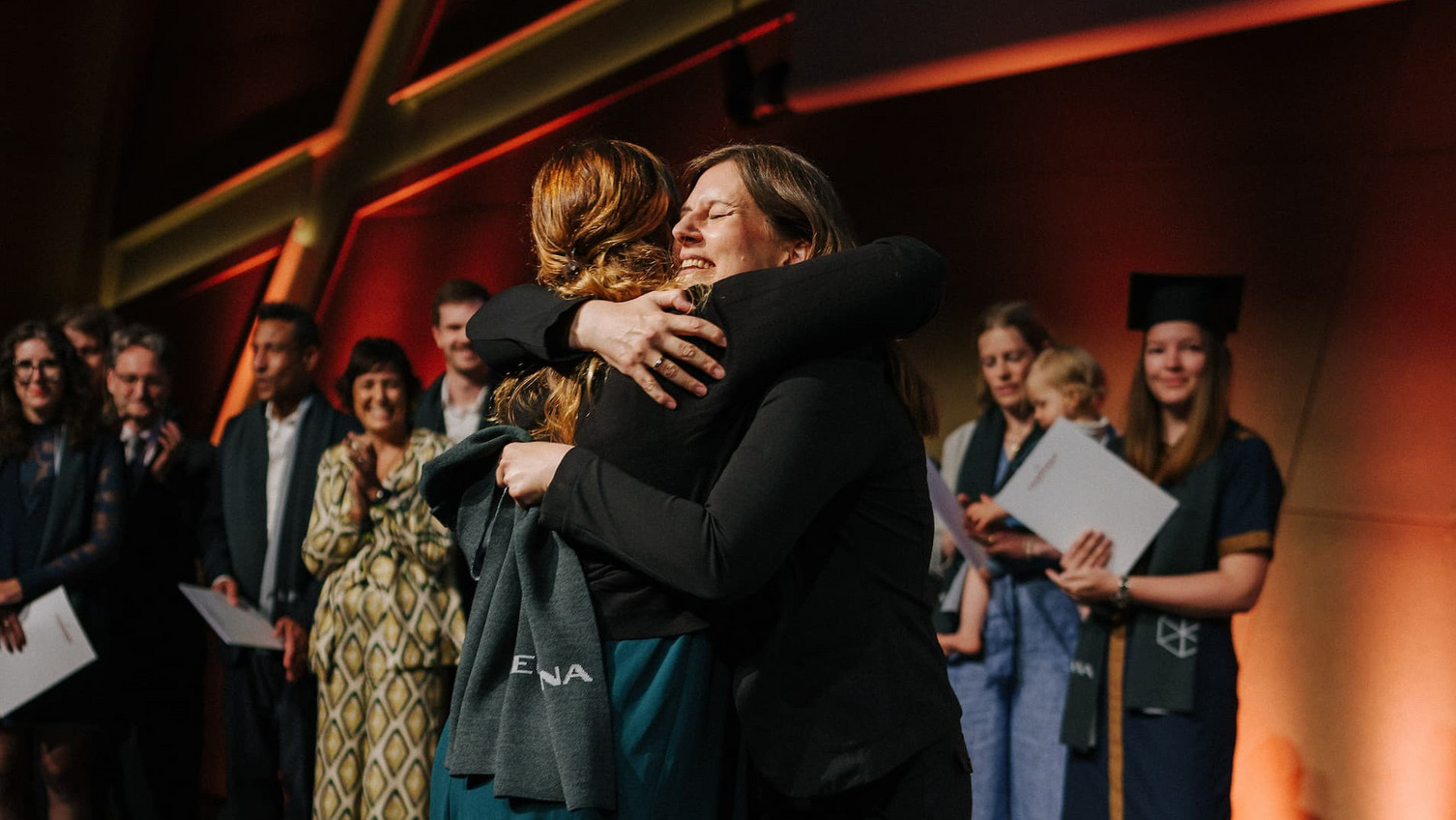
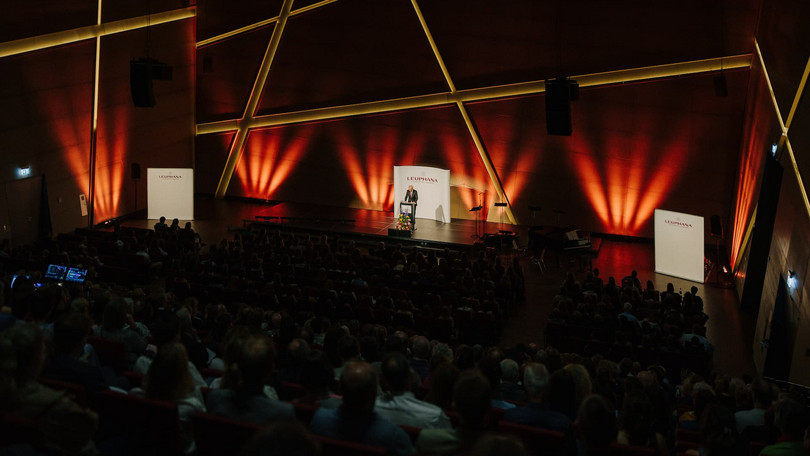
Music, an auditorium filled with voices, hugs, and a unique blend of tension and relief: The college’s graduates were given a festive send-off on Saturday, accompanied by their families and friends. In a festive and heartfelt manner, the speakers paid tribute to the graduates, who were eager to celebrate their achievements and look forward to the next step in their lives.
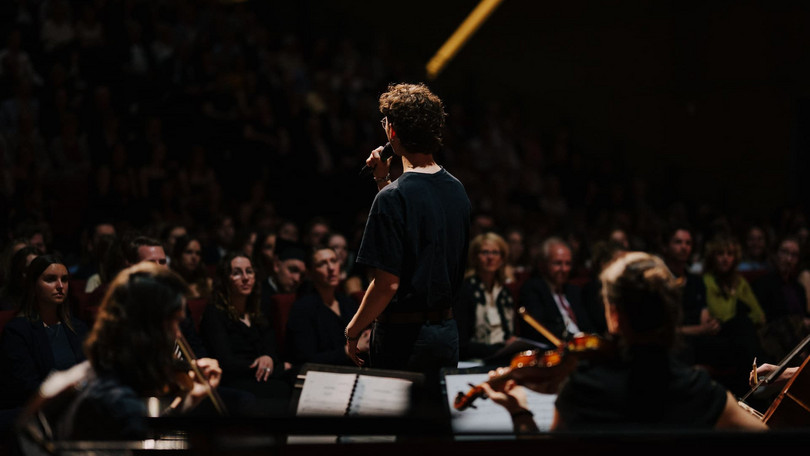
The music ensemble, led by University Music Director Rebecca Lang, presented excerpts from the Music Center’s musical project Dear Evan Hansen, which will premiere in October 2026. A line from the show—“Doesn’t anyone here have a plan?”—captured the mood in the hall: a mix of anticipation, uncertainty, and the knowledge that great paths often only open up once you set out on them.
President Sascha Spoun addressed the graduates: “Here it is, the graduation, the academic degree; your studies are complete, an intense phase of life is coming to an end, and a new one is beginning—or has already begun. These are moments to pause, to look back, and to look ahead—moments of joy, perhaps also of wistfulness, moments of pride and the feeling of having achieved something that no one can ever take away from you. Let’s enjoy this together!” Now the world awaits the graduates, “a world we call society.” He invited them to free themselves from the constant talk of the crisis and crises of their own generation. “You are more mature, more level-headed, and more realistic than my generation. At the same time, however, you are also younger—which means you are more open-minded, more creative, more versatile, and more adaptable. When you look at yourselves, you see talent, curiosity, a drive to act, fearlessness, and perhaps also that naivety without which many great things could never take shape. You see a better generation.”
Regina Graß from Leuphana’s Alumni and Friends Association bridged the gap from celebrating the moment to fostering connections that extend beyond graduation: “Many of our association members are happy to hire Leuphana graduates because they know what they’re getting. Thanks to the interdisciplinary curriculum, you have a huge advantage over graduates from other universities. They have acquired future-oriented skills that other graduates do not possess.”
Next to speak were the AStA representatives, Zoë Rauch and Philipp Näser, who personally congratulated the graduates, reflecting on their shared experiences during their studies and also addressing the challenges and aspirations of the students, including the expansion of the BAFöG.
“Things are quite turbulent out there right now,” said Jelena Bäumler, Vice President of the College, “there are conflicts and wars, the economy is faltering—and with it, in some cases, democracy as well—the climate crisis persists, and questions are being raised about the state of the international order and its future.” However, she noted that the graduates were being sent out into the world well-prepared. She encouraged the bachelor’s graduates: “Ideally, your studies at Leuphana University have turned you into boundary-crossers. You have studied different majors and minors, completed the Leuphana Semester and the complementary studies program, and in doing so, learned to engage with issues from various perspectives.”
Niklas Hampe, a political science graduate, then struck a particularly heartfelt note. In his commencement speech for Leuphana College, he brought the daily life of student life back to life—with the relieving certainty that, despite all obstacles, he now holds his bachelor’s degree: “We’ve reached our goal. We’ve made it. Today is our day, our moment,” and he expressed his gratitude both to the professors and to his college town of Lüneburg: “All in all, life was a joy on the Ilmenau.”
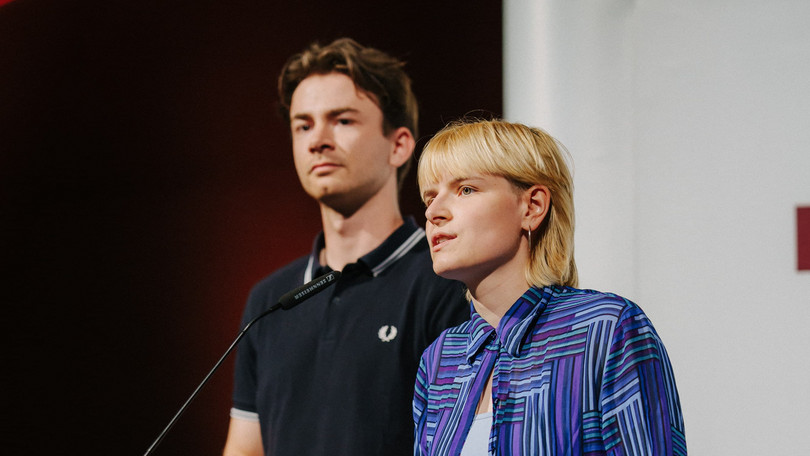

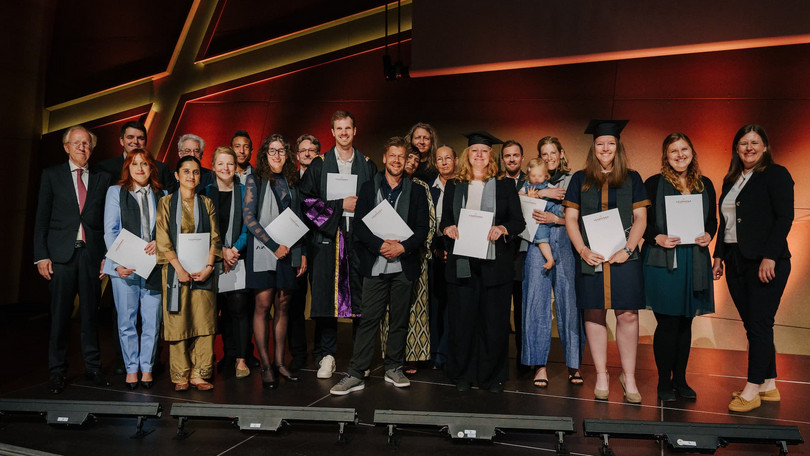
“Highlighting Opportunities”: Graduate School Commencement Ceremony
“These are weeks marked by many ‘last times,’” the AStA spokespersons said in their speech. On Saturday, June 13, 2026, everyone took their seats in the auditorium one last time. It is a momentous day in the academic careers of approximately 330 master’s graduates and 70 doctoral candidates celebrating their graduation from the Graduate School—and so, for the first time, the front rows are filled with pride, anticipation, and a touch of relief.
President Sascha Spoun congratulated all graduates on their completion of their studies—their newly earned academic degrees. He emphasized that the current generation of graduates has every reason to be proud of themselves: “When you look back on yourselves and your studies, you will discover even more. There were also crises—such as learning crises and writing crises, perhaps even financial or personal crises. Perhaps you thought about quitting more than once, felt overwhelmed, or thought you weren’t cut out for college. You’ve overcome all these challenges; you’ve demonstrated resilience and the ability to pull yourselves out of difficult situations. You can build on that for the future as well: on your ability to deal with and overcome challenges.” Young people shouldn’t shy away from a realistic perspective: “Perhaps you’re currently experiencing the ‘post-graduate blues’—post-graduate depression. Instead of immediately entering the workforce, you find yourself sitting there with too much time and opportunity to doubt yourself and the path you’ve chosen, while all those job applications haven’t yet borne fruit. This was completely foreign to my generation; we know neither this situation nor the feelings associated with it. That may have made life easier, but—and I say this without any cynicism—it makes your lives richer in experience and makes you more mature than my generation was back then.”
AStA spokespersons Helene Stephan and Philipp Näser, in their speech delivered in English, encouraged the graduates “to change the world, to adopt new perspectives, and also not to forget to allow themselves to change.” They expressed their deep gratitude for the students’ involvement in numerous student initiatives: “Your efforts have left traces here that will remain visible,” Helene Stephan emphasized.
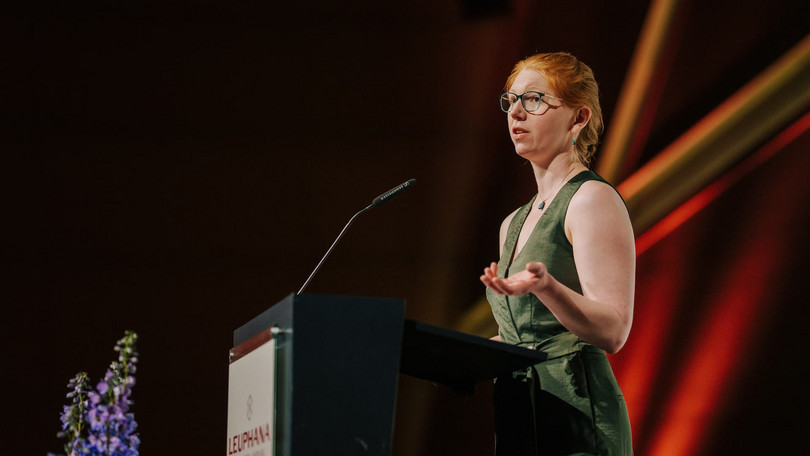
Simone Abels, Vice President of the Graduate School, Teacher Education, and Quality Development, mentioned in her speech the many visible and invisible hurdles that particularly disadvantaged groups face in pursuing an academic career. “The Leuphana Graduate School aims to break down as many of these barriers as possible for you and show you the range of opportunities available to you: The Graduate School stands for academic expertise, individual support combined with integration into the community, and research-driven teaching that takes social change and interdisciplinary thinking into account. As master’s graduates and doctoral degree holders, you embody these qualities, which now enable you to deviate from the statistical mean and stand out from the crowd.” Simone Abels expressed her joy for the graduates: “Be proud of what you have achieved. Your hard work and dedication deserve the highest recognition. I wish you much joy in continuing to learn and grow in the future. You have the best prerequisites for success—and that is true even, and above all, despite all possible odds.”
Aya Tawfic, a graduate of the Master’s program in Management and Entrepreneurship, found moving words in her graduation speech to reflect on her time at Leuphana as a student with an international background. For her, Leuphana remains a place where it’s not just the “finish line” that counts, but the moments in between—with faculty who encourage her to stay curious, and with fellow students “who made a city far from home feel like somewhere I actually belonged.”
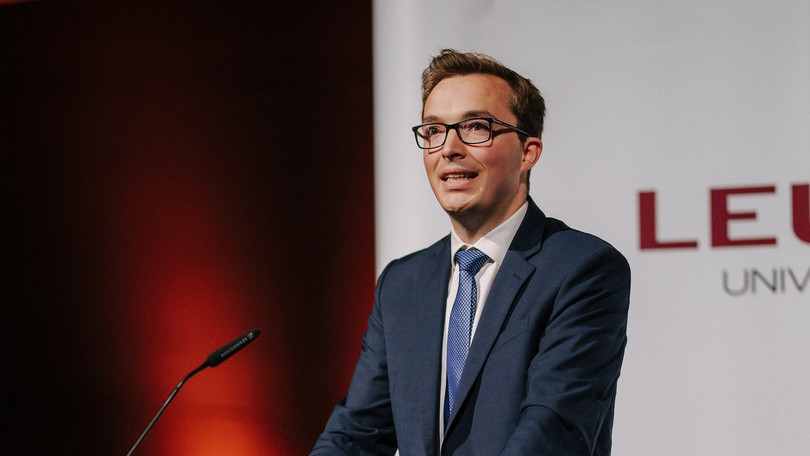
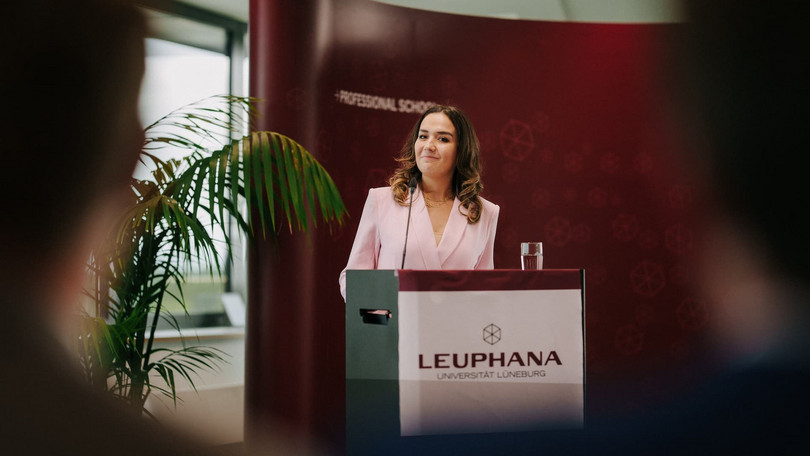
“Seeing the World in Its Many Shades of Gray”: Professional School Graduation Ceremony
The Leuphana Professional School held a graduation ceremony for a total of 150 graduates of the part-time Bachelor’s program in Business Administration, as well as the Master’s programs in Auditing, Construction Law & Construction Management, Digital Production Management, Digital Transformation Management, Performance Leadership, and Industrial Engineering. Together with guests—including family members, friends, and mentors of the graduates—the graduates celebrated the degrees they had earned while working full-time.
Markus Reihlen, Vice President for the Professional School, Internationalization, Entrepreneurship, and Knowledge Transfer, addressed the audience with a plea for slowing down. Thinking requires breaks, said Markus Reihlen, especially in times when technology suggests that we could “outsource our thinking.” Now more than ever, we need people who are willing to let themselves be challenged and who are capable of asking good questions. He warmly congratulated the graduates on acquiring these skills.
Following this, Erik Westermann-Lammers, the graduate speaker for the Professional School (M.A. in Auditing), also emphasized the value of community for successfully completing a part-time degree program: “You leave the university not only with an additional qualification, but also with new friendships—hopefully for life.”
Maria Schloßstein, deputy managing director of the Leuphana Professional School, then moderated the afternoon’s program as part of the decentralized celebrations. Building on his earlier remarks, Markus Reihlen congratulated the graduates not only on their degrees but also on their newly acquired skills—above all, the ability to see the world in its many shades of gray rather than just in black and white. In their graduation speeches, Nour Al Rifai (M.A. in Construction Law and Construction Management) and Patrick Hilbrecht (MBA in Digital Production Management) offered personal insights into their respective career paths.
In her speech, Ms. Al Rifai particularly emphasized the support and peer-to-peer exchange that defined her time at Leuphana Professional School, even though it wasn’t always easy. Moving forward while staying true to oneself—that’s how she defines success, and she views her degree as a shared achievement, since her family and friends also contributed to it. Reflecting on her bachelor’s degree in Syria, she reminded everyone present that being able to celebrate successes in peace is by no means a given.
Mr. Hilbrecht took the audience on his personal journey from his secondary school diploma to his MBA: “If someone had told me back then that I’d be standing here today, I wouldn’t have believed it.” He, too, emphasized the enormous importance of support from family, friends, supervisors, and mentors on such a journey. He said he had already gained a great deal from his part-time bachelor’s degree, but the MBA had far surpassed that.