
Prof. Dr. Daniel Fischer
Vita
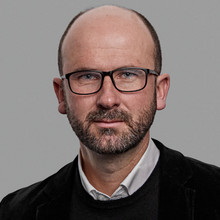
Daniel Fischer is Professor for Sustainability Education & Communication at Leuphana University of Lüneburg. Since early 2024, he has also held the UNESCO Chair in Higher Education for Sustainable Development.
In his research, he and his Sustainability Education Research Group (SERG) explore how more sustainable lifestyles and consumption patterns can be promoted through communication and learning. From an educational theory perspective, his focus is on how to strengthen reflexive awareness of the origins of unsustainable practices and empower individuals and collectives to become co-creators of social innovations that foster safe and just lifestyles. A central domain of his work is in teacher education. In recent years, he has intensively explored the contributions of mindfulness practices, storytelling, and participatory formats such as citizen science. Current research focuses include transformative forms of assessment and evaluation, as well as the democratization of teaching and learning formats.
Before joining Leuphana University, Daniel was Assistant Professor in Sustainability Education at Arizona State University (USA) and Associate Professor of Consumer Communication and Sustainability at Wageningen University (Netherlands). He completed his doctoral dissertation in sustainability sciences on the role of schools in addressing the global challenge of consumption. Prior to that, he completed a teacher training program and a master’s degree in "Educational Management and School Development."
Research Interests
Education for Sustainable Development, Social Studies, Teacher Education, Consumer Education, Sustainable Consumption, Sustainability Communication
Publications
Books and anthologies
- Die Rohstoff-Expedition: Entdecke, was in (d)einem Handy steckt!
Julia Nordmann (Author) , Maria J. Welfens (Author) , Daniel Fischer (Author) , Britta Bookhagen (Author) , Katrin Bienge (Author) , Claudia Nemnich (Author) , Kai Niebert (Author) , 2015 2 ed. Berlin , 160 p.Research output: Books and anthologies › Compendium/lecture notes › Education
Journal contributions
- Getting an empirical hold of the sustainable university: a comparative analysis of evaluation frameworks across 12 contemporary sustainability assessment tools
Daniel Fischer (Author) , Silke Jenssen (Author) , Valentin Tappeser (Author) , 18.08.2015 , in: Assessment & Evaluation in Higher Education, 40, 6 , p. 785-800 , 16 p.Research output: Journal contributions › Journal articles › Research › peer-review
- Conceptualizing sustainable consumption: Toward an integrative framework
Antonietta Di Giulio (Author) , Daniel Fischer (Author) , Martina Schäfer (Author) , Birgit Blättel-Mink (Author) , 01.04.2014 , in: Sustainability: Science, Practice, and Policy, 10, 1 , p. 45-61 , 17 p.Research output: Journal contributions › Journal articles › Research › peer-review
- Educational Organisations as »Cultures of Consumption«: Cultural Contexts of Consumer Learning in Schools
Daniel Fischer (Author) , 01.01.2011 , in: European Educational Research Journal, 10, 4 , p. 595-610 , 16 p.Research output: Journal contributions › Journal articles › Research › peer-review
Contributions to collected editions/anthologies
- Nachhaltiger Konsum: Wie lässt sich Nachhaltigkeit im Konsum beurteilen?
Daniel Fischer (Author) , Birgit Blättel-Mink (Author) , Antonietta Di Giulio (Author) , Gerd Michelsen (Author) , 01.01.2011 München , p. 73-88 , 16 p.Research output: Contributions to collected editions/anthologies › Contributions to collected editions/anthologies › Research
Activities
-
“To sustain, or not to sustain…?” An Analysis of Sustainability Journalism in German Newspapers
Daniel Fischer (Speaker)
→Activity: Conference Presentations › Research
Courses
These concepts are shaping discussions about our future all over the world today. Addressing them often raises even more questions than are initially answered and can sometimes feel like searching for the Holy Grail. So why make them the subject of a lecture for all first-year students?
Well, why not?
You will quickly realize that these questions come up again and again, regardless of what you study and what you do in your free time. Engaging with them can help you structure your ways of thinking and acting: starting with your own role not only as a student, but as a person who lives and learns, eats and drinks, shops and travels, to the role of science in general: Who is responsible for what? What do we consider fair, how do we imagine a sustainable future?
We will look at contributions that can offer certain approaches, but we will also be happy to cross disciplinary boundaries. We will examine the connections between different levels, systems, and concepts, starting with fundamental approaches to sustainable development and the challenges facing the world in general and young researchers in particular today: What do we really need to know in order to understand what is going on?
Ausgehend von einer Verortung des Bildungsverständnisses, das einem modernen Sachunterricht zugrunde liegt wird eine Standortbestimmung des Sachunterrichts in der Grundschule vorgenommen. Ziele, Inhalte und Methoden des Sachunterrichts werden vor dem Hintergrund des Spannungsfelds von Kind, Sache und Welt entwickelt.
Der Schwerpunkt liegt auf der Theorie-Praxis-Verzahnung:
In einer Methodenwerkstatt erarbeiten und erproben die Teilnehmenden fachspezifische und fächerübergreifende Denk-, Arbeits- und Handlungsweisen und reflektieren deren Eignung für den gesellschaftswissenschaftlichen Sachunterricht. Dazu wählen sie eine Methode zur Anwendung im Seminar und zur Reflexion im Portfolio.
Anhand gemeinsam von Lehrkräften, Studienseminarleitungen, Studierenden und Lehrenden entwickelter Fallvignetten diskutieren die Teilnehmenden sachunterrichtsdidaktische Frage- und Problemstellungen, erarbeiten Handlungsmöglichkeiten (z. B. im Umgang mit Schüler*innenfragen) und reflektieren diese ebenfalls im Portfolio.
Die Seminarinhalte bewegen sich im Spannungsfeld zwischen fachspezifischen Sichtweisen (u.a. Geographie-, Geschichts-, Politikdidaktik) und perspektivenübergreifenden Ansätzen (z.B. bedürfnisbezogene BNE). Das Seminar und das Portfolio bieten Raum zur eigenen Positionierung innerhalb dieses Spannungsfeldes.
Im Rahmen von Gruppen- und Portfolioarbeit erhalten die Teilnehmenden zudem die Gelegenheit, fachliche Fragestellungen – je nach Interesse und individuellem Bedarf – eigenständig zu vertiefen, um nach Abschluss des Bezugsfachs mit gesellschaftswissenschaftlich geschärftem Blick in das weitere (Sachunterricht-)Studium und die zukünftige Lehrpraxis gehen zu können.