
Collaborative Research for Sustainable Democracies
2026-08-11 How can democracies not only survive but also become sustainable in the face of the global polycrisis? At Leuphana, researchers from various schools and research centers have joined forces to examine the conditions for resilience and sustainability of contemporary democratic systems. The team’s first research retreat, held from June 25 to 26, 2026, marked the start of this collaborative work in the key subject area, Democratic Resilience.
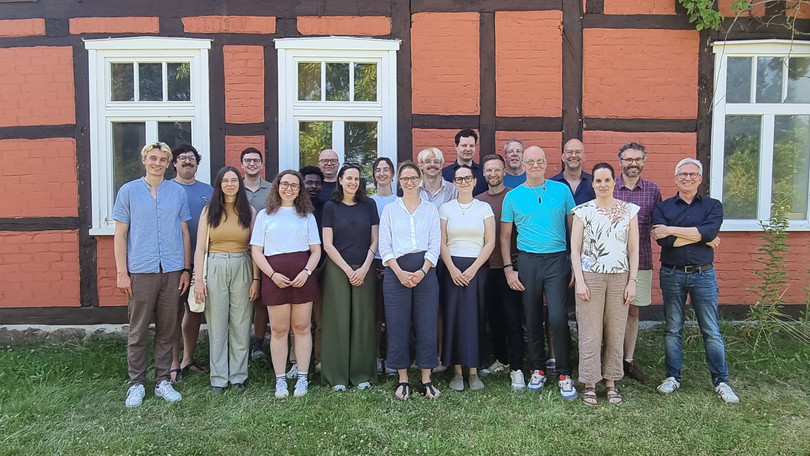
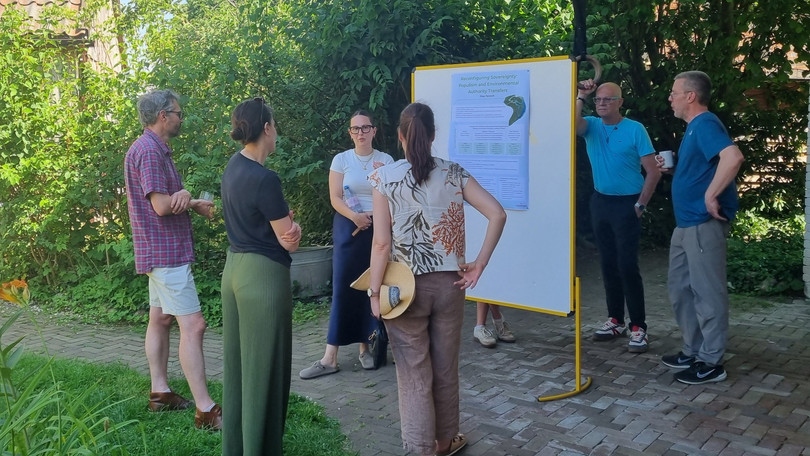
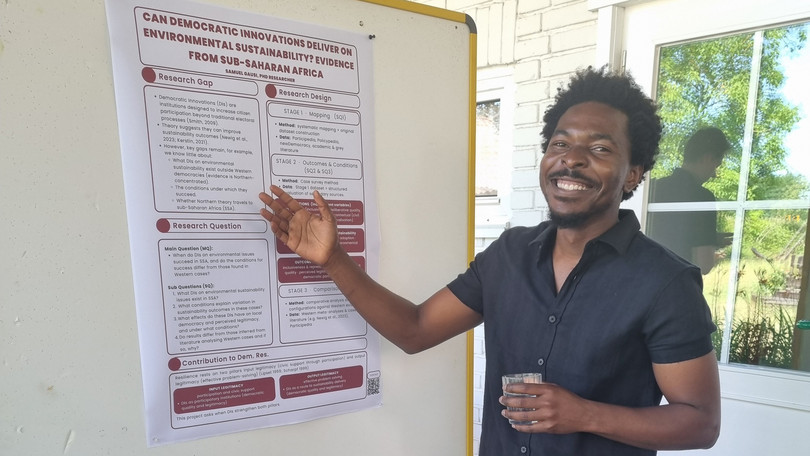
In times of climate change, geopolitical upheaval, political polarization, and a loss of trust in institutions, questions regarding the resilience of democracies become increasingly urgent: How do democracies persist? How can they adapt in the short term without abandoning their fundamental principles, while continuing to evolve in the long term to become truly sustainable? And above all: How can we work together to develop scientifically sound and socially relevant answers that address this complex reality? These questions were discussed at the first retreat of Leuphana’s key subject area “Democratic Resilience: Democracy’s Sustainability in the Global Polycrisis Era.”
The key subject area (KSA) comprises researchers at various career stages from the Leuphana School of Public Affairs, the Leuphana School of Sustainability and the Center for the Study of Democracy (CSD). Democratic resilience is a multifaceted, interdisciplinary field that encompasses individual values, social structures, political institutions, and global dynamics: “That is why it is crucial for researchers from different disciplines, at various career stages, and with complementary methodological approaches to come together to advance research on democratic resilience in a comprehensive, systematic, and innovative way,” explains Dr. Michael Rose, postdoctoral researcher in the KSA.
Over the course of two days, the team engaged intensively with the analytical strengths and weaknesses of the concept “democratic resilience” and the current research projects at Leuphana. The event featured a wide range of enriching contributions and discussions, lively conversations about the organization and development of the KSA, and reflections on how to integrate the projects into it.
One part of the retreat allowed the doctoral researchers to present their projects in the form of scientific posters using the “World Café” method. Here, the young scholars exchanged ideas with experienced colleagues. Lennart Bade, a doctoral candidate in the KSA, particularly emphasizes the spirit of equal collaboration: “For us doctoral candidates, the retreat was not only an ideal opportunity to present our dissertation projects and receive feedback from the professors, but also to help shape the joint research and future projects from the very beginning.”
Many important discussions took place not only in plenary sessions and during coffee breaks, but also in thematic clusters, for example, on the topics of citizens and voters, elites, democratic theory and political education, participation and sustainability, as well as international organizations. The researchers discussed current projects as well as planned future collaborations, academic publications, events, and the expansion of their interdisciplinary research network.
Researchers in the KSA Democratic Resilience examine conditions for resilience in models of social order through analyses at the individual, societal, systemic, and international levels. The key subject area is led by Prof. Dr. Jens Newig, Prof. Dr. Astrid Séville, and Prof. Dr. Christian Welzel and is part of Leuphana’s Embracing Transformation program, which is funded by the Lower Saxony Ministry of Science and Culture (MWK) and the Volkswagen Foundation.