The Leuphana Transformation Lab
Rethinking Transformation – Together, Critically, Responsibly
What is transformation? For whom is transformation desirable? How have historical transformations shaped both our contemporary understanding of transformations as well as our capacity for them? The notion of transformation poses a conceptual challenge; after all, what does and does not constitute transformations is deeply contested. The term also raises deep and abiding questions about the evaluation of transformations, the meaning of success and failure, and the criticisms of transformative practices as well as their benefits.

A Hub for Collaborative Research
The Lab serves as a physical meeting place as well as an international space for thought and experimentation. Here, cooperation between science, art, and society is strengthened, and collaborative research is linked to social responsibility—rooted locally and connected globally.
Our Vision
As part of an expanding global network of universities and research institutes, we push the boundaries of scholarly inquiry into transformative processes. By collaborating with our sister labs and international partners, we contribute to building a worldwide community dedicated to understanding and shaping transformations in socially just, environmentally sound, politically responsible, and culturally imaginative ways. Rethinking the role of academia in understanding and shaping transformative practices informs our work as a research unit and a connecting hub.
Our Mission
The Leuphana Transformation Lab envisions transformation as a plurality of intertwined social, ecological, cultural, and technological changes whose meanings, consequences, and desirability must remain subject to critical inquiry. Our mission is to become a catalyst for rigorous, imaginative, and responsible research on transformation with the goal of building a distinct school of thought on transformation. To this end, we will develop and test new research methods and communication formats that also incorporate artistic and design processes to facilitate innovative forms of knowledge production.
The Lab conducts research in various areas of transformation, which are grouped into three conceptual streams through collaborative work on terminology and conceptualization:
Questions of transformation are inseparable from questions of knowledge: any attempt to understand or foster transformative practices depends on assumptions about what counts as relevant ways of knowing, who is authorized to produce knowledge, and how claims about change are established or evaluated.
The conceptual stream Epistemologies of Transformation examines how transformation is known and which forms of knowledge underpin its conceptualization, narration, and enactment in different social, cultural, and political contexts. Transformative projects routinely invoke a range of different and even competing epistemologies (e.g., modernist, indigenous, feminist, decolonial) in support of various kinds of interventions. Here, a variety of metrics and models (e.g., algorithms, physical prototypes, visualizations, storytelling etc.) do important epistemological work. They are part of complex techniques and practices which generate understanding on the terrain that is to be transformed and produce the knowledge for evaluating success or failure of transformative projects. At the same time, various community-based transformative practices, invoking local and situated knowledge, are embedded in counter-epistemologies, ways of knowing that contest dominant forms of knowledge production. In this increasingly complex epistemological landscape, it is often not clear what counts as appropriate transformation knowledge or how to define and measure transformative thrust. We interrogate the epistemic foundations of “transformation,” both as an analytical category and a normative project. We ask: What constitutes authority in evaluating success or failure of transformation? How are effectiveness and impact established or contested? What can failures contribute to transformation knowledge?
Not every rupture is transformative, and not every transformation begins with disruption, yet transformative practices are often motivated by the idea that social, economic, political, or ecological crises are ideal moments for intervention. How should we assess the relationship between transformation and disruption?
The conceptual stream Disruption and Transformation explores disruptiveness as a central feature of life in contemporary globalized societies. It investigates how disruption shapes contemporary life and is entangled with the notion of transformation. Although rupture is a constitutive element of modernity, rendered meaningful in the processes of progress and emancipation, today’s notion of disruption takes on increasingly the negative connotations of sudden decline and collapse. Against the background of today’s putatively permanent mode of crisis, dominant technological, economic, and political strategies of disruption intensify contemporary experiences of rupture. As democracies, governance institutions, and infrastructures face more frequent disruptive events of destructive magnitude, transformation is often framed as a necessary process for safeguarding society against such turbulence. Disruptiveness even undergirds the promise of transformation across a wide range of emancipatory agendas. We explore disruption as part of transformative processes: What is left of transformation when rupture seems ubiquitous, and the openness of the future becomes increasingly curtailed? What are social and political strategies for disruption to receive uptake rather than cause fear and denial? How can we respond to disruption in theoretically, socially, and ethically informed ways while reconsidering its meaning and its relationship to transformation?
Transformation is never only about change itself. Its putative successes or failures depend on the boundaries of the interventions meant to bring about change, that is, on the scales we consider meaningful to assess their effects and the time horizons through which transformation becomes can be evaluated.
The conceptual stream Scales and Temporalities of Transformation critically engages the scalar and temporal frames through which transformation is envisioned, narrated, and organized. Transformative projects work at many different scales: from the individual and interpersonal to the institutional, societal, even the planetary. Framing transformative change as incremental or systemic across different scales requires setting specific temporal horizons and clear delineation of spatial scales. Thus, transformative practices often invoke a specific temporal order which casts the future as normatively and functionally better, while eliding the past or reducing it to background noise. Scalarity and temporality are more than technical matters of measurement and forecasting. They offer glimpses into the rationalities governing transformative projects. We analyse how temporal and scalar frames shape political, technological, economic, social, or ecological possibilities, redistribute resources, and configure horizons of action. To that end, we examine how different scales and temporalities are privileged, linked, or opposed in transformative projects. How do competing visions of the proper scale of transformation enable or foreclose particular pathways for change? How is the past (e.g., memories or archival practices) mobilized, marginalized, or erased in narratives of transformation? How do transformation narratives project and structure short-, medium-, and long-term futures (e.g., intergeneration justice)?
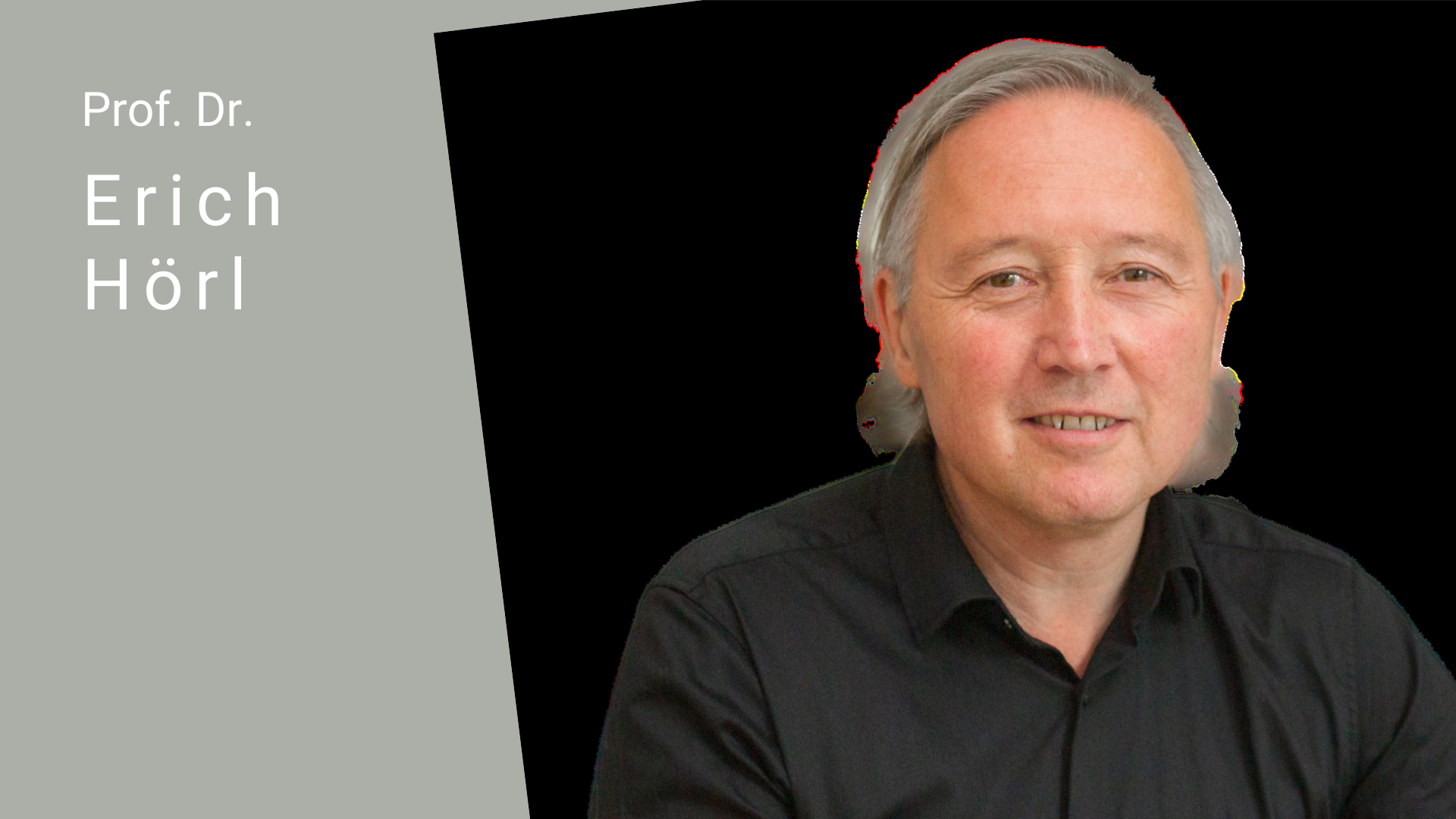
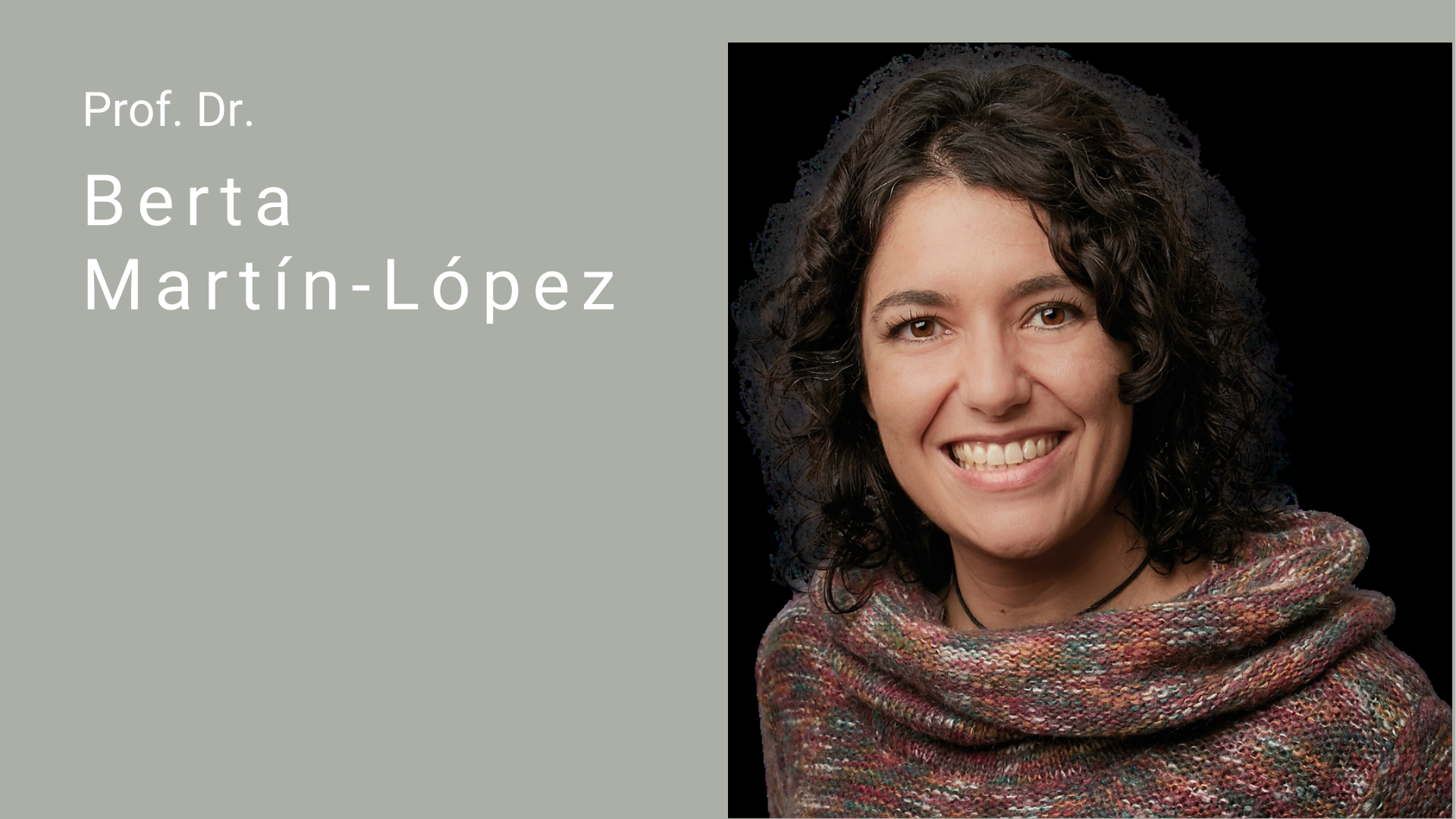
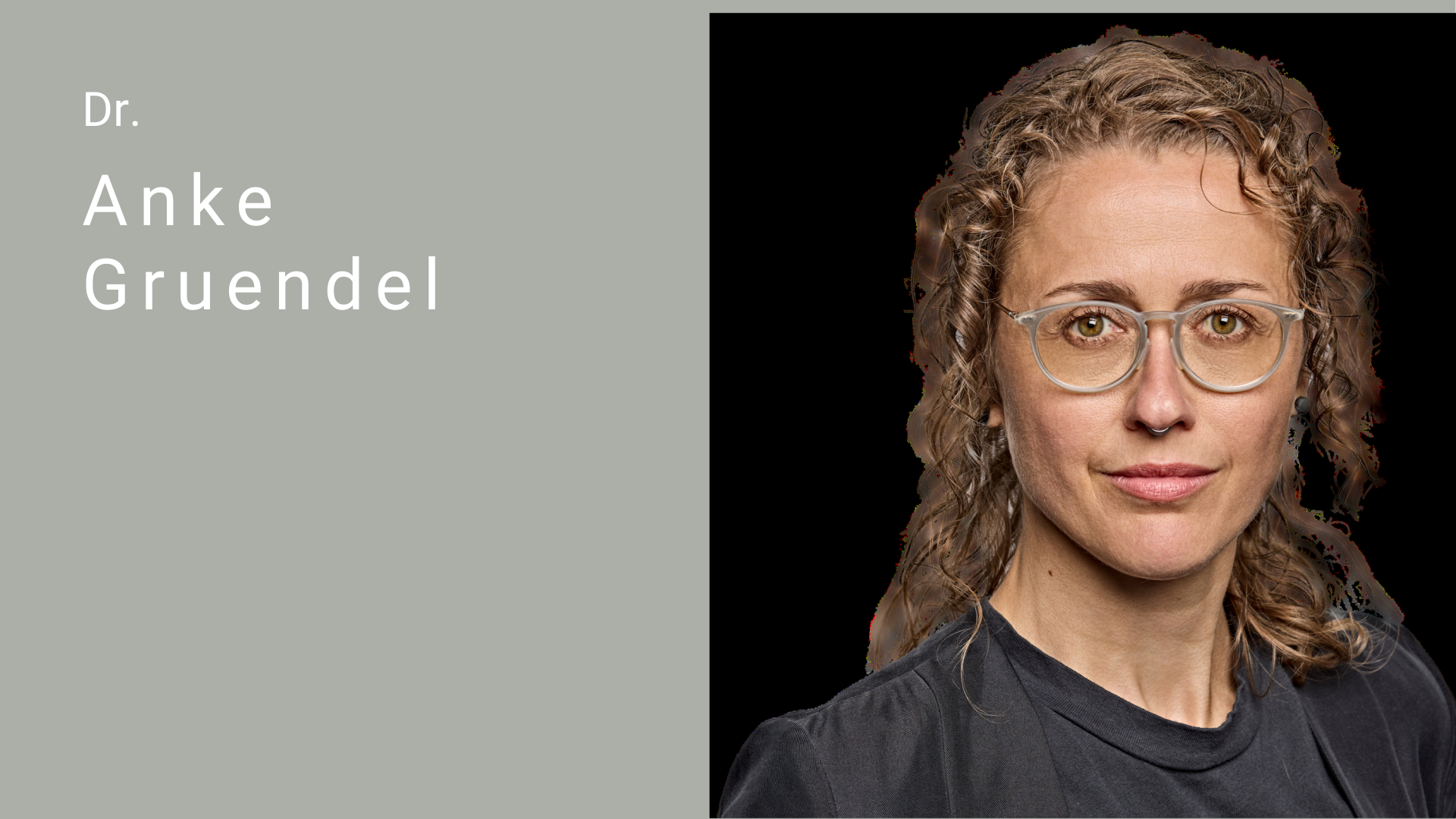
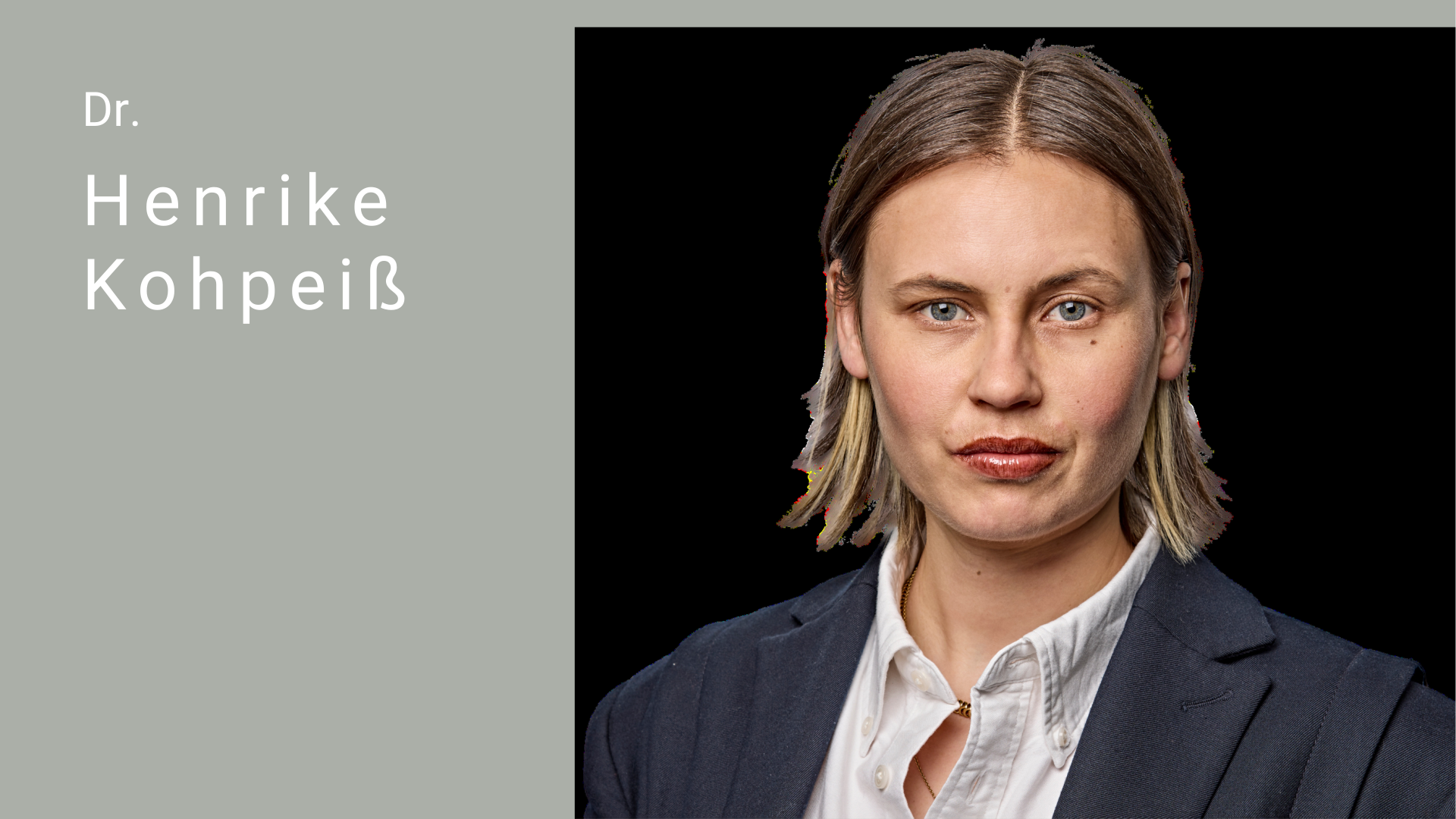
A development team was established to set up the Lab to further develop and refine the following areas: 1. Vision and Mission, 2. Research Profile, and 3. Programs and Formats. In addition to the core team pictured here, other members include Prof. Dr. Armin Beverungen, Prof. Dr. Steffen Farny, Prof. Dr. Elke Schüssler, Prof. Dr. Astrid Séville, and Prof. Dr. Laura Venz, as well as, in an advisory capacity, Dr. Daniela Janßen (Managing Director of the Embracing Transformation programm), Dr. Jutta Grünberg-Bochard (Head of the President’s Office), and Dr. Andreas Bunge (University Development / President’s Office).
The Lab combines approaches from the social sciences, cultural studies, sustainability research, psychology, art, and economics, and develops new approaches to conduct collaborative and innovative transformation research. It promotes university-wide networking and creates synergies between departments, initiatives, and existing structures.
As a hub for interdisciplinary knowledge integration, the Lab synthesizes results from the five research areas Digital Cultures, Democracy, Entrepreneurship, Sustainability, and Organization, as well as the cross-cutting theme of Psychology of Transformation.
Collaborative research findings benefit students at Leuphana College, the Graduate School, and the Professional School. The findings are then channeled into business, politics, and society through knowledge transfer initiatives and innovation communities.
A central component of the Lab is the “Embracing Transformation” doctoral program. More than 40 doctoral candidates from around the world have the opportunity to make their mark in transformation research and become part of the global discourse.
Within the framework of “Embracing Transformation,” Leuphana has established the Transformation Lab as a central, cross-faculty institution. The Embracing Transformation program is funded by the Strategic Development of Potential initiative of the Lower Saxony Ministry of Science and Culture (MWK) and the Volkswagen Foundation.