
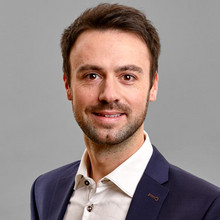
Dr. Marco Reich
Vita
01/2016-present Postdoctoral research associate, Institute of Sustainable and Environmental Chemistry, Leuphana University Lüneburg, Germany
01/2011-12/2015 Research associate/doctoral candidate, Institute of Sustainable and Environmental Chemistry, Leuphana University Lüneburg, Germany
Thesis/Project: Fatty Acid Profile of the Initial Oral Biofilm - Characterization and Modification
01/2010-11/2010 Research associate, Institute for Environmental Health Sciences and Hospital Infection Control, Albert-Ludwigs-University Freiburg im Breisgau, Germany
04/2009-12/2009 Analytical chemist (Clinical chemistry, drug/metabolite monitoring) at synlab medical Services GmbH, Stuttgart, Germany
03/2007-10/2007 Chemist at Hoffmann-La Roche AG, Basel (CH). Department of preclinical pharmaceutical research (Subgroup: Metabolic diseases)
Synthesis of new active ingredients and intermediates in the field of arteriosclerosis research
10/2004-04/2009 Studied Pharmaceutical Chemistry (Dipl. Ing.) at NTA Isny, Germany
Diploma thesis in cooperation with synlab Services GmbH,Stuttgart, Germany: Implementation of MALDI-TOF Mass Spectrometry for Rapid Identification of Microorganisms in Clinical Routine
Projects
-
Bridging The Great Divide in Sustainability Science: Linking High-Performance Modeling and Transition Experiments to Foster Transformational Change Towards Sustainability
Klaus Kümmerer (Project manager, academic) , Henrik von Wehrden (Project manager, academic) , Heike Zimmermann (Project staff) , Marco Reich (Project staff) , Robert L. Feller (Project staff) , Daniel J. Lang (Project manager, academic) , Nigel Forrest (Project staff) , Arnim Wiek (Project manager, academic) , Manfred Laubichler (Project manager, academic) , Aditya Ghosh (Project staff) , Beatrice John (Project staff) , John-Oliver Engler (Project staff)
→Project: Research
-
The lipidome of the pellicle and the role of lipids for the dynamic process of initial biofilm formation in situ.
Klaus Kümmerer (Project manager, academic) , Christian Hannig (Project manager, academic) , Matthias Hannig (Project manager, academic) , Marco Reich (Project manager, academic)
→Project: Research
-
The lipidome of the pellicle and the role of lipids for the dynamic process of initial biofilm formation in situ.
Klaus Kümmerer (Project manager, academic) , Marco Reich (Project staff)
→Project: Research
Publications
Journal contributions
- Correction to: Determination and risk assessment of UV filters and benzotriazole UV stabilizers in wastewater from a wastewater treatment plant in Lüneburg, Germany (Environmental Monitoring and Assessment, (2024), 196, 8, (725), 10.1007/s10661-024-12853-2)
Akinranti S. Ajibola (Author) , Marco Reich (Author) , Klaus Kümmerer (Author) , 01.11.2024 , in: Environmental Monitoring and Assessment, 196, 11 , 1 p.Research output: Journal contributions › Comments / Debate / Reports › Research
- Determination and risk assessment of UV filters and benzotriazole UV stabilizers in wastewater from a wastewater treatment plant in Lüneburg, Germany
Akinranti S. Ajibola (Author) , Marco Reich (Author) , Klaus Kümmerer (Author) , 01.08.2024 , in: Environmental Monitoring and Assessment, 196, 8 , 19 p.Research output: Journal contributions › Journal articles › Research › peer-review
- Impact of green and blue-green light on the growth, pigment concentration, and fatty acid unsaturation in the microalga Monoraphidium braunii
Marco Reich (Author) , Philipp Rohne (Author) , Ulf Riebesell (Author) , Martin Kerner (Author) , Klaus Kümmerer (Author) , Mark Helamieh (Author) , 01.05.2024 , in: Photochemistry and Photobiology, 100, 3 , p. 587-595 , 9 p.Research output: Journal contributions › Journal articles › Research › peer-review
- The lipid composition of the in situ pellicle
Marco Reich (Author) , Christian Hannig (Author) , Matthias Hannig (Author) , Klaus Kümmerer (Author) , Anna Kensche (Author) , 01.10.2022 , in: Archives of Oral Biology, 142Research output: Journal contributions › Journal articles › Research › peer-review
- Blue-green light is required for a maximized fatty acid unsaturation and pigment concentration in the microalga Acutodesmus obliquus
Marco Reich (Author) , Sophie Bory (Author) , Philipp Rohne (Author) , Ulf Riebesell (Author) , Martin Kerner (Author) , Klaus Kümmerer (Author) , Mark Helamieh (Author) , 01.07.2022 , in: Lipids, 57, 4-5 , p. 221-232 , 12 p.Research output: Journal contributions › Journal articles › Research › peer-review
Activities
-
Guidance on the application of in silico tools for Benign by Design
Ann-Kathrin Amsel (Speaker) , Oliver Olsson (Coauthor) , Marco Reich (Coauthor) , Klaus Kümmerer (Coauthor) , Stefanie Lorenz (Coauthor) , Neele Puhlmann (Coauthor)
→Activity: Conference Presentations › Research
-
Guidance on the application of in silico tools for Benign by Design
Ann-Kathrin Amsel (Speaker) , Oliver Olsson (Coauthor) , Marco Reich (Coauthor) , Klaus Kümmerer (Coauthor) , Stefanie Lorenz (Coauthor) , Neele Puhlmann (Coauthor)
→Activity: Conference Presentations › Research
Courses
Winter 26/27 - In Silico Tools for Chemical Assessment and Design
In silico tools use computational methods to predict chemical properties, toxicity, and potential risks. They provide a faster, more sustainable, and often more ethical alternative to traditional in vitro and in vivo testing. These tools are widely used in drug discovery, chemical safety assessment, and regulatory compliance (e.g., under REACH and FDA guidelines).
The in silico approach supports the early identification of hazardous substances (before they are even synthesized) and guides the "benign-by-design" development of safer chemicals. Through virtual screening and structure-based optimization, in silico tools reduce the need for laboratory testing and accelerate innovation in sustainable chemistry. They also help assess environmental fate and support life cycle thinking, making them essential for designing safer, more sustainable chemical products.
After a basic theoretical introduction, this course emphasizes the practical application of in silico software and assessment through hands-on experience with both commercial and open-source software platforms, applying them to real-world challenges in sustainable chemistry.