
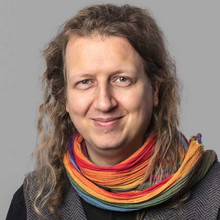
Prof. Dr. Henrik von Wehrden
Center for Methods
Associated member, Sustainability Education and Transdisciplinary Research Institute
Vita
Henrik von Wehrden is the dean of the faculty of sustainability at Leuphana and member of the methods center. His work focuses on applying methods in a new context to create novel knowledge. His research spans across many spatial scales and groups of organisms, as well as explored the normative dimensions of methodological research.
Teaching
Statistics, GIS, methods; teaching though research
Research Interests
Statistics, drylands, species distribution models, conservation
Projects
-
agri:change – Future through change: Sustainability transformation in the agricultural and food industry in Lower Saxony
Henrik von Wehrden (Project manager, academic) , Christoph Schwenck (Project staff) , Jannis Pfendtner-Heise (Project staff)
→Project: Research
-
Interdisziplinäre Methodenlehre und Kompetenzen
Henrik von Wehrden (Project manager, academic)
→Project: Research
-
Zukunft des Wohnens selbst erforschen
Henrik von Wehrden (Project manager, academic)
→Project: Other
-
Machbarkeitsstudie zur Operationalisierung einer interaktiven, virtuell unterstützten Lernumgebung zur Stärkung von Nachhaltigkeitskompetenzen
Henrik von Wehrden (Project manager, academic)
→Project: Research
-
DigiTaL - Teilprojekt 04: Methoden-Wiki
Henrik von Wehrden (Project manager, academic) , Neha Chauhan (Project manager, academic) , Anna-Lena Rau (Project manager, academic)
→Project: Teaching
Publications
Journal contributions
- The false certainties of climate policy: Rethinking risk and cooperation in an uncertain future
Florian Ulrich Jehn (Author) , Astrid Kause (Author) , Henrik von Wehrden (Author) , Jana Zscheischler (Author) , Johann Majer (Author) , 01.12.2026 , in: Ecological Economics, 250 , 5 p.Research output: Journal contributions › Comments / Debate / Reports › Research
- Major determinants of sustainable agriculture practices adoption: A systematic review
Max Kretschmer (Author) , Jorge Gustavo Rodríguez Aboytes (Author) , Henrik von Wehrden (Author) , Neha Chauhan (Author) , 01.05.2026 , in: Land Use Policy, 164 , 12 p.Research output: Journal contributions › Journal articles › Research › peer-review
- Establishing a GIS toolbox to access urban verticality
Christoph Maximilian Schwenck (Author) , Tobias Neumann (Author) , Henrik von Wehrden (Author) , 01.04.2026 , in: City and Environment Interactions, 30 , 12 p.Research output: Journal contributions › Journal articles › Research › peer-review
- Pluralism and integration? A systematic review of ecological economics methodological foundations
Max Friedemann Kretschmer (Author) , Henrik von Wehrden (Author) , Joe A. Ament (Author) , Julius Rathgens (Author) , 01.02.2026 , in: Ecological Economics, 240 , 10 p.Research output: Journal contributions › Journal articles › Research › peer-review
- Measuring environmental (in)justices: Insights from a systematic literature review on methodological approaches
Noelia Zafra-Calvo (Author) , Gonzalo Cortés-Capano (Author) , Anna Lena Tonninger (Author) , Henrik von Wehrden (Author) , Jacqueline Loos (Author) , 19.12.2025 , in: iScience, 28, 12 , 18 p.Research output: Journal contributions › Journal articles › Research › peer-review
Contributions to collected editions/anthologies
- Socio-Environmental Vulnerability of Agriculture Communities to Climate Change in Western Himalaya: A Household-Level Review
Henrik von Wehrden (Author) , Pawan Kumar Joshi (Author) , Neha Chauhan (Author) , 24.09.2022 , p. 123-145 , 23 p.Research output: Contributions to collected editions/anthologies › Contributions to collected editions/anthologies › Research
- Climate Change May Trigger Broad Shifts in North America's Pacific Coastal Rainforests
D.A. DellaSala (Author) , M. Koopman (Author) , J. Leonard (Author) , Claude Meisch (Author) , P. Herzog (Author) , P. Alaback (Author) , M.I. Goldstein (Author) , S. Jovan (Author) , A. MacKinnon (Author) , Henrik von Wehrden (Author) , P. Brandt (Author) , 01.01.2018 Oxford , p. 233-244 , 12 p.Research output: Contributions to collected editions/anthologies › Chapter › Research › peer-review
- Sustainability and Ecosystems
Henrik von Wehrden (Author) , Goddert von Oheimb (Author) , David Abson (Author) , Werner Härdtle (Author) , 01.01.2016 Dordrecht , p. 61-70 , 10 p.Research output: Contributions to collected editions/anthologies › Chapter › Research › peer-review
- Habitat suitability models in conservation planning – a short introduction
Petra Dieker (Author) , Henrik von Wehrden (Author) , Angela Taboada Palomares (Author) , 01.05.2014 Sofia , p. 57-65 , 9 p.Research output: Contributions to collected editions/anthologies › Contributions to collected editions/anthologies › Research › peer-review
- Methoden und Methodologie in den Nachhaltigkeitswissenschaften
Henrik von Wehrden (Author) , Daniel J. Lang (Author) , Horst Rode (Author) , 01.03.2014 Berlin, Heidelberg , p. 115-144 , 30 p.Research output: Contributions to collected editions/anthologies › Contributions to collected editions/anthologies › Education
Activities
-
Identifying Conservation Priorities in the face of future development: applying development by design in the mongolian gobi
Henrik von Wehrden (Reviewer)
Activity: Academic Consultant › Research
-
Vegetation changes along a climatic gradient during a severe drought year in the El Nino region
Henrik von Wehrden (presenter)
→Activity: Presentations (poster etc.) › Research
-
Landscape effects on bird and rodent cummunities and seed predation to agriculture in Israel
Henrik von Wehrden (Speaker)
→Activity: Conference Presentations › Research
-
Lessons for conservation biology under global change conditions: a case study on two burnet moth species in the high altitudes of the Pyrenees
Henrik von Wehrden (Speaker)
→Activity: Conference Presentations › Research
-
Transdisciplinary research - a bridge between science and practitioners to produce reliable knowledge
Henrik von Wehrden (Speaker)
→Activity: Presentations (poster etc.) › Research
Press / Media
-
Von nachhaltiger Flächennutzung und gerechten Stadt-Land-Beziehungen: Zukunftsszenarien und konkrete Ansätze aus dem Landkreis Lüneburg.
1 Media contributionPress/Media: Press/Media
-
„Ich weiß, dass … aber trotzdem …“ Kognitionsverzerrungen und Nachhaltigkeit
1 time citedPress/Media: Press/Media
-
Schwankende Niederschläge in Trockengebieten verhindern Überweidung
1 time citedPress/Media: Press/Media
-
Schwankungen sorgen für Stabilität - Weltweit Degration von Weideflächen untersucht
1 time citedPress/Media: Press/Media
-
Schwankungen sorgen für Stabilität - Weltweit Degration von Weideflächen untersucht
1 time citedPress/Media: Press/Media
Courses
The lecture offers a broad conceptual and historical overview on scientific methods. Starting with the epistemological fundamentals of diverse metho-dological approaches and disciplines, the increasing diversity of methods is explained. At the same time, the inter- and transdisciplinary path at Leu-phana is exemplified, and the fundamental principles of scientific methodology (such as bias or critical reflection) as well as the methodological focus of Major and Minor courses are illustrated. Methods are made tangible through practical and interactive tasks and the students generate first data by themselves.
This course is a deep dive into scientific methodology. Most of you have some experience with specific disciplinary methods from your bachelor's programs, thus you bring a diversity of experiences to the table. The primary goal of this course is to take your multidisciplinary backgrounds and integrate your knowledge into a critically reflective and normatively oriented canon of inter- and transdisciplinary methods and methodology for sustainability science.
How does the course work?
In this course, you will be sent on missions to design case studies for diverse problems in sustainability science with a focus on scientific methods! To be able to do so, you will receive a range of inputs on methods and methodological aspects in the first weeks and over the course of the semester. We use a Flipped Classroom approach, which means you do not get a top-down lecture where you just listen to us and do homework afterwards; instead, we provide you with method packages for preparation that you engage with individually and in groups each week at your own pace before we come together for the seminar session.
The seminar Sessions ...
We meet for the seminar session every Monday from 12:15 to 15:45 in the lecture room C40.501 in the central building. We use the room as a hub for exchange and joint learning, where we work together on specific methods, get your group work moving forward, and critically exchange ideas about the diverse aspects necessary for working with scientific methods in sustainability contexts. The session is divided into four parts:
- the first part focuses on the integration of the knowledge you engaged with in the preparation materials into your mission work
- the second part focuses on specific challenges related to the methods, mission contexts or group collaboration aspects in task forces
- the third part is designated for your group work, where we will be present and answer questions
- the fourth part offers tutorials on specific methods with team members from the Center of Methods
Experience has shown that this structured accountability-like tutorial makes it easier to get started and stay on track so that you can get through the Bachelor's thesis process as successfully as possible. The tutorial is designed in such a way that you can benefit from it no matter which phase of the thesis you are currently in: you can join from the very start of planning your thesis up until when you are in the finishing phase and preparing your defense.
The tutorial is accompanied by this Wiki-Article, which provides information as well as hints and experiences regarding each step of the thesis process: https://sustainabilitymethods.org/index.php/How_to_write_a_thesis
There is an additional "Writing Tutorial" every two weeks that you can sign up to. Here, we will exclusively focus on getting into writing/researching in a productive atmosphere. Further, there is the opportunity to discuss questions.
Die Erfahrung hat gezeigt, dass dies den Einstieg und das Durchhalten erleichtert, um die Bachelorarbeit möglichst erfolgreich durchlaufen können. Das Tutorium ist so konzipiert, dass Sie davon profitieren können, unabhängig davon, in welcher Phase der Arbeit Sie sich gerade befinden. Sie können ganz am Anfang der Planung bis zu den letzten Zügen und in der Vorbereitung der Verteidigung mit ihren Themen zu dem Tutorium kommen.
Das Tutorium wird durch den folgenden Sustainability-Methods-Wiki-Artikel begleitet: https://sustainabilitymethods.org/index.php/How_to_write_a_thesis
Es gibt ein zusätzliches “Schreibtutorium” (guided co-working space) alle zwei Wochen, zu dem Sie zusätzlich kommen können. Dort wird der Fokus darauf liegen, Aufgaben für die Bachelorarbeit in einer produktiven Umgebung zu bearbeiten, und es gibt die Gelegenheit, Fragen gemeinsam zu besprechen.
Experience has shown that this makes it easier to get started and stay on track so that you can get through the Bachelor's thesis process as successfully as possible. The tutorial is designed in such a way that you can benefit from it no matter which phase of the thesis you are currently in: you can join at the very start of planning your thesis up until when you are in the finishing phase and preparing your defense.
The tutorial will be accompanied by the following Sustainability-Methods-Wiki article: https://sustainabilitymethods.org/index.php/How_to_write_a_thesis