
Dr. Ann-Kathrin Amsel
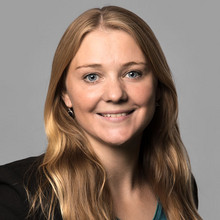
Vita
- 01/2019 - present: Research associate, Institute of Sustainable Chemistry, Leuphana University Lüneburg, Germany
- 08/2021–07/2023: Study programme coordinator, M.Sc. Sustainable Chemistry, Leuphana Professional School, Lüneburg, Germany
- 03/2019–12/2024: Doctoral studies, Leuphana University Lüneburg, Germany, dissertation: Methoden zur Anwendbarkeit des Benign by Design Konzepts für die biologische Abbaubarkeit in der Umwelt am Beispiel der ionischen Flüssigkeiten
- 10/2016-12/2018: Master of Sustainability Science, Leuphana University Lüneburg, Germany
- 10/2013-09/2016: Bachelor of Environmental Sciences, Leuphana University Lüneburg, Germany
Research Interests
Sustainable Chemistry, Green Chemistry, Benign by Design, Ionic Liquids, (Q)SAR, Environmental biodegradation
Projects
-
Embracing Transformation: Toward a Regenerative Society
Joern Fischer (Project manager, academic) , Steffen Farny (Co-Projectmanager, academic) , Maria Wolters (Project staff) , Rowan Alden Hull (Coordination) , David Abson (Affiliated Researcher) , Ann-Kathrin Amsel (Affiliated Researcher) , Jelena Bäumler (Affiliated Researcher) , Daniel Fischer (Affiliated Researcher) , Ulf Hahnel (Affiliated Researcher) , Sylvia Haider (Affiliated Researcher) , Harald Heinrichs (Affiliated Researcher) , Jacob Hörisch (Affiliated Researcher) , Astrid Kause (Affiliated Researcher) , Klaus Kümmerer (Affiliated Researcher) , Dirk Lehr (Affiliated Researcher) , Berta Martín-López (Affiliated Researcher) , Jens Newig (Affiliated Researcher) , Oliver Olsson (Affiliated Researcher) , Maria Salisch (Affiliated Researcher) , Stefan Schaltegger (Affiliated Researcher) , Thomas Schomerus (Affiliated Researcher) , A. Timur Sevincer (Affiliated Researcher) , Alexander Stark (Affiliated Researcher) , Vicky Temperton (Affiliated Researcher) , Matthias Wenzel (Affiliated Researcher) , Henrik von Wehrden (Affiliated Researcher) , Vânia G. Zuin (Affiliated Researcher)
→Project: Research
-
Methoden zur Anwendbarkeit des Benign by Design Konzepts für die biologische Abbaubarkeit in der Umwelt am Beispiel der ionischen Flüssigkeiten
Ann-Kathrin Amsel (Project staff) , Klaus Kümmerer (Project manager, academic)
→Project: Dissertation project
Publications
Journal contributions
- Modelling biodegradability based on OECD 301D data for the design of mineralising ionic liquids
Ann-Kathrin Amsel (Author) , Suman Chakravarti (Author) , Oliver Olsson (Author) , Klaus Kümmerer (Author) , 22.05.2024 , in: Green Chemistry, 26, 12 , p. 7363-7376 , 14 p.Research output: Journal contributions › Journal articles › Research › peer-review
- Identification of structure-biodegradability relationships for ionic liquids - clustering of a dataset based on structural similarity
Ann-Kathrin Amsel (Author) , Oliver Olsson (Author) , Klaus Kümmerer (Author) , 29.09.2023 , in: Green Chemistry, 25, 22 , p. 9226-9250 , 25 p.Research output: Journal contributions › Journal articles › Research › peer-review
- Inventory of biodegradation data of ionic liquids
Ann-Kathrin Amsel (Author) , Oliver Olsson (Author) , Klaus Kümmerer (Author) , 01.07.2022 , in: Chemosphere, 299Research output: Journal contributions › Journal articles › Research › peer-review
- Toward Application and Implementation of in Silico Tools and Workflows within Benign by Design Approaches
Ann-Kathrin Amsel (Author) , Marco Reich (Author) , Oliver Olsson (Author) , Klaus Kümmerer (Author) , Stefanie Lorenz (Author) , Neele Puhlmann (Author) , 20.09.2021 , in: ACS Sustainable Chemistry and Engineering, 9, 37 , p. 12461-12475 , 15 p.Research output: Journal contributions › Journal articles › Research › peer-review
- Abiotic and biotic degradation of five aromatic organosilicon compounds in aqueous media: Structure degradability relationships
Oliver Olsson (Author) , Ann-Kathrin Amsel (Author) , Britta Rummel (Author) , Norbert W. Mitzel (Author) , Klaus Kümmerer (Author) , Elisa Grabitz (Author) , 15.06.2020 , in: Journal of Hazardous Materials, 392 , 15 p.Research output: Journal contributions › Journal articles › Research › peer-review
Activities
-
Struktur-Bioabbaubarkeitsbeziehungen für die Entwicklung von in der Umwelt bioabbaubaren ionischen Flüssigkeiten
Ann-Kathrin Amsel (Speaker) , Suman Chakravarti (Coauthor) , Oliver Olsson (Coauthor) , Klaus Kümmerer (Coauthor)
→Activity: Conference Presentations › Research
-
Modelling biodegradability based on OECD 301D data for the design of mineralising ionic liquids
Ann-Kathrin Amsel (Speaker) , Suman Chakravarti (Coauthor) , Oliver Olsson (Coauthor) , Klaus Kümmerer (Coauthor)
→Activity: Conference Presentations › Research
-
Academic education in the field of sustainable chemistry
Ann-Kathrin Amsel (presenter) , Rebecca Holtmann (Coauthor) , Klaus Kümmerer (Coauthor)
→Activity: Presentations (poster etc.) › Research
-
Modelling biodegradability based on OECD 301D data for the design of mineralising ionic liquids
Ann-Kathrin Amsel (presenter) , Suman Chakravarti (Coauthor) , Oliver Olsson (Coauthor) , Klaus Kümmerer (Coauthor)
→Activity: Presentations (poster etc.) › Research
-
Modelling biodegradability based on OECD 301D data for the design of mineralising ionic liquids
Ann-Kathrin Amsel (Speaker) , Suman Chakravarti (Coauthor) , Oliver Olsson (Coauthor) , Klaus Kümmerer (Coauthor)
→Activity: Conference Presentations › Research
Courses
Concepts:
• Benign by Design
• 12 principles of green chemistry
• Key characteristics of sustainable chemistry
Laboratory techniques:
• Ion chromatography
• Solid Phase Extraction
• LC-MS-MS
• NMR spectroscopy
• UV/vis spectroscopy
• Melting point
Tools & computer-based methods:
• Data set creation and analysis (e.g. Clustering)
• QSAR
• ChemSelect
• Green Chemistry Metrics