
Ph.D. Thesis: Dr. Christian Heise – The Open Science Experiment
2026-08-10 The former president of the Hamburg Media School has now joined the SPIEGEL Group as Chief Strategy and Technology Officer. He wrote his doctoral dissertation at Leuphana University Lüneburg on a provocative question: Is it possible to write a doctoral dissertation live online?
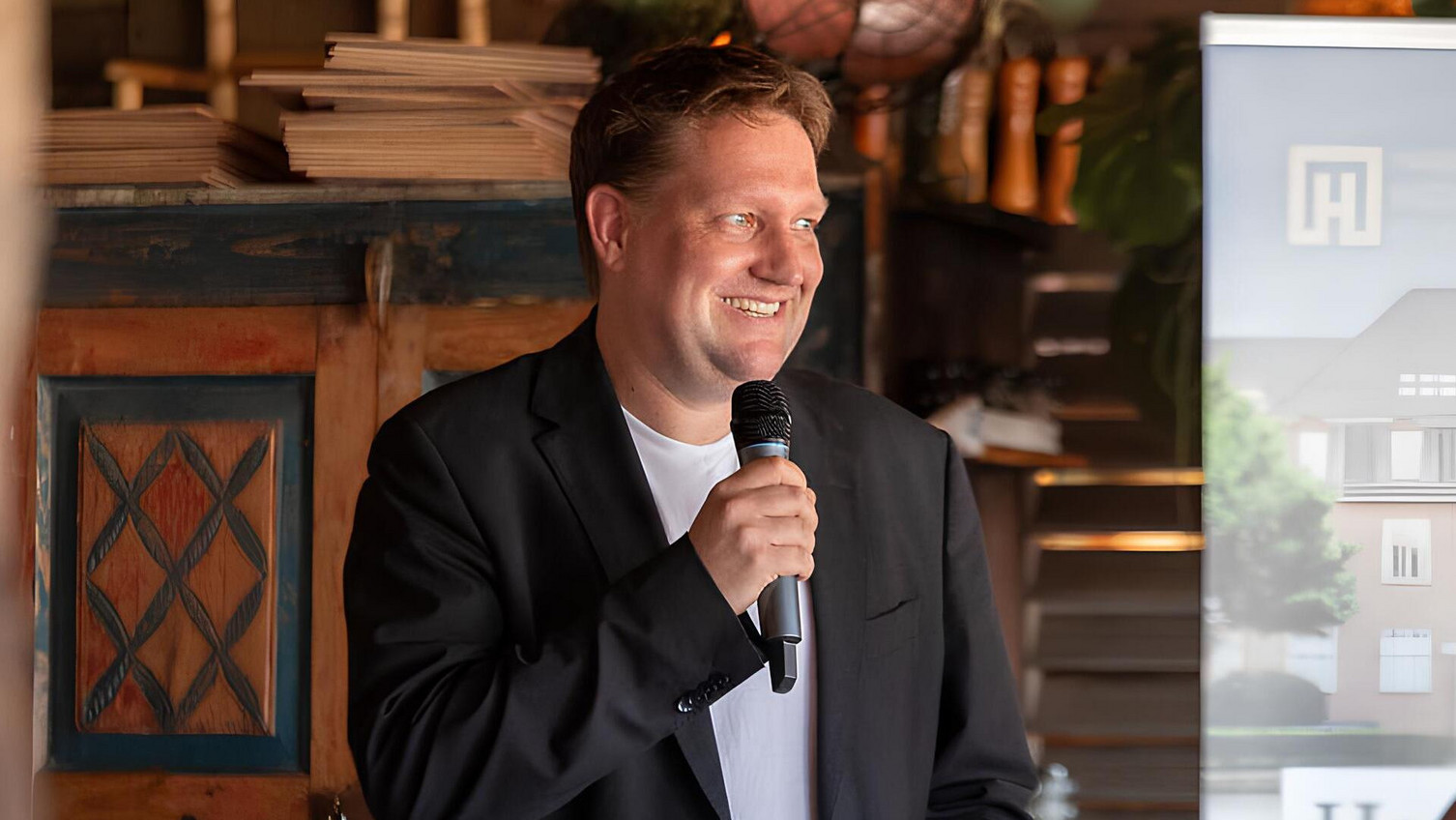
About ten years ago, Christian Heise embarked on an experiment that few thought possible: He wrote large portions of his doctoral dissertation publicly online—from data analysis and literature review to the actual writing, including documented revisions. Christian Heise wanted to prove that Open Science is not just a theoretical idea. At that time, the political scientist joined Leuphana and its Center for Digital Cultures (CDC). His radical idea was met with open ears: “I encountered an atmosphere that balanced critical scientific thinking with a great enthusiasm for experimentation,” recalls the alumnus. His data and texts can still be accessed today on the platform offene-doktorarbeit.de.
For Christian Heise, Open Science is more than just a method—it’s a conviction: “We live in a world where polarization has become a business model.” Openness, he says, can help create spaces for critical inquiry and nuanced debates: “Transparency is not a one-way street,” he explains.
As part of his doctoral dissertation, he therefore surveyed around 1,000 researchers to find out their views on open research communication. Here, too, the result was clear: While interest was high, open research communication was rarely implemented in day-to-day research.
At the same time, the project addressed a fundamental debate within the scientific community: Christian Heise criticizes the dominant role of academic publishers and advocates for making research results as openly accessible as possible: “Researchers should realize that where they publish their results also has a political dimension.”
Christian Heise worked at Google for about nine years before becoming president of the Hamburg Media School. Today, as Chief Strategy and Technology Officer at the SPIEGEL Group, he is responsible for strategy and technology. Christian Heise has also been invited to testify as an expert witness at hearings of the German Bundestag.
He still teaches at the Hamburg Media School for Leuphana in the “Digital Media” program. He describes Leuphana as an “extraordinary place.” The Center for Digital Cultures, in particular, created a space for him where he could bring together academia and digital culture: “It was a space for experimentation that I haven’t seen anywhere else in this form.”
Perhaps the fundamental idea behind his dissertation is more relevant than ever. Given the rapid development of artificial intelligence and digital technologies, traditional academic publications often take too long to become available. “How can you research artificial intelligence if the publication process takes a year?” asks Christian Heise. At the same time, he emphasizes that openness does not mean sacrificing academic quality, but rather making research results accessible more quickly. Christian Heise’s experiment is complete, but the debate on open science is not yet over.