
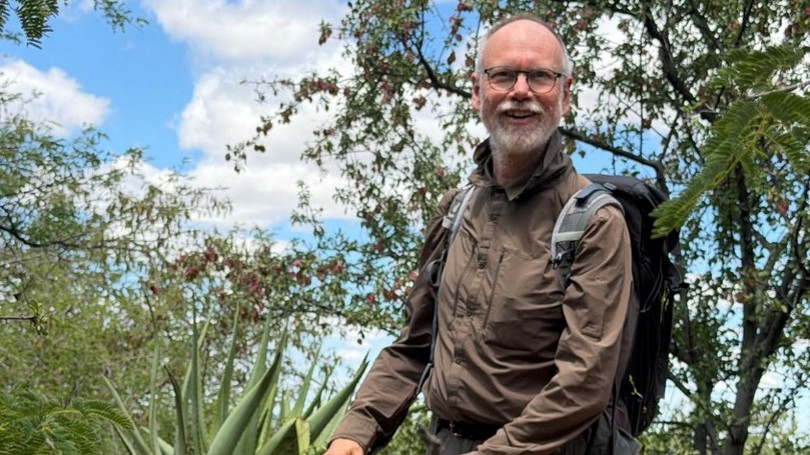
My research focuses on conservation and global change biology of insects, and the taxonomy of ground beetles (Carabidae). My work spans topics ranging from long-term trends of carabids in the Lüneburg Heath to highly diverse ecosystems in the Middle East, European High Mountains, and subtropical China. Species distribution models, ecological traits and analyses of poleward and uphill shifts are used to describe the impact of global change drivers on insects. A significant part of my work is dedicated to taxonomy and systematics, where I use integrated taxonomic approaches (morphometry, DNA sequences) including historical museum specimens to analyze new taxa and to contribute to our general knowledge of species diversity patterns. In addition, I employ modern predictive modeling to understand how global environmental changes shape patterns of species distribution and biodiversity in the future. I am a member of the IUCN Global Tiger Beetle Specialist Group.
https://www.leuphana.de/en/institutes/institute-of-ecology/team/thorsten-assmann.html
My work focuses on the vital intersection of agroecology and entomology, with an emphasis on insect conservation in agricultural landscapes. I look closely at strategies to promote beneficial insects, such as pollinators (e.g., wild bees) and natural pest controllers (e.g., ground beetles). Specifically, I investigate how landscape design and targeted measures, like flower strips and semi-open network corridors, can improve habitat quality. While much of my research centers on pollination ecology, I also integrate citizen science approaches into the large-scale monitoring of wild bees and wasps.
https://www.leuphana.de/en/institutes/institute-of-ecology/team/swantje-grabener.html
As an environmental scientist and qualified pharmacy technician, I work in teaching and research. In addition to teaching courses in environmental sciences and the biology teacher training programme, I support projects such as the long-term monitoring of arthropods (particularly ground beetles) in the Lüneburg Heath, as well as research projects such as the BEF project in China. Aside from the traditional morphology-based identification of insects, I also work with molecular techniques such as DNA barcoding.