
Vegetation Ecology and Biodiversity Conservation
NEWS:
09.10.2026 A new publication in Ecological Indicators shows an innovative method for analysing biodiversity effects in the canopy space of mixed-species forests; co-authored by Andreas Fichtner und Sylvia Haider.
28.09.2026 We are very pleased to announce that Luzie Glock received the Early-Career Researchers’ Award for the best PhD Talk entitled “Forest management effects on branch hydraulic traits across multiple levels of biological organization” at the joint NSO–GfÖ 2026 conference in Odense, Denmark.
28.09.2026 A new global study published in the Journal of Vegetation Science shows native plant communities lack biotic resistance to invaders at high-elevations; co-authored by Meike Buhaly, Sophia Turner, and Sylvia Haider.
02.09.2026 The new Yearbook of the Lüneburg Natural Science Society offers insights into the natural history of northeastern Lower Saxony, edited by Andreas Fichtner, Werner Härdtle und Johannes Prüter.
31.08.2026 A new global study published in Nature Ecology & Evolution shows that the mycorrhizal strategies of non-native plants vary strongly across biomes and disturbance regimes, with no universal mycorrhizal strategy promoting successful establishment; co-authored by Sylvia Haider. „Behind the Paper“ Blog.
31.08.2026 A new study published in Global Change Biology shows that increasing nutrient inputs may amplify the variability of grassland ecosystem functioning under a changing climate; co-authored by Sylvia Haider.
21.08.2026 New publication in Global Ecology and Biogeography presenting the long-term global database of the Mountain Invasion Research Network (MIREN); lead by Sylvia Haider with contributions from Meike Buhaly and Sophia Turner. Behind the scenes: 20 years of successful collaboration within the research network MIREN.
15.07.2026 A new study published in Journal of Applied Ecology shows effects of enhanced forest structure on diversity of understorey plant communities; co-authored by Pia Bradler, Werner Härdtle and Andreas Fichtner.
WHO WE ARE
The research groups Vegetation Ecology and Biodiversity Conservation (Prof. Dr. Sylvia Haider) and Conservation Biology and Fundamentals of Natural Sciences (Prof. Dr. Andreas Fichtner) focus on various aspects of vegetation ecology. Both groups work closely together, with biodiversity as a central, unifying theme. We integrate fundamental research with applied approaches to better understand the causes and consequences of biodiversity change for ecosystem processes.
Using field studies, experiments, and modern analytical methods, we investigate the links between biodiversity and ecosystem functioning, aiming to provide a solid scientific basis for effective strategies in sustainable land use.
The Vegetation Ecology and Biodiversity Conservation research group conducts fundamental research on plant functional traits to gain deeper insights into the functional importance of biodiversity in regulating ecological processes. We investigate how traits such as leaf morphology or nutrient acquisition strategies vary along environmental gradients, and how species diversity and identity shape ecosystem functioning and services, including carbon sequestration and habitat provision.
A key focus is on model regions with pronounced environmental gradients, such as mountain ecosystems. Studying these regions allows us to analyse plant community composition and biodiversity patterns at a global scale, and to better understand how these communities respond to climate warming, human-induced disturbances, and the introduction of non-native species.
The Conservation Biology and Fundamentals of Natural Sciences research group integrates fundamental research with applied conservation. Our work focuses on plants, plant communities, and their protection. Botany and the practical teaching of species identification are central to our activities, with the aim of advancing biodiversity conservation.
We investigate how environmental changes shape ecological processes and plant community composition and diversity, and how this knowledge can serve as a foundation for sustainable conservation strategies. In particular, we focus on forest ecosystems, exploring both core ecological processes and applied conservation strategies.
Through our teaching activities, we aim to inspire and empower students by fostering their knowledge and critical thinking skills to drive positive change. Our courses provide a comprehensive understanding of ecological processes and strategies for biodiversity conservation, as well as their significance for sustainable land use and the delivery of ecosystem services. Fundamental scientific concepts are also integrated, helping students to better understand processes in nature and landscapes.
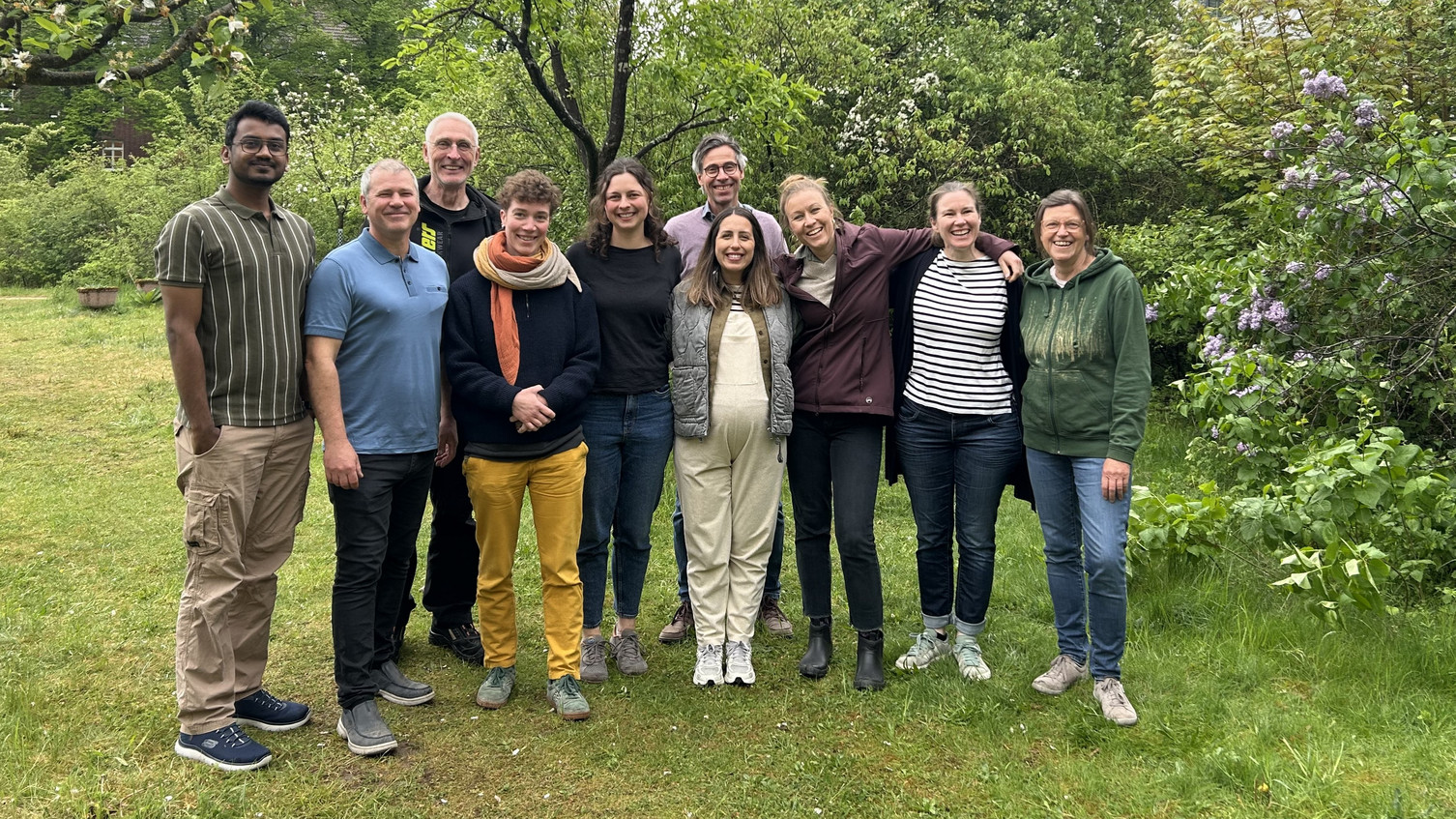
Head
Prof. Dr. Sylvia Haider, AG Vegetationsökologie und Biodiversitätsforschung
Prof. Dr. Andreas Fichtner, AG Naturschutzbiologie und Naturwissenschaftliche Grundlagen