
Prof. Dr. Andreas Fichtner
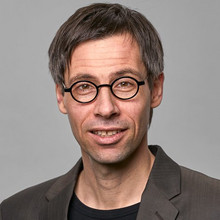
Institut für Ökologie
Werdegang
Prof. Dr. rer. nat. habil. Andreas Fichtner verantwortet an der Leuphana Universität Lüneburg das Fach Naturschutzbiologie und Naturwissenschaftliche Grundlagen. Kern seiner Arbeit ist es, ökologische Grundlagenforschung mit angewandten Naturschutzaspekten zu verknüpfen. Dabei leitet er aus seinen Forschungsergebnissen Handlungsempfehlungen und Schutzstrategien zum Erhalt und zur nachhaltigen Nutzung von Ökosystemen ab. Zu seinen Forschungsinteressen zählen:
- Funktionelle Biodiversitätsforschung
- Vegetationsökologie und globaler Wandel
- Waldökologie und Naturschutz
- Naturschutzbiologie von Pflanzen
Vita
- seit 2026: Außerplanmäßige Professur für Naturschutzbiologie und Naturwissenschaftliche Grundlagen, Leuphana Universität Lüneburg
- 2025: Ernennung zum apl. Professor, Leuphana Universität Lüneburg
- 2021: Habilitation, Venia Legendi für Ökologie, Leuphana Universität Lüneburg
- 2015-2025: Wissenschaftlicher Mitarbeiter, Institut für Ökologie, Leuphana Universität Lüneburg
- 2014-2015: Mitarbeiter der Umweltabteilung der Gemeinde Ratekau
- 2009-2014: Wissenschaftlicher Mitarbeiter, Institut für Natur- und Ressourcenschutz, Universität Kiel
- 2009: Promotion zum Dr. rer. nat., Fachbereich Ökologie, Universität Kiel
- 2006-2009: Wissenschaftlicher Mitarbeiter, Institut für Ökosystemforschung, Universität Kiel
- 2004-2006: Freier Mitarbeiter Silva Verde GmbH, Waldökologie und Forst Consulting
- 1998-2003: Studium der Agrarwissenschaften, Fachrichtung Landschaftsentwicklung, Universität Kiel
- 1994-1996: Abgeschlossene Berufsausbildung zum Gärtner (Berufszweig: biologisch-organischer Obstbau)
Projekte
-
FOR 5375 „Erhöhung der strukturellen Diversität zwischen Waldbeständen zur Erhöhung der Multidiversität und Multifunktionalität in Produktionswäldern“ - Teilprojekt SP9 „Waldbodenpflanzen in Zeit und Raum: Einfluss erhöhter struktureller Heterogenität auf die Dynamik von Pflanzengemeinschaften und Ökosystemstabilität
Andreas Fichtner (Wissenschaftliche Projektleiter*in) , Goddert von Oheimb (Wissenschaftliche Projektleiter*in)
→Projekt: Forschung
-
FOR 5375 „Erhöhung der strukturellen Diversität zwischen Waldbeständen zur Erhöhung der Multidiversität und Multifunktionalität in Produktionswäldern“ - Teilprojekt SP1: Synthesen und statistischer Service
Andreas Fichtner (Wissenschaftliche Projektleiter*in) , Jörg Müller (Wissenschaftliche Projektleiter*in) , Christian Ammer (Wissenschaftliche Projektleiter*in) , Orsi Decker (Wissenschaftliche Projektleiter*in) , Nico Eisenhauer (Wissenschaftliche Projektleiter*in) , Oliver Mitesser (Wissenschaftliche Projektleiter*in) , Carola Paul (Wissenschaftliche Ko-Projektleiter*in) , Dominik Seidel (Wissenschaftliche Projektleiter*in) , Rupert Seidl (Wissenschaftliche Projektleiter*in)
→Projekt: Forschung
-
Climate future lab DIVERSA - Forest disturbances under climate change in Lower Saxony: Understanding drivers and impacts to enhance forest adaptability
Sylvia Haider (Wissenschaftliche Projektleiter*in) , Andreas Fichtner (Wissenschaftliche Projektleiter*in)
→Projekt: Forschung
-
DFG-Forschungsgruppe 5375: Erhöhung der strukturellen Diversität zwischen Waldbeständen zur Erhöhung der Multidiversität und Multifunktionalität in Produktionswäldern - Teilprojekt 8: Pflanzengemeinschaften im Unterstand von Wäldern und Primärproduktion
Andreas Fichtner (Wissenschaftliche Projektleiter*in)
→Projekt: Forschung
-
DFG-Graduiertenkolleg 2324: TreeDì – Tree Diversity Interactions: Die Rolle von Baum-Baum-Interaktionen in lokalen Nachbarschaften in chinesischen subtropischen Wäldern; P1: Spatial above- and belowground complementarity
Goddert von Oheimb (Wissenschaftliche Projektleiter*in) , Andreas Fichtner (Wissenschaftliche Projektleiter*in) , Xiaojuan Liu (Wissenschaftliche Projektleiter*in) , Keping Ma (Wissenschaftliche Projektleiter*in) , Wensheng Bu (Wissenschaftliche Projektleiter*in)
→Projekt: Forschung
Publikationen
Bücher und Anthologien
- Jahrbuch des Naturwissenschaftlichen Vereins Lüneburg
Andreas Fichtner (Herausgeber*in) , Werner Härdtle (Herausgeber*in) , Johannes Prüter (Herausgeber*in) , 2026 Lüneburg , 204 S.Publikation: Bücher und Anthologien › Sammelwerke und Anthologien › Forschung
- Einfluss der Bewirtschaftungsintensität auf die Wachstumsdynamik von Waldmeister-Buchenwäldern (Galio odorat-Fagetum)
Andreas Fichtner (Autor*in) , 2009 Kiel , 150 S.Publikation: Bücher und Anthologien › Monografien › Forschung
Beiträge in Zeitschriften
- Tree-tree interactions revisited – A refined approach to quantify spatial complementarity in tree crowns
Alexander Täuber (Autor*in) , Andreas Fichtner (Autor*in) , Helge Bruelheide (Autor*in) , Andréa Davrinche (Autor*in) , Sylvia Haider (Autor*in) , Tobias Käcks (Autor*in) , Xiaojuan Liu (Autor*in) , Tama Ray (Autor*in) , Goddert von Oheimb (Autor*in) , 04.10.2026 , in: Ecological Indicators, 191 , 11 S.Publikation: Beiträge in Zeitschriften › Zeitschriftenaufsätze › Forschung › begutachtet
- Enhancing structural heterogeneity in managed forest landscapes promotes gamma but not beta diversity in understorey plant communities
Pia M. Bradler (Autor*in) , Benjamin M. Delory (Autor*in) , Sebastian Dittrich (Autor*in) , Christian Ammer (Autor*in) , Claus Bässler (Autor*in) , Marc W. Cadotte (Autor*in) , Anne Chao (Autor*in) , Po-Yen Chuang (Autor*in) , Werner Härdtle (Autor*in) , Oliver Mitesser (Autor*in) , Akira S. Mori (Autor*in) , Jörg Müller (Autor*in) , Nishizawa Keita (Autor*in) , Fons van der Plas (Autor*in) , Goddert von Oheimb (Autor*in) , Andreas Fichtner (Autor*in) , 04.07.2026 , in: Journal of Applied Ecology, 63, 7 , S. 1-16 , 16 S.Publikation: Beiträge in Zeitschriften › Zeitschriftenaufsätze › Forschung › begutachtet
- Contrasting direct and indirect effects of roe deer on herb layer vegetation in gaps and closed canopies
Ludwig Lettenmaier (Autor*in) , Marc W. Cadotte (Autor*in) , Sebastian Dittrich (Autor*in) , Kerstin Pierick (Autor*in) , Christian Ammer (Autor*in) , Pia M. Bradler (Autor*in) , Simone Cesarz (Autor*in) , Nico Eisenhauer (Autor*in) , Andreas Fichtner (Autor*in) , Daniel Kraus (Autor*in) , Soumen Mallick (Autor*in) , Atle Mysterud (Autor*in) , Goddert von Oheimb (Autor*in) , Christian Ristok (Autor*in) , Jörg Müller (Autor*in) , 19.06.2026 , in: Journal of Ecology, 114, 6 , S. 1-13 , 13 S.Publikation: Beiträge in Zeitschriften › Zeitschriftenaufsätze › Forschung › begutachtet
- Spatial microclimatic heterogeneity is associated with forest structure and biodiversity
Kerstin Pierick (Autor*in) , Dominik Seidel (Autor*in) , Pia Bradler (Autor*in) , Simone Cesarz (Autor*in) , Orsi Decker (Autor*in) , Benjamin M. Delory (Autor*in) , Sebastian Dittrich (Autor*in) , Martin Ehbrecht (Autor*in) , Nico Eisenhauer (Autor*in) , Andreas Fichtner (Autor*in) , Michael Junginger (Autor*in) , Michael Köhler (Autor*in) , Ludwig Lettenmaier (Autor*in) , Roman M. Link (Autor*in) , Soumen Mallick (Autor*in) , Jörg Müller (Autor*in) , Julia Rothacher (Autor*in) , Lena Rugen (Autor*in) , Guido F. Scholz (Autor*in) , Jean Léonard Stör (Autor*in) , Kim K. Weißing (Autor*in) , Clara Wild (Autor*in) , Goddert von Oheimb (Autor*in) , Christian Ammer (Autor*in) , Bernhard Schuldt (Autor*in) , 01.06.2026 , in: Ecological Indicators, 187 , 12 S.Publikation: Beiträge in Zeitschriften › Zeitschriftenaufsätze › Forschung › begutachtet
- Canopy Definitions Shape Canopy Space Filling–Productivity Relationships: Evidence From Terrestrial Laser Scanning
Tama Ray (Autor*in) , Andreas Fichtner (Autor*in) , Matthias Kunz (Autor*in) , Michaela Hildebrand (Autor*in) , Helge Bruelheide (Autor*in) , Catherine Potvin (Autor*in) , Florian Schnabel (Autor*in) , Goddert von Oheimb (Autor*in) , 01.05.2026 , in: Ecology and Evolution, 16, 5 , 11 S.Publikation: Beiträge in Zeitschriften › Zeitschriftenaufsätze › Forschung › begutachtet
Beiträge in Sammelwerken
- Nachbarschafts-Artenvielfalt kann trockenheitsbedingte Zuwachseinbußen bei Bäumen mindern
Werner Härdtle (Autor*in) , Andreas Fichtner (Autor*in) , 23.08.2024 München , S. 119-131 , 13 S.Publikation: Beiträge in Sammelwerken › Aufsätze in Konferenzbänden › Forschung › begutachtet
- Forest Ecosystems: A functional and biodiversity perspective
Andreas Fichtner (Autor*in) , Werner Härdtle (Autor*in) , 01.01.2021 Cham , S. 383-405 , 23 S.Publikation: Beiträge in Sammelwerken › Aufsätze in Sammelwerken › Forschung › begutachtet
- Land use change and the future of biodiversity
Carsten Hobohm (Autor*in) , Carl Beierkuhnlein (Autor*in) , Christine Börtitz (Autor*in) , V. Ralph Clark (Autor*in) , Nadja El Balti (Autor*in) , Andreas Fichtner (Autor*in) , Scott Franklin (Autor*in) , Thomas Gaens (Autor*in) , Werner Härdtle (Autor*in) , Andreas Skriver Hansen (Autor*in) , Monika Janišová (Autor*in) , Jan Jansen (Autor*in) , Martin Lindner (Autor*in) , Michaela Moro-Richter (Autor*in) , Volker Müller-Benedict (Autor*in) , Konrad Ott (Autor*in) , Karl Christoph Reinmuth (Autor*in) , Nils M. van Rooijen (Autor*in) , Matthias Sandberg (Autor*in) , Joop H.J. Schaminée (Autor*in) , Cindy Q. Tang (Autor*in) , Hans-Christoph Vahle (Autor*in) , Sula E. Vanderplank (Autor*in) , 01.01.2021 Cham , S. 451-483 , 33 S.Publikation: Beiträge in Sammelwerken › Aufsätze in Sammelwerken › Forschung › begutachtet
- Integrativer Klimaschutz im Wald: Herausforderungen und Handlungsoptionen
Andreas Fichtner (Autor*in) , Knut Sturm (Autor*in) , Martin Schmid (Autor*in) , Saskia von Steen (Autor*in) , 01.01.2014 Bonn , S. 57-63 , 7 S.Publikation: Beiträge in Sammelwerken › Aufsätze in Konferenzbänden › Forschung › begutachtet
- Gamma GAMM applied on tree growth data
Alain F. Zuur (Autor*in) , Andreas Fichtner (Autor*in) , Elena N. Ieno (Autor*in) , Anatoly A. Saveliev (Autor*in) , 01.01.2014 1. Aufl. Newburgh , S. 217-239 , 23 S.Publikation: Beiträge in Sammelwerken › Aufsätze in Sammelwerken › Forschung › begutachtet
Lehrveranstaltungen
1. introduction to ecological experimentation, sampling and analysis of biotic parameters.
2. measurement and significance of physical environmental factors using the example of atmospheric pressure and the solubility of oxygen as a function of temperature.
3. basic operations in the chemical laboratory and introduction to experimental work
4. introductory experiments on soil ecology
Part 1: Importance of soil acidity and soil colors - determination of pH and color of soil horizons
Part 2: Significance of soil types - Granulometric analysis and field method.
1. introduction to ecological experimentation, sampling and analysis of biotic parameters.
2. measurement and significance of physical environmental factors using the example of atmospheric pressure and the solubility of oxygen as a function of temperature.
3. basic operations in the chemical laboratory and introduction to experimental work
4. introductory experiments on soil ecology
Part 1: Importance of soil acidity and soil colors - determination of pH and color of soil horizons
Part 2: Significance of soil types - Granulometric analysis and field method.
1. introduction to ecological experimentation, sampling and analysis of biotic parameters.
2. measurement and significance of physical environmental factors using the example of atmospheric pressure and the solubility of oxygen as a function of temperature.
3. basic operations in the chemical laboratory and introduction to experimental work
4. introductory experiments on soil ecology
Part 1: Importance of soil acidity and soil colors - determination of pH and color of soil horizons
Part 2: Significance of soil types - Granulometric analysis and field method.
1. introduction to ecological experimentation, sampling and analysis of biotic parameters.
2. measurement and significance of physical environmental factors using the example of atmospheric pressure and the solubility of oxygen as a function of temperature.
3. basic operations in the chemical laboratory and introduction to experimental work
4. introductory experiments on soil ecology
Part 1: Importance of soil acidity and soil colors - determination of pH and color of soil horizons
Part 2: Significance of soil types - Granulometric analysis and field method.
Exercises are held biweekly with 4 hours per session. There are a total of 6 dates covering the following topics:
1. introduction to ecological experimentation, sampling and analysis of biotic parameters.
2. measurement and significance of physical environmental factors using the example of atmospheric pressure and the solubility of oxygen as a function of temperature.
3. basic operations in the chemical laboratory and introduction to experimental work
4. introductory experiments on soil ecology
Part 1: Importance of soil acidity and soil colors - determination of pH and color of soil horizons
Part 2: Significance of soil types - Granulometric analysis and field method.
Exercises are held biweekly with 4 hours per session. There are a total of 6 dates covering the following topics:
1. introduction to ecological experimentation, sampling and analysis of biotic parameters.
2. measurement and significance of physical environmental factors using the example of atmospheric pressure and the solubility of oxygen as a function of temperature.
3. basic operations in the chemical laboratory and introduction to experimental work
4. introductory experiments on soil ecology
Part 1: Importance of soil acidity and soil colors - determination of pH and color of soil horizons
Part 2: Significance of soil types - Granulometric analysis and field method.
1. introduction to ecological experimentation, sampling and analysis of biotic parameters.
2. measurement and significance of physical environmental factors using the example of atmospheric pressure and the solubility of oxygen as a function of temperature.
3. basic operations in the chemical laboratory and introduction to experimental work
4. introductory experiments on soil ecology
Part 1: Importance of soil acidity and soil colors - determination of pH and color of soil horizons
Part 2: Significance of soil types - Granulometric analysis and field method.
Darüber hinaus werden evolutionäre Zusammenhänge, Zellaufbau und die Keimblätter (Ecto-, Endo- und Mesoderm) erläutert. Die Studierenden erhalten eine Einführung in die grundlegenden Baupläne, Morphologie und Anatomie von Pflanzen- und Tierkörpern und entwickeln ein Basisverständnis ihrer strukturellen Organisation.
Praktische Übungen zu Mikroskopie, Präparation und biologischem Zeichnen vertiefen das Verständnis, ebenso wie die Themen Zellstruktur, Zellteilung und Zelldifferenzierung. Das Modul fördert zudem methodische Kompetenzen in biologischen Arbeitsweisen, Beobachtungstechniken und wissenschaftlichem Arbeiten.