
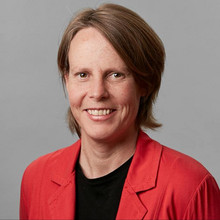
Prof. Dr. Vicky Temperton
Publikationen
Beiträge in Zeitschriften
- Nitrogen fixation and carbon assimilation of the desert legume Tephrosia apollinea under PEG-induced osmotic stress
M. Iftikhar Hussain (Autor*in) , Ali El-Keblawy (Autor*in) , Alaa Emad Aljabi (Autor*in) , Duaa Emad Aljabi (Autor*in) , Mohamad Hafez (Autor*in) , Amira Al Jasmi (Autor*in) , Tim Schampoel (Autor*in) , Vicky Temperton (Autor*in) , 01.02.2019 , in: Flora, 251 , S. 105-113 , 9 S.Publikation: Beiträge in Zeitschriften › Zeitschriftenaufsätze › Forschung › begutachtet
- Legume intercropping with the bioenergy crop sida hermaphrodita on marginal soil
Moritz Nabel (Autor*in) , Silvia D. Schrey (Autor*in) , Vicky Temperton (Autor*in) , Lucy Harrison (Autor*in) , Nicolai D. Jablonowski (Autor*in) , 02.07.2018 , in: Frontiers in Plant Science, 9 , 9 S.Publikation: Beiträge in Zeitschriften › Zeitschriftenaufsätze › Forschung › begutachtet
- Neighbourhood stories: role of neighbour identity, spatial location and order of arrival in legume and non-legume initial interactions
Vicky Temperton (Autor*in) , Marc Faget (Autor*in) , Emanuela W. A. Weidlich (Autor*in) , 01.03.2018 , in: Plant and Soil, 424, 1-2 , S. 171-182 , 12 S.Publikation: Beiträge in Zeitschriften › Zeitschriftenaufsätze › Forschung › begutachtet
- Biodiversity-multifunctionality relationships depend on identity and number of measured functions
Sebastian T. Meyer (Autor*in) , Robert Ptacnik (Autor*in) , Helmut Hillebrand (Autor*in) , Holger Bessler (Autor*in) , Nina Buchmann (Autor*in) , Anne Ebeling (Autor*in) , Nico Eisenhauer (Autor*in) , Christof Engels (Autor*in) , Markus Fischer (Autor*in) , Stefan Halle (Autor*in) , Alexandra Maria Klein (Autor*in) , Yvonne Oelmann (Autor*in) , Christiane Roscher (Autor*in) , Tanja Rottstock (Autor*in) , Christoph Scherber (Autor*in) , Stefan Scheu (Autor*in) , Bernhard Schmid (Autor*in) , Ernst Detlef Schulze (Autor*in) , Vicky Temperton (Autor*in) , Teja Tscharntke (Autor*in) , Winfried Voigt (Autor*in) , Alexandra Weigelt (Autor*in) , Wolfgang Wilcke (Autor*in) , Wolfgang W. Weisser (Autor*in) , 01.01.2018 , in: Nature Ecology and Evolution, 2, 1 , S. 44-49 , 6 S.Publikation: Beiträge in Zeitschriften › Zeitschriftenaufsätze › Forschung › begutachtet
- Accuracy and bias of methods used for root length measurements in functional root research
Leonie Meder (Autor*in) , Anna Lütje (Autor*in) , Rafael Weidlich (Autor*in) , Vicky Temperton (Autor*in) , Benjamin Delory (Autor*in) , Richard van Duijnen (Autor*in) , Emanuela W. A. Weidlich (Autor*in) , 01.11.2017 , in: Methods in Ecology and Evolution, 8, 11 , S. 1594-1606 , 13 S.Publikation: Beiträge in Zeitschriften › Zeitschriftenaufsätze › Forschung › begutachtet
Lehrveranstaltungen
With the increasing human pressure on ecosystems and cultural landscapes, one of the main challenges is to design and develop ecological restoration that supports the preservation of biodiversity, ecosystem services and livelihood security. A central theme here is to integrate the ecological dimension with the socio-cultural dimension in order to create sustainable landscapes and equitable societies. Therefore, restoration does not only focus on ecological functions and biodiversity, but also on human communities, their knowledge and values. Indeed, restoration requires of society as agents of sustainable transformations.
During the seminar in the second module we will examine how we can restore nature, how we can engage different social actors and how we can measure the impacts of restoration strategies on human wellbeing and biodiversity.
During the seminar in the second module we will examine how we can restore nature, how we can engage different social actors and how we can measure the impacts of restoration strategies on human wellbeing and biodiversity.
The module „Ecosystem functions and services“ comprises two parts: a set of lectures and a set of seminars.
The lectures will be introduce you to the global terrestrial biomes (from the tropical rainforest to the tundra), their most important ecosystems and their functions and services.
In the seminar, students will select one aspect of ecosystem functioning and services and present it to their fellow students for discussion. Each presenatation is based on one or two original scientific papers about biodiversity& ecosystem functions or biodiversity & ecosystem services . Overall the topics covered will show the diversity of perspectives and interpretations of the importance of biodiversity for how ecosystems function and the services they provide. [This semester we will focus on the provisioning of ecosystem functions and services from a global science-policy persoective and take a close look at the topic of what may be the best foci to mitigate climate change and biodiversity loss. You will see that it is not a simple topic.]
The module therefore includes discussions of important and up to date literature in the research field of ecosystem functioning and services. We will critically discuss the research findings in respect to their application in nature conservation and ecological restoration. You will learn the main characteristics of the global terrestrial biomes and the environmental variables shaping them, and the ecological theories that can be tested in them as well as sustainability relevant issues related to global change and ecosystems.
The lectures will be introduce you to the global terrestrial biomes (from the tropical rainforest to the tundra), their most important ecosystems and their functions and services.
In the seminar, students will select one aspect of ecosystem functioning and services and present it to their fellow students for discussion. Each presenatation is based on one or two original scientific papers about biodiversity& ecosystem functions or biodiversity & ecosystem services . Overall the topics covered will show the diversity of perspectives and interpretations of the importance of biodiversity for how ecosystems function and the services they provide. [This semester we will focus on the provisioning of ecosystem functions and services from a global science-policy persoective and take a close look at the topic of what may be the best foci to mitigate climate change and biodiversity loss. You will see that it is not a simple topic.]
The module therefore includes discussions of important and up to date literature in the research field of ecosystem functioning and services. We will critically discuss the research findings in respect to their application in nature conservation and ecological restoration. You will learn the main characteristics of the global terrestrial biomes and the environmental variables shaping them, and the ecological theories that can be tested in them as well as sustainability relevant issues related to global change and ecosystems.
The module „Ecosystem functions and services“ comprises two parts: a set of lectures and a set of seminars. PLEASE REGISTER ONLY FOR THE LECTURES AND THEN YOU SHOULD BE AUTOMATICALLY REGISTERED FOR THE SEMINAR TOO.
The lectures will be introduce you to the global terrestrial biomes (from the tropical rainforest to the tundra), their most important ecosystems and their functions and services.
In the seminar, students will select one aspect of ecosystem functioning and services and present it to their fellow students for discussion. Each presentatation is based on one or two original scientific papers about biodiversity& ecosystem functions or biodiversity & ecosystem services . Overall the topics covered will show the diversity of perspectives and interpretations of the importance of biodiversity for how ecosystems function and the services they provide. We will mainly be focussing on large biodiversity-ecosystem functioning experiments such as the Jena Experiment, Cedar Creek or BEF China.
The module therefore includes discussions of important and up to date literature in the research field of ecosystem functioning and services. We will critically discuss the research findings in respect to their application in nature conservation and ecological restoration. You will learn the main characteristics of the global terrestrial and aquatic biomes and the environmental variables shaping them, and the ecological theories that can be tested in them.
The lectures will be introduce you to the global terrestrial biomes (from the tropical rainforest to the tundra), their most important ecosystems and their functions and services.
In the seminar, students will select one aspect of ecosystem functioning and services and present it to their fellow students for discussion. Each presentatation is based on one or two original scientific papers about biodiversity& ecosystem functions or biodiversity & ecosystem services . Overall the topics covered will show the diversity of perspectives and interpretations of the importance of biodiversity for how ecosystems function and the services they provide. We will mainly be focussing on large biodiversity-ecosystem functioning experiments such as the Jena Experiment, Cedar Creek or BEF China.
The module therefore includes discussions of important and up to date literature in the research field of ecosystem functioning and services. We will critically discuss the research findings in respect to their application in nature conservation and ecological restoration. You will learn the main characteristics of the global terrestrial and aquatic biomes and the environmental variables shaping them, and the ecological theories that can be tested in them.
First part: key scientific background necessary to work in environmental sciences; second part: social-science components of environmental sciences, including value systems and governance.
The students begin to familiarize themselves with the strand-specific case (i.e., context, structures and processes, historical development), and explore possible joint research objects (Part A of the Transdisciplinary Research Process).
Some information on Hiddensee: It is a microcosm of the situation in Germany in relation to topics of nature conservation and ecological restoration in a social-ecological context. It is also a microcosm of Germany politically and legally.
The limited size of the island plus the ease with which one can access a wide variety of different ecological habitats, plus a growing list of local actors with whom we have managed to make contact and build some forms of relationships, makes it very good for a TD course on the interface between conservation and law.
- The overall concept is that students will explore and get to know the wide variety of habitats on the island and the conservation and restoration opportunities and challenges related to these habitats and their legal protection. At the same time, based on certain local actor groups (people involved in conservation, the local primary school kids and teachers, the inhabitants of the fascinating village of Neuendorf, an old fishing village) we develop TD topics either based on previous work from the first cohorts of students and explore new directions in TD on the island.
In order to be able to effectively and meaningfully engage with local actors on these topics, students needs a foundation in the key issues related to conservation and legal protection. For this reason, it is very important for students to work in groups on getting to know their own habitat type (grasslands, forest, heathland and the common of the village of Neuendorf).
Some information on Hiddensee: It is a microcosm of the situation in Germany in relation to topics of nature conservation and ecological restoration in a social-ecological context. It is also a microcosm of Germany politically and legally.
The limited size of the island plus the ease with which one can access a wide variety of different ecological habitats, plus a growing list of local actors with whom we have managed to make contact and build some forms of relationships, makes it very good for a TD course on the interface between conservation and law.
- The overall concept is that students will explore and get to know the wide variety of habitats on the island and the conservation and restoration opportunities and challenges related to these habitats and their legal protection. At the same time, based on certain local actor groups (people involved in conservation, the local primary school kids and teachers, the inhabitants of the fascinating village of Neuendorf, an old fishing village) we develop TD topics either based on previous work from the first cohorts of students and explore new directions in TD on the island.
In order to be able to effectively and meaningfully engage with local actors on these topics, students needs a foundation in the key issues related to conservation and legal protection. For this reason, it is very important for students to work in groups on getting to know their own habitat type (grasslands, forest, heathland and the common of the village of Neuendorf).
This is the Master Forum for SEBS students in the Sustainability Master. It consists of two longer sessions in class, with alternating presence of the two lecturers. During these two sessions we will be discussing the exposes that have been uploaded to MyStudy.
The first session will be on earlier on in the semester on 11.11.2026 from 14.15 to 17.45 in 14.204 with Dave Abson, and the second on later on in the winter semester (with Vicky Temperton), on 20.01.2027 also from 14.15 until 17.45, in 14.204. Rooms may change- this will be updated closer to the time.
Between these dates students are expected to make appointments with their direct supervisors to discuss their thesis ideas and plans.
The first session will be on earlier on in the semester on 11.11.2026 from 14.15 to 17.45 in 14.204 with Dave Abson, and the second on later on in the winter semester (with Vicky Temperton), on 20.01.2027 also from 14.15 until 17.45, in 14.204. Rooms may change- this will be updated closer to the time.
Between these dates students are expected to make appointments with their direct supervisors to discuss their thesis ideas and plans.
This is the PhD Colloquium of the Institute of Ecology, where PhD students present their methods, approaches and results and then discuss the results and implications with their supervisors and with other researchers in the institute. The colloquium takes place once per month, on the 4th Wednesday of every month at 16.15 h, in HS5.