
Prof. Dr. Oliver Genschow
Vita
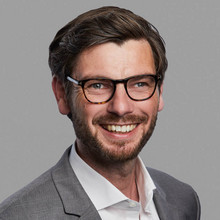
Oliver Genschow is professor for Cognitive-, Social-, and Economic Psychology. In his research, he mainly focuses on interaction patterns among humans with a strong focus on perception-action coupling, such as imitation, mimicry, and anticipated action.
Further information on the underlying processes of imitative behavior and the possibility of measuring automatic imitation in online studies can be found on the following homepage: https://www.automatic-imitation.com
Other topics of investigation include free will beliefs, social norms, consumer behavior, implicit attitude measures and approach-avoidance motivation. As one of four editor-in-chiefs of the In-Mind magazine, Oliver Genschow supports science communication from scientifically working psychologists.
Links
Academic Career
- Since Oct. 2022: Leuphana Universität Lüneburg, Professor for Cognitive-, Social-, and Economic Psychology
- Feb. 2022 – Aug. 2022: Parental leave
- Jan. 2017 – Sept. 2022: University of Cologne, Juniorprofessor for Social Psychology: Social Cognition
- Okt. – Dec. 2016: University of Basel (Switzerland): PostDoc at the chair of Social Psychology
- Sept. 2013 – Okt. 2016: Ghent University (Belgium): PostDoc at the chair of Experimental Psychology
- Jan. 2013 – Aug. 2013: University of Mannheim, PostDoc at the chair of Consumer and Economic Psychology
- Feb. 2011 – Dec. 2012: University of Mannheim, PhD student at the chair of Consumer and Economic Psychology
- Feb. 2010 – Jul. 2012: University of Basel (Switzerland), Research Assistant at the chair of Social- and Economic Psychology
Projects
-
Social innovative transformation by including work spaces (SinTrA)
Steffen Farny (Project manager, academic) , Oliver Genschow (Project manager, academic) , David D. Loschelder (Project manager, academic) , Svenja Rehwinkel (Project staff) , Monika Imschloß (Project manager, academic) , Melissa Striethörster (Project staff) , Josephine Führer (Project staff)
→Project: Research
Courses
The lecture provides an introduction to the field of Cognitive Psychology. It covers physiological and psychological processes of attention and perception, learning and memory, as well as language. In addition, the module will touch topics related to thinking and reasoning, consciousness, as well as embodiment and sense of agency."