
Research project
This research project, based at the Institute of Political Science, addresses current questions in political economy and economic sociology from a new perspective. It starts from the assumption that key issues such as ownership, investment, and value creation can be observed in particularly prominent form in the equestrian world. Through dialogue with key stakeholders from sport, breeding, and related fields, the project aims to develop a deeper understanding of the functioning of the equestrian world and to generate new insights into these issues. As such, the goal is to provide a micro‑sociological foundation for contemporary economic transformations.
 ©Photo by Hans-Peter Traunig on Unsplash
 ©Photo by Niccolò Chiamori on Unsplash
 ©Photo by K. K. on Unsplash
Although the exact timing of its domestication remains debated, from around 5,500 years ago onward the horse played a critical role in processes of territorial expansion, military conquest, agricultural transformation, and economic development. With the Industrial Revolution and subsequent innovations in transport and communication, horses were gradually replaced and, by the mid‑20th century, largely confined to sporting and leisure activities, seemingly losing the exceptional status they had held throughout much of human history.
 ©Photo by Virginia Commonwealth University Libraries on Unsplash
 ©Photo by Bozhin Karaivanov on Unsplash
The research project challenges this narrative, arguing that the horse has retained broader socio‑economic significance well into the contemporary era. The equestrian world has transformed into a dynamic economic sector fully integrated into the global economy, with an estimated annual global impact of approximately $300 billion, encompassing 60.5 million horses, 335 million riders, and 4.2 million jobs (FEI, 2024).
The project focuses on the worlds of equestrian sports, such as show jumping and dressage, and horse racing, which share several key features. Both are embedded in institutional frameworks organized, among other things, by equestrian federations and breeding associations. They are shaped by large firms operating on a global scale, significant technological innovations, as well as substantial financial investments. As such, they provide a useful lens for exploring recurring themes in global political economy and economic sociology.
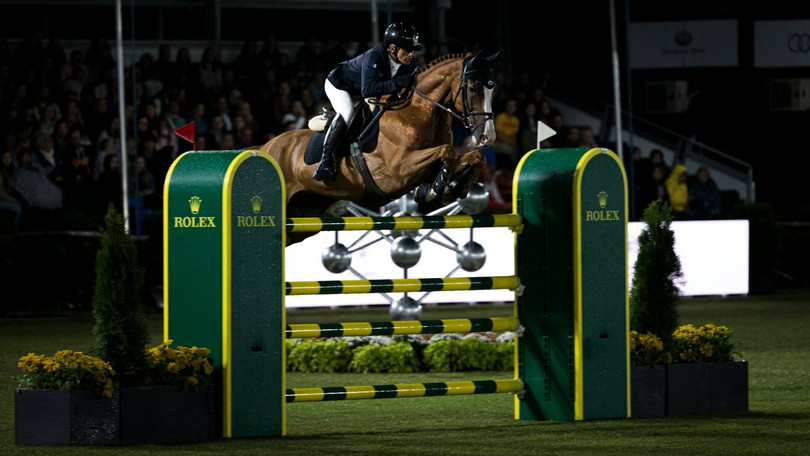
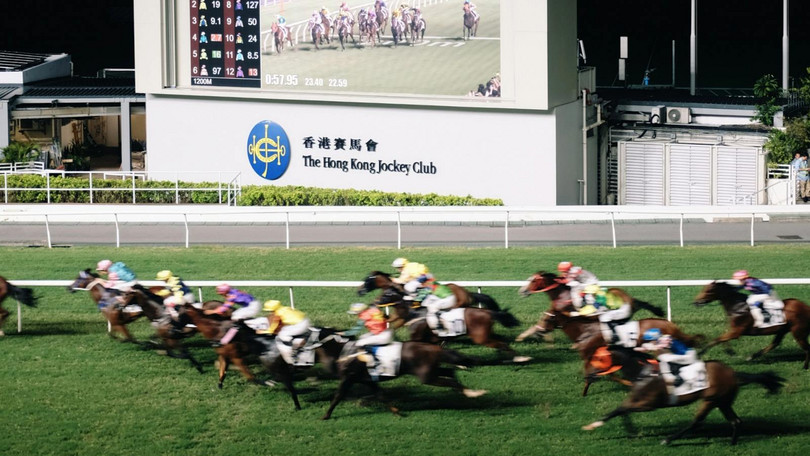
Recent research at the intersection of political economy and economic sociology has pointed to important changes in the organization of contemporary economies, including a growing importance of assets alongside commodities, and of capital investment alongside market exchange. Existing work has examined both the broader drivers of these developments and the mechanisms that produce the asset form, while also highlighting the implications for processes of wealth formation and social stratification. Building on this research, the project develops a micro‑sociological account of contemporary economic transformations, illustrated through the case of the equestrian world.
Insights into the equestrian world
- How do equestrian sports and horse racing combine passion, expertise, and long‑term commitment with economic and investment considerations?
- If an investment logic exists, what are the underlying motivations? Which aspects of the sport, the animal, or breeding practices inform investment decisions?
- How is the value of a horse, a bloodline, or an equestrian firm determined, and which factors contribute to value creation over time?
- How has the equestrian world as an economic sector evolved in recent years, and how do these developments differ across disciplines and national contexts?
Contemporary economic processes in focus
- How do economic things become constituted as commodities or assets?
- What role does ownership play in this regard?
- How is economic value defined and estimated, and how are valuation practices related to investment practices?
- In what broader economic, social, institutional‑legal, and scientific ecosystems do these dynamics unfold?
- How have they evolved over time, and how do they vary across national contexts?
I am a postdoctoral researcher in Political Economy at the Institute of Political Science at Leuphana University in Lüneburg, where I am currently developing this research project on the equestrian world. Before that, I worked as a research associate at Bielefeld University and the University of Wuppertal. My academic background lies at the intersection of Global Political Economy, European Studies and Public Policy Analysis. In my PhD, I analyzed processes of institutional and policy change in EU fiscal policy. My research has been published in international journals such as Journal of European Integration, JCMS: Journal of Common Market Studies, and The Economists’ Voice, and I have also served as a reviewer for similar academic journals. Initial ideas for this research project have been presented at international conferences, including the Max Planck Summer School for Women in Political Economy or the Congress of the German Sociological Association. Beyond my academic work, I have been an avid horse lover since my early childhood in Normandy, France, and still spend much of my free time at the stables, an interest that partly inspired this research project…
Dr. Aanor Roland
Universitätsallee 1, C4.016b
21335 Lüneburg
Fon +49.4131.677-2454
aanor.roland@leuphana.de