
Prof. Dr. Dawid Friedrich
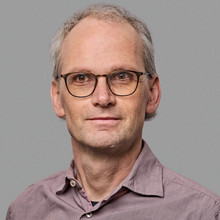
Supernumerary Professor, Institute of Political Sciences
Projects
-
Jugend und Politik - ein schwieriges Verhältnis? Schüler als Jugendforscher
Dawid Friedrich (Project manager, academic) , Andreas Lutter (Project manager, academic)
→Project: Practical Project
-
Workshop "Representation in the European Union: Coping with present challenges to democracy", 16. bis 18. September 2010 in Lüneburg
Dawid Friedrich (Project manager, academic) , Sandra Kröger (Project manager, academic)
→Project: Scientific event
-
Representation in the European Union
Dawid Friedrich (Project manager, academic) , Sandra Kröger (Partner)
→Project: Research
-
PPGG-Programm PELP -Public Policy and Good Governance
Dawid Friedrich (Project manager, academic)
→Project: Teaching
Publications
Books and anthologies
- The representative turn in EU studies
Sandra Kröger (Editor) , Dawid Friedrich (Editor) , 2016 Abingdon , 145 p.Research output: Books and anthologies › Collected editions and anthologies › Research
- The representative turn in EU studies
Sandra Kröger (Editor) , Dawid Friedrich (Editor) , 2013 Abingdon , 153 p.Research output: Books and anthologies › Special Journal issue › Research
- The Challenge of Democratic Representation in the European Union
Dawid Friedrich (Editor) , Sandra Kröger (Editor) , 2012 1 ed. Houndmills , 306 p.Research output: Books and anthologies › Book › Research
- Democratic participation and civil society in the European Union
Dawid Friedrich (Author) , 2011 1 ed. Manchester , 232 p.Research output: Books and anthologies › Monographs › Research
Journal contributions
- Editorial to the forum “International Relations of science and knowledge”
Thomas Pfister (Author) , Dawid Friedrich (Author) , 02.01.2015 , in: Innovation - The European Journal of Social Science Research, 28, 1 , p. 1-2 , 2 p.Research output: Journal contributions › Other (editorial matter etc.) › Research
- Democratic representation in the EU: Two kinds of subjectivity
Sandra Kröger (Author) , Dawid Friedrich (Author) , 01.02.2013 , in: Journal of European Public Policy, 20, 2 , p. 171-189 , 19 p.Research output: Journal contributions › Journal articles › Research › peer-review
- Introduction: The representative turn in EU Studies
Sandra Kröger (Author) , Dawid Friedrich (Author) , 01.02.2013 , in: Journal of European Public Policy, 20, 2 , p. 155-170 , 16 p.Research output: Journal contributions › Journal articles › Research › peer-review
- Free movement and the emergence of European social citizenship
Kerstin Blome (Author) , Dawid Friedrich (Author) , Patrizia Nanz (Author) , 01.01.2012 , in: Österreichische Zeitschrift für Politikwissenschaft (ÖZP), 41, 4 , p. 383-398 , 16 p.Research output: Journal contributions › Journal articles › Research › peer-review
- Zivilgesellschaftliche Partizipation in der EU-(Forschung): Eine ernüchternde Bilanz
Sandra Kröger (Author) , Dawid Friedrich (Author) , 01.01.2012 , in: Integration, 35, 1 , p. 53-59 , 7 p.Research output: Journal contributions › Critical reviews › Research
Contributions to collected editions/anthologies
- The Democratization of the European Union: an empirical assessment
Dawid Friedrich (Author) , 16.05.2014 1 ed. London , p. 168-176 , 9 p.Research output: Contributions to collected editions/anthologies › Contributions to collected editions/anthologies › Research
- Democratic representation in transnational citizens’ forums?
Dawid Friedrich (Author) , 01.01.2014 , p. 161-180 , 20 p.Research output: Contributions to collected editions/anthologies › Chapter › Research › peer-review
- Introduction: The representative turn in EU studies
Sandra Kröger (Author) , Dawid Friedrich (Author) , 13.08.2013 Abingdon , p. 1-16 , 16 p.Research output: Contributions to collected editions/anthologies › Contributions to collected editions/anthologies › Research › peer-review
- European governance and the deliberative challenge
Dawid Friedrich (Author) , 01.01.2013 , p. 35-56 , 22 p.Research output: Contributions to collected editions/anthologies › Chapter › Research › peer-review
- Political Representation in the EU: A second transformation?
Dawid Friedrich (Author) , Sandra Kroeger (Author) , 01.01.2012 Houndmills , p. 3-20 , 18 p.Research output: Contributions to collected editions/anthologies › Chapter › Research › peer-review
Activities
-
3rd International Conference on Democracy as Idea and Practice
Dawid Friedrich (Speaker)
→Activity: Conference Presentations › Research
-
42nd UACES Annual Conference - UACES 2012
Dawid Friedrich (Speaker)
Activity: Conference Presentations › Research
-
42nd UACES Annual Conference - UACES 2012
Dawid Friedrich (Speaker)
Activity: Conference Presentations › Research
-
The Future of the EU after Lisbon - the Crisis and Democracy in Europe
Dawid Friedrich (Lecturer)
Activity: Guest lectures › Research
-
Europa-Union, Kreisverband Hamburg-Harburg
Dawid Friedrich (Speaker)
Activity: Guest lectures › Transfer
Courses
ACHTUNG: Eine nachträgliche Anrechnung eines bereits vollständig absolvierten Praktikums ist nicht möglich!
Teilnahmevoraussetzung sind mindestens 4 Wochen Praktikum (in Vollzeit) im Anschluss an den Einführungsworkshop.
1. Einführungsworkshop (Teilnahme obligatorisch)
Der Einführungsworkshop mit den Lehrenden des Komplementärstudiums dient der Reflexion von Wissen und Erfahrungen. So entwickeln Sie im Workshop Perspektiven für die Praxisphase und erarbeiten eine Leitfrage.
2. Betreute Ausarbeitung einer Leitfrage
Ziel der Leitfrage ist die Verknüpfung von theoretischen Inhalten des Studiums mit der Praxisphase durch Bearbeitung einer wissenschaftlichen Fragestellung.
Zur fachlichen Reflexion und weiteren Ausarbeitung Ihrer Leitfrage führen Sie zwei Gespräche mit dem Dozenten. Ein Gespräch sollte vor oder zu Beginn der Praxisphase geführt werden und ein weiteres zu deren Abschluss. Die Ausarbeitung Ihrer Leitfrage wird benotet (50%).
3. Reflexionsfragen vor, während und nach der Praxisphase
Die Bearbeitung der Fragen sollen Ihnen helfen, Ihre Praxisphase in Bezug auf Ihr Studium zu reflektieren. Die Fragen sind in zwei Abschnitte unterteilt: Ihre Erwartungen im Vorfeld, Ihre Beobachtungen während der Durchführung und der Rückblick vor dem Hintergrund Ihrer Erfahrungen nach dem Abschluss der Praxisphase. Die Bearbeitung wird bewertet und geht in die Benotung ein (20%).
4. Abschlussworkshop (Teilnahme obligatorisch)
Durch die Präsentation Ihrer Ergebnisse im Abschlussworkshop nehmen Sie die Fragestellungen aus dem Berufsleben direkt wieder mit in Ihr Studium. Gleichzeitig überprüfen Sie die Zweckdienlichkeit von wissenschaftlichen Theorien in beruflichen Kontexten. So lassen Sie andere Studierende an Ihren Erfahrungen teilhaben und profitieren selbst von den Erlebnissen ihrer Kommilitoninnen und Kommilitonen. Ihre abschließende Präsentation wird von den Lehrenden des Komplementärstudiums benotet (30%).