
MBA Sustainability Management: Ulrike Stroh – How Sustainability Is Setting a Trend
2026-11-09 Many schools would like to integrate sustainability into their daily routines but don’t know how. Ulrike Stroh completed the part-time MBA in Sustainability Management at Leuphana Professional School in 2022. With her master’s thesis, she laid the foundation for a company that guides schools on their path toward greater sustainability. To date, “Edustain” has advised more than 250 schools.
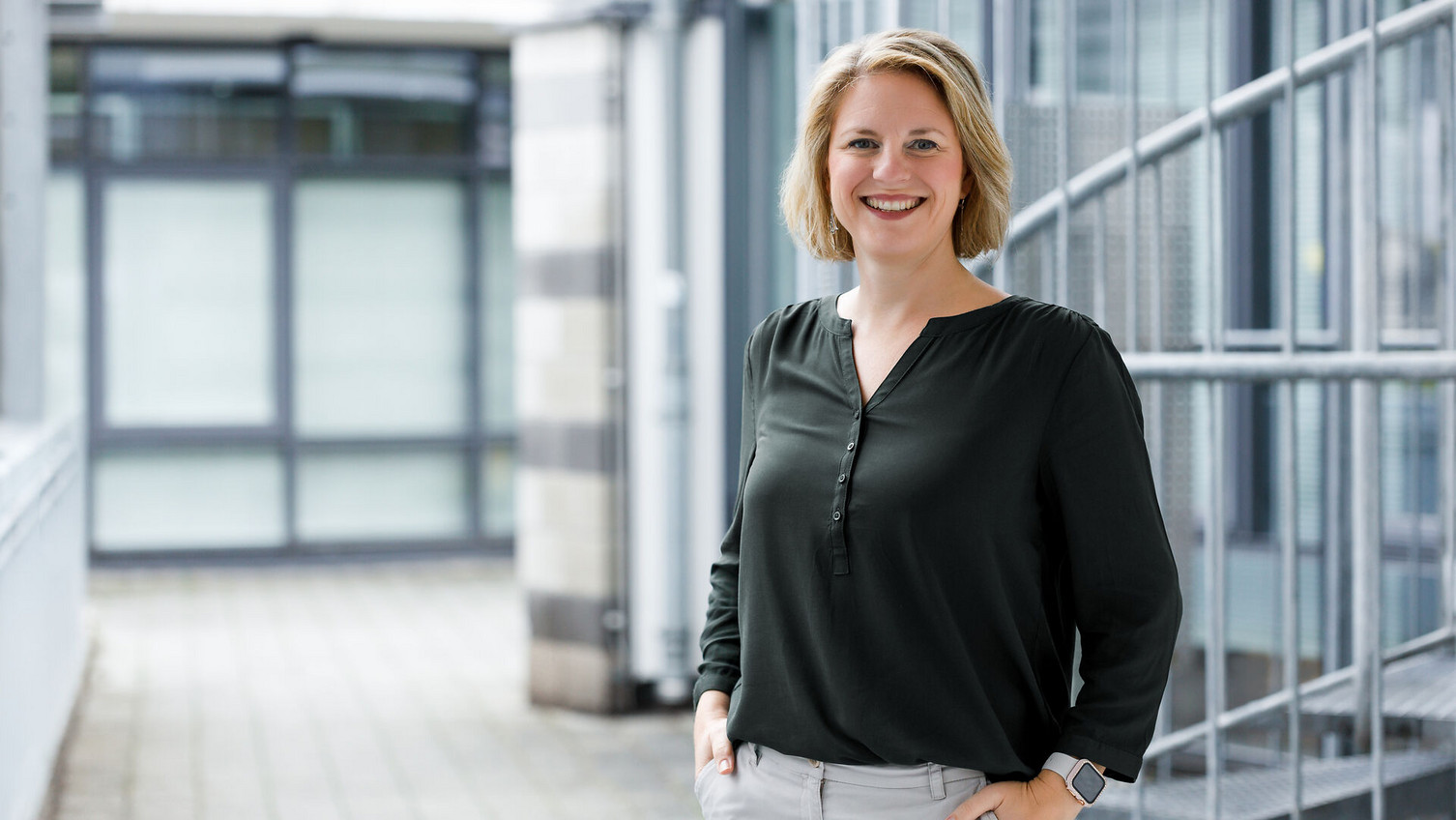
Waste sorting, school gardens, or solar panels: Schools often have one or two initiatives that contribute to sustainability. “But in our conversations, we’ve found that school administrators, teachers, and students alike want a school that is holistically sustainable,” explains Ulrike Stroh. With its “Whole School Approach,” “Edustain” therefore takes a comprehensive view of the entire school. This includes energy consumption, waste reduction, and the design of the school grounds, as well as equal opportunity, inclusion, democracy education, and student participation.
During the COVID-19 pandemic, she began to wonder: How can I contribute to a more sustainable world? As a mother of three, the topic of school was an obvious one. After graduating from high school, Ulrike Stroh studied international business administration as part of a vocational academy program at Lufthansa. She has been working there for about 20 years now, currently as Corporate Sustainability Manager. “With the MBA in Sustainability Management, I wanted to answer the question of what else successful corporate management should be measured by—besides economic success.”
The MBA in Sustainability Management is designed to empower students to implement sustainable development and corporate social responsibility (CSR) in their companies. The idea for her company came to her while she was a student: “We translated the United Nations’ Sustainable Development Goals into practical applications for schools,” explains Ulrike Stroh.
For both students and teachers, the school is meant to become a space for hands-on experience: “Those who help shape their own learning and living environment experience firsthand how change happens.” In concrete terms, this might look like this: In geography class, children learn about the effects of emissions; in math class, they calculate their school’s carbon footprint; in class councils, ideas for reduction are gathered; in a panel discussion, they debate these with school administrators, parents, and school authorities; and finally, decisions are made and implemented collectively; Through her company, Ulrike Stroh supports school administrators and teachers in pursuing this path: “Many often don’t know where or how to start.”
She has now worked with over 250 schools throughout Germany. This reach has been achieved primarily through collaboration with ministries, state institutions, and school authorities. In Lower Saxony, for example, the company facilitates a professional development program for school administrators that spans an entire school year. A partnership has also developed with Leuphana University of Lüneburg: The team contributed methodological components to a project led by Prof. Dr. Daniel Fischer and funded by the German Federal Environmental Foundation. During kick-off and wrap-up workshops, the team helped school administrators identify opportunities and implement concrete measures.
“I wanted to be able to contribute to sustainable development. Now we’re training teachers who will become advocates for sustainability,” Ulrike Stroh summarizes. With her master’s thesis, she has done more than just her homework.