
Dr. Robin Kuchar
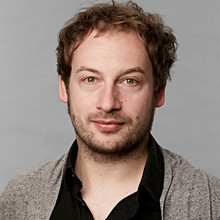
Research associate, Professur für Soziologie der Organisation und der Kultur
Vita
Robin completed his MA studies in Applied Cultural Science in early 2009 by finishing his thesis about Popular Music and Globalization.
In 2017, he completed his phd thesis about the development and transformation of DIY based music venues. Carrying out three case studies of DIY based music clubs in Hamburg-St. Pauli, the analysis focuses changing spatial strategies, identities and self-conceptions of the clubs within the spheres of local scenes, the city and the Music Industries. The related book 'Musikclubs zwischen Szene Stadt und Music Industries. Autonomie, Vereinnahmung, Abhängigkeit' was published in 2020.
Currently, Robin works as Post-Doc Researcher and Lecturer at Institute of Sociology and Cultural Organization. His main research interests are Culture and the City, DIY & Underground Scenes, Production of Culture, Music Industries, Livemusic & Music Venues and Cultural Participation.
He is co-series editor of 'Urban Music Studies', member of IASPM, KISMIF and co-initiator of the Urban Music Studies Scholars Network (www.urbanmusicstudies.org).
Apart from Academia, Robin worked as project manager for the ‚Hamburg Day of Music 2012‘ (NGO) and for the mission orientated research project ‘Who is Musicking in Hamburg?’ (2009), initiated by the municipality of Hamburg. For years, he was/ is organizing concerts, running a DIY Music Label and doing live-sound engineering.
Projects
-
TrICo Subprojekt - Community Art and Culture
Timon Beyes (Project manager, academic) , Boukje Cnossen (Project manager, academic) , Robin Kuchar (Project staff) , Lana Bartusch (Project manager, academic) , Maximilian Schellmann (Project staff) , Susan Börner (Project staff)
→Project: Transfer (R&D project)
-
Until Covid-19 do us apart. Music Scenes in Lockdown
Robin Kuchar (Project staff) , Volker Kirchberg (Project staff) , Alenka Barber-Kersovan (Project staff)
→Project: Research
-
Groove the City 2020
Volker Kirchberg (Project manager, academic) , Robin Kuchar (Project staff) , Alenka Barber-Kersovan (Project staff) , Lisa Gaupp (Project staff)
→Project: Scientific event
-
Groove the City 2018
Volker Kirchberg (Project manager, academic) , Robin Kuchar (Project staff) , Alenka Barber-Kersovan (Project staff) , Lisa Gaupp (Project staff)
→Project: Scientific event
-
Urban Music Studies Scholars´Network
Robin Kuchar (Project manager, academic) , Volker Kirchberg (Project manager, academic) , Lisa Gaupp (Project manager, academic) , Alenka Barber-Kersovan (Project manager, academic)
Project: Research
Publications
Books and anthologies
- Urban Music Studies - Theories and Methods
Robin Kuchar (Editor) , Jess Reia (Editor) , Alenka Barber-Kersovan (Editor) , 2026Research output: Books and anthologies › Collected editions and anthologies › Research
- Musikclubs zwischen Szene, Stadt und Music Industries: Autonomie, Vereinnahmung, Abhängigkeit.
Robin Kuchar (Author) , 2020 1 ed. Wiesbaden , 314 p.Research output: Books and anthologies › Book › Research
- Music City: Musikalische Annäherungen an die kreative Stadt
Volker Kirchberg (Editor) , Robin Kuchar (Editor) , Alenka Barber-Kersovan (Editor) , 2014 1. ed. Bielefeld , 344 p.Research output: Books and anthologies › Collected editions and anthologies › Research
Journal contributions
- Music Scenes and Cultural Ecosystems: Alternative Practices between 'Official Policy Recognition' and 'Post-Pandemic Austerity'
Robin Kuchar (Author) , 09.09.2025 , in: DIY, Alternative Cultures & Society, 3, 2 , p. 139-152 , 14 p.Research output: Journal contributions › Journal articles › Research › peer-review
- From DIY avantgardism to icons of German New Wave:: Einstürzende Neubauten and the legacy of ‘Ingenious Dilletants’
Robin Kuchar (Author) , 01.01.2024 , in: Rock Music Studies, 11, 1 , p. 71-88 , 18 p.Research output: Journal contributions › Journal articles › Research › peer-review
- Vom stadträumlichen Pionier zur Kulturstätte inmitten der Pandemie. Musikclubs als (sozial-)räumliche Akteure urbaner Musikökosysteme
Robin Kuchar (Author) , 01.06.2023 , in: Standort, 47, 2 , p. 127-135 , 9 p.Research output: Journal contributions › Journal articles › Transfer › peer-review
- The “First Ones to Close and Last Ones to Re-Open”: Music Venues, COVID-19 and the Handling of the Crisis
Robin Kuchar (Author) , Maxine Frey (Author) , Julia Gooß (Author) , Tim Mertens (Author) , 22.06.2022 , in: Journal of World Popular Music, 9, 1-2 , p. 170-196 , 27 p.Research output: Journal contributions › Journal articles › Research › peer-review
- Music Venues in Transition: States of Autonomy, Dependence and Subcultural Institutionalization
Robin Kuchar (Author) , 01.01.2020 , in: Todas as Artes, 3, 2 , p. 25-41 , 17 p.Research output: Journal contributions › Journal articles › Research › peer-review
Contributions to collected editions/anthologies
- Musikclubs und Stadt: Zwischen Underground, urbaner Infrastruktur und ‚subkultureller Institutionalisierung‘
Robin Kuchar (Author) , 01.01.2026 MünsterResearch output: Contributions to collected editions/anthologies › Chapter › Research › peer-review
- Musikclubs in der Livemusikökologie: Situation und kulturpolitische Implikationen in Zeiten der Pandemie
Robin Kuchar (Author) , 20.06.2023 Bielefeld , p. 111-122 , 12 p.Research output: Contributions to collected editions/anthologies › Contributions to collected editions/anthologies › Transfer › peer-review
- Building Scene and Cultural Memory in the Weser Hills.: The Case of Glitterhouse Records and Orange Blossom Special Festival
Robin Kuchar (Author) , 22.03.2023 Cham , p. 163-178 , 16 p.Research output: Contributions to collected editions/anthologies › Contributions to collected editions/anthologies › Research › peer-review
- Independent Music and Independent Music Scenes.: From DIY led Collectives to Individualized Professionals?
Robin Kuchar (Author) , 26.01.2023 London , p. 567-592 , 25 p.Research output: Contributions to collected editions/anthologies › Chapter › Research › peer-review
- Changing Identities of DIY based Music Venues? Clubs between Scene-Traditionalism, Assimilation and ‘Subcultural Institutionalization’
Robin Kuchar (Author) , 01.07.2018 Porto , p. 157-157 , 1 p.Research output: Contributions to collected editions/anthologies › Published abstract in conference proceedings › Research › peer-review
Activities
-
Evaluating ecological thinking for music and the arts – from blackboxing towards a ‘serious’ analytical tool?
Robin Kuchar (Speaker)
→Activity: Conference Presentations › Research
-
Theorizing ‘Music Ecosystem’ for Urban Music Studies – from underground to infrastructure
Robin Kuchar (Speaker)
→Activity: Conference Presentations › Research
-
Club, Szene und Stadt. Eine Langzeitbetrachtung von Selbstverständnissen und sozialen Umfeldern von Musikclubs
Robin Kuchar (Speaker)
Activity: talk or presentation in privat or public events › Education
-
Scene – Infrastructure – Ecosystem? Challenges of researching cultural production within increasing social complexity
Robin Kuchar (Speaker)
Activity: talk or presentation in privat or public events › Research
-
Thinking music scene outside the scene – between understandings of networks, ecosystem, and infrastructure
Robin Kuchar (Speaker)
→Activity: Conference Presentations › Research
Press / Media
-
Wenn Kulturangebote fehlen
1 Media contributionPress/Media: Press/Media
-
Feiern junge Neusser noch?
1 time citedPress/Media: Press/Media
-
Warum kleine Kulturorte für die Region wichtig sind
1 time citedPress/Media: Press/Media
-
Sex und wummernde Bässe: Was im exklusivsten Club Deutschlands wirklich abgeht
1 time citedPress/Media: Press/Media
-
Zurück zum Thema: Proberäume in Deutschland
1 time citedPress/Media: Press/Media
Courses
Therefore, the first part of the course will set a frame of theoretical and methodological approaches – from the question of cultural entrepreneurs, motivations and future challenges to analytical methods and tools as design-thinking.
The second part of the course will contain field visits and the practical experimentation with tools and academic research, from fields such as management and organization studies, (critical) entrepreneurship studies, and (cultural) sociology.
Within the group-based projects on real life cases conducted, these materials will be used to further theorise, contextualise, and critically reflect on the performativity of entrepreneurial tools and methods. To test their ideas, students will explore a real-life case of a cultural organisation and will be invited to develop entrepreneurial and creative propositions to intervene and enact change.
The course is related to an ongoing research and knowledge-transfer project at Leuphana, the Innovation Community Arts & Culture (see: https://www.leuphana.de/en/partners/innovation-communities/arts-and-culture.html)
Das Modul Theorien der Kulturorganisation nimmt dazu das gesamte System aus Produktion (Kreation), Distribution (Vermittlung) und Rezeption (Konsum) von Kultur in den Blick. Neben erster Grundlagen zum 'Cultural Diamond' und zu Prozessen der Kulturproduktion udn Rezeption betrachten wir Ansätze zu Kultur als soziale Entität, zu Austauschprozessen von Kultur und Gesellschaft und zu den Beziehungen von Kultur und Ökonomie - von der Kulturindustriekritik Horckheimer/Adornos zur aktuellen Bedeutung von Kultur im Neoliberalismus.
Neben Beckers Konzept der ArtWorlds und Bourdieus Feldtheorie werden wir Kultur als gesellschaftliches System, Netzwerk und Ökosystem diskutieren, Einflussfaktoren der kulturellen Produktion kennenlernen und die sozialen und ökonomischen Funktionen von Kunst und Kultur - auch für die Organisation unserer Gesellschaft - kritisch hinterfragen.
Dies alles werden wir in einer Kombination aus Vorlesung und Übung erarbeiten.