
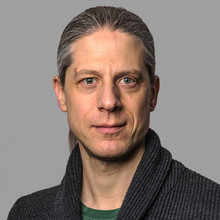
Prof. Dr. Sebastian Wallot
Vita
2003 - 2008 Undergraduate and graduate studies of Psychology at the Universities of Bremen, Eichstätt-Ingolstadt and Trier, Germany
2008 Diploma (MSc-equivalent) in Psychology at the University of Trier, Germany
2008 - 2011 Ph.D. student at the Department of Psychology of the University of Cincinnati, OH,USA
2010 - 2011 parental leave (5 months total)
2011 Ph.D. in Experimental psychology at the Universtity of Cincinnati, OH,USA
2012 - 2016 PostDoc at the Interacting Minds Centre, Aarhus University, Denmark
2014 - 2015 parental leave (9 months total)
2018 - 2019 parental leave (10 months total)
2016 - 2020 PostDoc at the Max-Plnck-Institue for Empirical Aesthetics, Frankfurt a.M., Germany
sice 2020 Professor for Research Methods at the Institute of Psychology, Leuphana University of Lüneburg, Germany
2021 Habilitation at the Faculty of Psychology and Sports Science of the Goethe University of Frankfurt a.M.
Projects
-
The role of (non-)synchronous coordination and its quantification in joint action
Sebastian Wallot (Project manager, academic) , Dan Mønster (Project manager, academic) , Giuseppe Leonardi (Project manager, academic) , Ilanit Gordon (Project manager, academic)
→Project: Research
-
Regularities in Reading Times
Sebastian Wallot (Project manager, academic)
→Project: Research
-
Quantifying nonlinear dynamics in psychological data (Heisenberg-Professur)
Sebastian Wallot (Project manager, academic)
→Project: Research
Publications
Journal contributions
- Anticipating the movement of football (soccer) goalkeepers
Danna Oomen (Author) , Lennard Fochler (Author) , Sebastian Wallot (Author) , Oliver Genschow (Author) , 22.09.2026 , in: Psychology of Sport and ExerciseResearch output: Journal contributions › Journal articles › Research › peer-review
- A Multivariate Method for Dynamic System Analysis: Multivariate Detrended Fluctuation Analysis Using Generalized Variance
Sebastian Wallot (Author) , Julien Patrick Irmer (Author) , Monika Tschense (Author) , Nikita Kuznetsov (Author) , Andreas Højlund (Author) , Martin Dietz (Author) , 01.07.2026 , in: Topics in Cognitive Science, 18, 3 , 18 p.Research output: Journal contributions › Journal articles › Research › peer-review
- Response to “What Poetry Reveals About the Sciences of the Mind”
Winfried Menninghaus (Author) , Sebastian Wallot (Author) , 01.06.2026 , in: Poetics Today, 47, 2 , p. 291-295 , 5 p.Research output: Journal contributions › Journal articles › Research
- Physiological synchrony amongst medical residents during crisis management simulation training and a video-based assessment of leaders’ performance
Lucia Patino Melo (Author) , Sebastian Wallot (Author) , Keerat Grewal (Author) , Matthew Moreno (Author) , Osamu Nomura (Author) , Jason M. Harley (Author) , 01.04.2026 , in: Learning and Instruction, 102 , 12 p.Research output: Journal contributions › Journal articles › Research › peer-review
- Do sex differences influence test habituation and internal data validity in neurocognitive testing? A blinded measurement error analysis
Manuel Oraze (Author) , Marco Herbsleb (Author) , José Afonso (Author) , Sebastian Wallot (Author) , Konstantin Warneke (Author) , 26.01.2026 , in: Neuroscience, 593 , p. 106-121 , 16 p.Research output: Journal contributions › Journal articles › Research › peer-review
Contributions to collected editions/anthologies
- Language, Meaning, and the Foundations of Scientific Practice: Rethinking the Computer Metaphor of Mind and Brain
Sebastian Wallot (Author) , Moritz Bammel (Author) , 01.04.2026 , p. 296-310 , 15 p.Research output: Contributions to collected editions/anthologies › Chapter › Research › peer-review
- Measures of microgenetic changes in emotion regulation strategies across life transitions
Marlene Skovgaard Lyby (Author) , Sebastian Wallot (Author) , Mimi Yung Mehlsen (Author) , 01.01.2020 Wiesbaden , p. 287-302 , 16 p.Research output: Contributions to collected editions/anthologies › Contributions to collected editions/anthologies › Research › peer-review
- Team Emotions and Team Learning
Håkonsson Dorthe Døjbak (Author) , Panagiotis Mitkidis (Author) , Sebastian Wallot (Author) , 01.01.2020 New York, NY , p. 453-474 , 22 p.Research output: Contributions to collected editions/anthologies › Chapter › Research › peer-review
- A Tutorial Introduction to Recurrence Quantification Analysis (RQA) for Keystroke Logging Data
Sebastian Wallot (Author) , Joachim Grabowski (Author) , 11.02.2019 Leiden , p. 163-189 , 27 p.Research output: Contributions to collected editions/anthologies › Chapter › Research › peer-review
- Recurrence quantificationanalysis as a general-purpose tool for bridging the gap between qualitative and quantitative analysis
Sebastian Wallot (Author) , Marlene Skovgaard Lyby (Author) , Marieke M.J.W. van Rooij (Author) , 01.01.2015 Tübingen , p. 69-87 , 19 p.Research output: Contributions to collected editions/anthologies › Article in conference proceedings › Research
Courses
In der Übung entwickeln Sie anhand praktischer Aufgaben ein grundlegendes Verständnis von KI-Modellen (bspw. Klassifikation, Empfehlungssysteme oder Textgenerierung), wenden die verschiedenen Modelle an und evaluieren sie. Zusätzlich bekommen Sie eine Einführung in die Programmierung mit Python und Prompting-Strategien. Im Verlauf des Semesters entwerfen Sie in Kleingruppen ein eigenes kleines KI-gestütztes Programm. Dabei vertiefen Sie Ihr Wissen im Entwurf und in der Evaluation von KI-Systemen weiter – sowohl mit Blick auf technische als auch gesellschaftliche Implikationen. Parallel zu den Übungen stehen von Oktober bis Januar erfahrene und engagierte Tutor:innen (Teaching Assistants) zur Verfügung, um die Studierenden auf dem Campus im gesamten Lernprozess zu unterstützen.
In der Übung entwickeln Sie anhand praktischer Aufgaben ein grundlegendes Verständnis von KI-Modellen (bspw. Klassifikation, Empfehlungssysteme oder Textgenerierung), wenden die verschiedenen Modelle an und evaluieren sie. Zusätzlich bekommen Sie eine Einführung in die Programmierung mit Python und Prompting-Strategien. Im Verlauf des Semesters entwerfen Sie in Kleingruppen ein eigenes kleines KI-gestütztes Programm. Dabei vertiefen Sie Ihr Wissen im Entwurf und in der Evaluation von KI-Systemen weiter – sowohl mit Blick auf technische als auch gesellschaftliche Implikationen. Parallel zu den Übungen stehen von Oktober bis Januar erfahrene und engagierte Tutor:innen (Teaching Assistants) zur Verfügung, um die Studierenden auf dem Campus im gesamten Lernprozess zu unterstützen.
The practical exercises are done with the free open source software R (http://www.r-project.org/).