
One food initiative at a time
Ecologist and Humboldt-fellow Dr. Beatriz Vizuete Sáenz de Ugarte challenges the agri-food-system
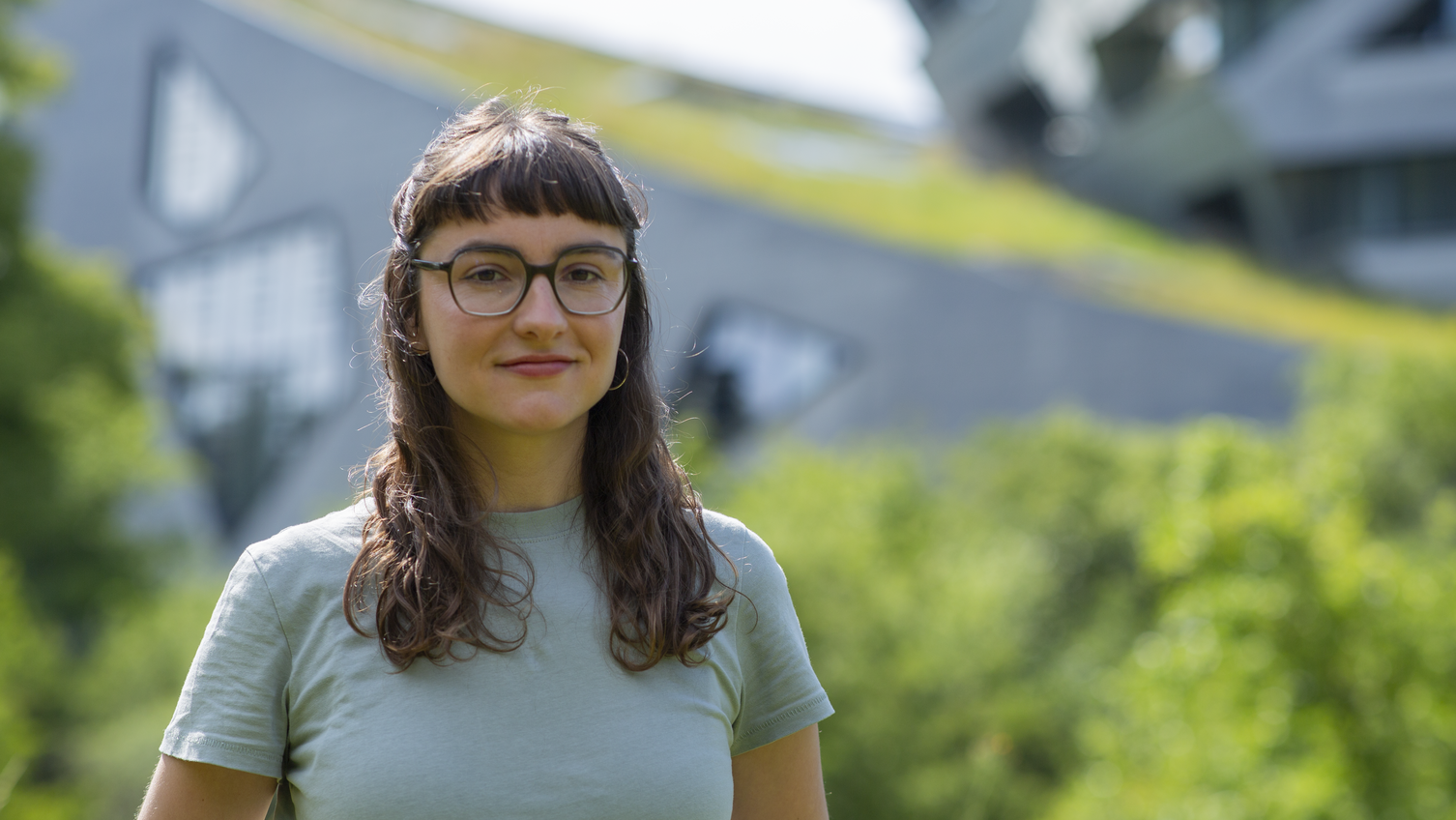
2026-08-04 In January, Leuphana University Lüneburg welcomed Dr. Beatriz Vizuete Sáenz de Ugarte as postdoctoral Humboldt-fellow. Since then, she has joined the Social-Ecological Systems Institute (SESI) to conduct research on transformations towards sustainable food systems. In this interview, she talks about her path into academia, the importance of inter and transdisciplinary research, and why science communication matters.
You have been at Leuphana since January. Why Lüneburg and why now?
I had visited Lüneburg once before I started. On that occasion, I had the opportunity to meet my current supervisor, Professor Berta Martín-López, and discover this lovely city. Since January, I’ve been living in Lüneburg – it was very cold at first. But I really like it here.
Your are a social ecologist specializing in human-nature relations in agroecology, sustainable food initiatives and food systems transformations. How did you become interested in research in the first place?
I’ve always been a very curious person. As a child, I was constantly asking questions and trying to understand different perspectives. At some point, I realised that, if there are so many different perspectives, it is likely that the world does not correspond to just one single, universal reality. As a researcher, I like to talk to people to understand their experiences and the way they view and relate to the world. At the same time, I have always felt a strong connection to nature. For me, nature is a place of inspiration and something that gives meaning to my life. That is why I am so motivated to investigate the different forms of human-nature relationships, particularly within agri-food systems.
What was your academic path like so far?
I did my bachelor in Biology and later completed a Master’s degree on Interdisciplinary Gender Studies at the Autonomous university of Madrid. I wanted to combine natural sciences with social sciences and integrate gender and equality issues in environmental sciences. At that time, many people asked me why I was combining such different fields. But for me, that is exactly the strength of this approach: making connections visible.
After that, I completed my PhD in Ecology, where I focused on the role of agroecological initiatives in food system transformations. I developed my research and conducted fieldwork in the mountainous area of the Madrid región (Spain). Specifically, I worked with women farmers leading agroecological initiatives, which was a very formative experience for me.
What role does sustainability currently play in research in Spain?
Compared to Germany – and especially compared to Leuphana – sustainability research in Spain is still less interdisciplinary. Fields such as ecology, sociology, and philosophy often work more separately from each other. That was one of the reasons I wanted to come to Leuphana. Here, sustainability truly occupies a central place in teaching and research projects, where it is integrated across the board. This openness to different perspectives is pretty unique.
Why is interdisciplinarity so important in your work?
We cannot solve complex crises such as climate change from one perspective only. I originally come from the natural sciences, but working in sustainability has taught me to look at problems in a broader way. We need natural science knowledge, of course – but it is equally important to understand social relations, values, and power structures.
What is your broader research agenda?
I study sustainable agri-food initiatives, that is, small, local projects that seek ecological and social transformation towards more sustainable agri-food systems. During my PhD, I could analyze that these initiatives are not driven solely by economic objectives, but are also based on values as care for nature, and the desire to work in harmony with ecosystems. Social aspects play also a very important role here. Gender relations, in particular, matter a lot. Women in agricultural and food systems often face gender-specific challengues. If we do not consider these dynamics, many inequalities remain invisible. For example, many women farmers expressed that their work is not taken seriously or that they remain invisible in decision-making forums — especially in traditionally male-dominated sectors. Often, they have to work twice as hard to gain recognition.
What challenges do these initiatives generally face? Can you give an example?
One major issue is economic viability. Many projects lack financial support or face bureaucratic barriers. One example is the certification processe within European Agricultural Policy. Although these initiatives seek certification, small-scale producers often deliberately choose to remain small and sustainable rather than expand. However, many regulations are designed for larger production structures and make it difficult to apply them to alternative models. It becomes a paradox that projects which genuinely implement sustainability strategies covered by European legislation are unable to benefit from this support.
You came to Leuphana for a reason: What is the focus of your current project?
With those challengues in mind, I wonder what strategies are needed and how we can develop them to support these initiatives take root, amplify and realise their full potential. In other words, how can we support the key actors who are driving the transformation of agri-food systems towards sustainability?
I came to Leuphana because I believe it offers the best environment both for addressing these research questions and for developing my skills as a researcher. In my current project, I aim to develop transformative pathways to amplify sustainable agri-food initiatives in border territories by following an inter- and transdisciplinary approach that combines several transformation frameworks and participatory methodologies First, I want to analyze their transformative potential: What kinds of practices are they developing? What is their decision-making context? And what impacts do they have? In a second step, I want to involve the local policymakers and civil society. Through participatory workshops, I aim to co-create future visions and develop pathways with concrete recommendations for action. To develop this research, I am working with sustainable agri-food initiatives in the border area between Galicia (Spain) and Northern Portugal – an European grouping of territorial cooperation with great diversity of initiatives (agriculture, livestock, wine production, fishing).
What does success in research mean to you?
For me, success would mean that the people I work with feel that the research is useful for them – that it supports their work or creates new opportunities for collaboration. Besides producing academic results, I want to create research with a perceptible social impact.
Science communication is particularly important to you. Why?
Many people do not have access to academic journals or do not read scientific texts. That is why we need new ways of making knowledge accessible. Furthermore, public engagement is not just about disseminating results, it is the only way to ensure that my research has a real impact on people’s lives.
In previous projects, I worked with designers to create illustrations and infographics to make scientific content more accessible. Now, I am experimenting with formats such as podcasts and documentaries, which make my day-to-day work even more enjoyable. Language is important as well. Not everyone speaks English — especially in rural areas. Science should reach as many people as possible.
You currently hold a prestigious Humboldt-Fellowship, congratulations! What advice do you have for early-career researchers?
Follow your sincere motivations. First, allow yourself to dream – then further refine and develop your idea. It is important not only that a project is scientifically interesting, but also that it contributes something meaningful to society. Be clear about your motivations and follow them sincerely.
Thanks for the interview!
The Humboldt Research Fellowship enables highly qualified researchers from abroad to pursue their own research projects in collaboration with hosts at research institutions in Germany. It is among the most prestigious international funding programs for academic exchange and is awarded by the Alexander von Humboldt Foundation.