
Sustainable land use: best practices for science, policy and communities (Dr. Duguma)
2026-04-02 From his dissertation at Leuphana to his own position: Dr. Dula Wakassa Duguma has successfully secured a DFG Eigene Stelle — an independent research position — to investigate the real-world impacts of Ethiopia’s long-term land restoration efforts. His funded project, “Ethiopia’s Sustainable Land Management Practices” will provide insights from ecosystem restoration practices for science, policy, and community life.
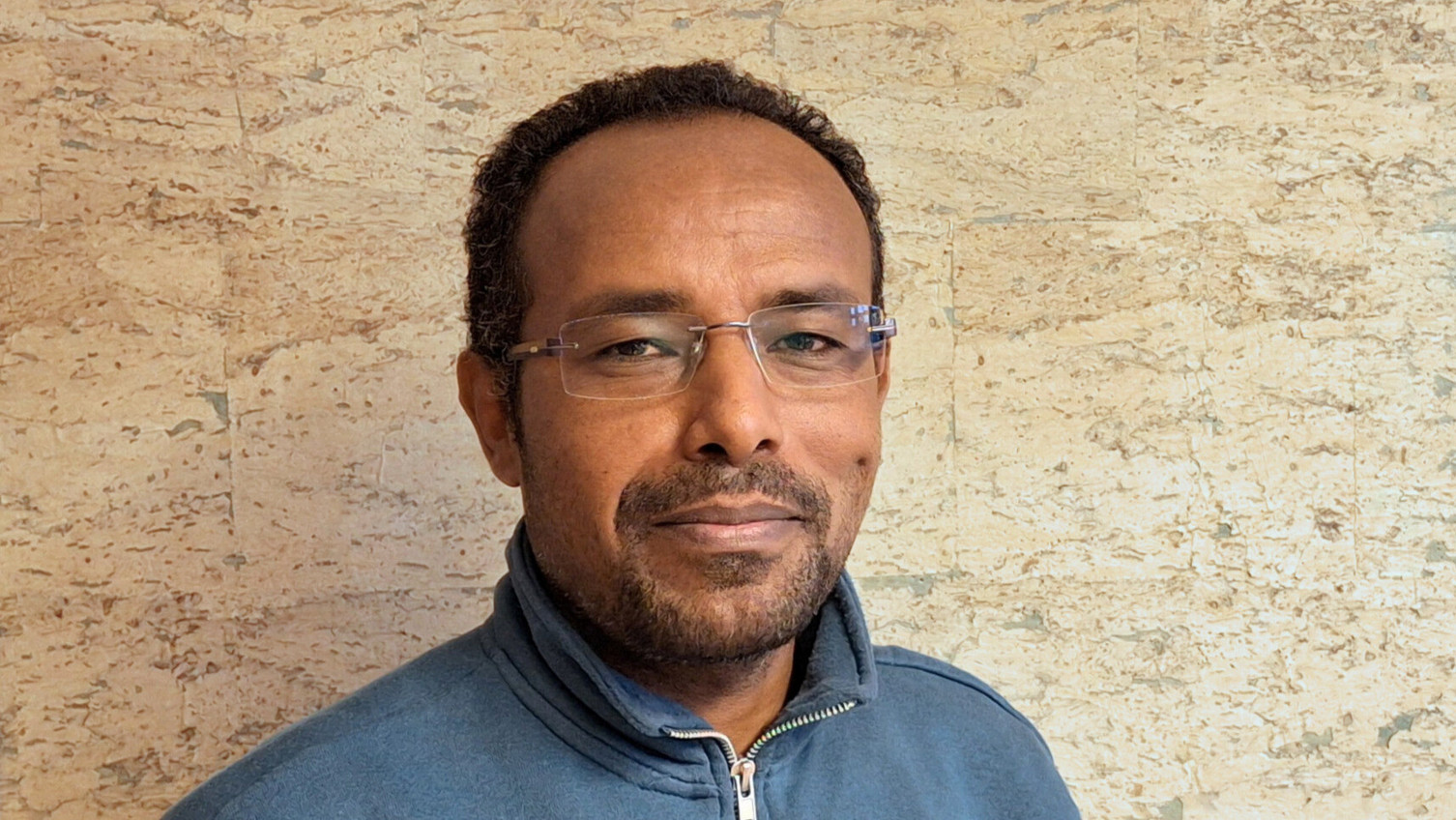
In his research, Duguma focuses on a large-scale land restoration initiative in Ethiopia that began in the early 2000s. Despite its scale and duration, there has been little scientific evaluation of its ecological and societal impacts. Dr. Duguma’s research will fill this critical gap: “In the project, I want to uncover lessons that help scientists, practitioners, and policymakers design more effective, equitable, and biodiverse restoration projects. This research can inform environmental resilience strategies and land-use policies.” The researcher at the Social-ecological Systems Institute (SESI) is particularly motivated in his project’s interdisciplinary contribution, namely “landscape ecology, conservation science, and ecosystem restoration. As the title indicates, my project is about drawing lessons from past and ongoing restoration efforts. I will be looking at the diverse impacts of land restoration practices.”
His interdisciplinary approach combines data from remote sensing, field ecology, and social science. Using satellite imagery, Duguma will assess landscape-level vegetation changes. He will also analyse woody plant diversity, comparing restored areas to natural forests to determine whether they are replicating native ecosystems or creating novel, potentially less beneficial ones. “Even if an area appears restored based on satellite imagery, it may be dominated by exotic species,” explains Dr. Duguma. In these cases, it is important to examine even more closely what advantages or disadvantages the restored areas could have for land users. That is why the project also looks at the services and disservices provided by the restored landscapes to people. Using household surveys, the researcher will investigate whether local communities gain access to the restored land and whether they benefit from it. Dr. Duguma plans to share his findings through international conferences, local workshops, and accessible communication materials like brochures.
Dula Wakassa Duguma started his academic career at Leuphana as doctoral student in a project on sustainable bioeconomy (funded by the former BMBF, now BMFTR). His research on the effects of land-use change scenarios on ecosystems and biodiversity in Ethiopia was supervised by Prof. Dr. Jörn Fischer. After completing his PhD in December 2023, Dr. Duguma continued to work with Jörn Fischer as postdoctoral researcher in a DFG Research Unit, contributing to the synthesis and coordination sub-project. “I gained experience in project management, coordination, empirical work, and synthesising project results. The DFG Eigene Stelle funding is a great opportunity to build on my experiences and lead my own project. And it allows me to stay at Leuphana, together with the great team at SESI, who are hosting me during my research,” says Dr. Duguma.
The German Research Foundation (DFG) funding “Eigene Stelle” (own position) is particularly suitable for early career researchers who wish to conduct research independently at a German research institution. Successful applicants receive funding for the duration of a proposed research project. With the DFG Eigene Stelle funding, Dr. Duguma has achieved his first independent research position for the coming three years at Leuphana’s School of Sustainability.