
Prof. Dr. Ricardo Usbeck
Vita
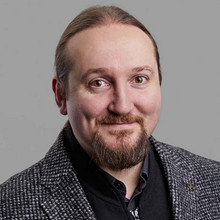
Ricardo Usbeck studied computer science (B.Sc., M.Sc.) at the Martin Luther University Halle-Wittenberg. He then moved to Leipzig, where he received his doctorate in 2017 in the field of data extraction and search engines. Until 2019, he worked as a postdoctoral researcher at the University of Paderborn in the Data Science Group. He later became team leader at the Fraunhofer Institute for Intelligent Analysis and Information Systems. In 2021, he took over the Junior Professorship for Semantic Systems at the University of Hamburg. In 2023, he was appointed Professor of Information Systems, in particular Artificial Intelligence and Explainability, at Leuphana University Lüneburg. He works in and leads several national and international research projects on knowledge graphs, large language models, chatbots and AI for social good. He is interested in transformation-related domains such as sustainability and creative spaces for technology. Ricardo Usbeck tries to build a bridge between research and application.
Projects
-
HumAIne - Learning from Humans
Ricardo Usbeck (Project manager, academic) , Florian Stamer (Co-Projectmanager, academic)
→Project: Transfer (R&D project)
-
Proaktive Versorgungssicherheit durch dynamische Simulation mit selbstlernenden LLM-Agenten - Teilvorhaben: Neuro-Symbolische KI für Erklärbare Informationsextraktion und Event-Analyse
Ricardo Usbeck (Project manager, academic) , Patrick Westphal (Project staff) , Julian Burmester (Project staff)
→Project: Research
-
Leuphana AI Campus – Minor Artificial Intelligence for Bachelor Students
Ricardo Usbeck (Project manager, academic) , Anna Ehrenberg (Co-Projectmanager, academic) , Kai Moltzen (Project staff) , Hanna Marlene Schulz (Project staff) , Martin Kohler (Project staff)
→Project: Teaching
-
Studienqualitätsmittel: Mobile KI-Workstations für den gleichberechtigten Zugang zur KI Entwicklung
Martin Kohler (Project manager, academic) , Ricardo Usbeck (Project manager, academic)
→Project: Teaching
-
Creative Space for Human and Artificial Intelligence
Ricardo Usbeck (Project manager, academic) , Martin Kohler (Project manager, academic)
→Project: Teaching
Publications
Books and anthologies
- Proceedings of TextGraphs-17: Graph-based Methods for Natural Language Processing: The 62nd Annual Meeting of the Association of Computational Linguistics; August 15, 2024; TextGraphs @ ACL 2024
Dmitry Ustalov (Editor) , Yanjun Gao (Editor) , Alexander Pachenko (Editor) , Elena Tutubalina (Editor) , Irina Nikishina (Editor) , Arti Ramesh (Editor) , Andrey Sakhovskiy (Editor) , Ricardo Usbeck (Editor) , Gerald Penn (Editor) , Marco Valentino (Editor) , 2024 Kerrville , 162 p.Research output: Books and anthologies › Conference proceedings › Research
- D2R2 2024: Linked Data-driven Resilience Research 2024: Proceedings of the Third International Workshop on Linked Data-driven Resilience Research (D2R2'24) co-located with European Semantic Web Conference 2024 (ESWC 2024), May 27, 2024
Julia Holze (Editor) , Sebastian Tramp (Editor) , Michael Martin (Editor) , Sören Auer (Editor) , Ricardo Usbeck (Editor) , Nenad Krdzavac (Editor) , 2024 AachenResearch output: Books and anthologies › Conference proceedings › Research
- Second International Workshop on Linked Data-driven Resilience Research 2023
Sebastian Tramp (Editor) , Ricardo Usbeck (Editor) , Natanael Arndt (Editor) , Julia Holze (Editor) , Sören Auer (Editor) , 2023Research output: Books and anthologies › Conference proceedings › Research
- Linked Data-driven Resilience Research 2023: Proceedings of the Second International Workshop on Linked Data-driven Resilience Research 2023 co-located with Extended Semantic Web Conference 2023 (ESWC 2023), Hersonissos, Greece, May 28, 2023
Sebastian Tramp (Editor) , Ricardo Usbeck (Editor) , Natanael Arndt (Editor) , Julia Holze (Editor) , Sören Auer (Editor) , 2023 AachenResearch output: Books and anthologies › Conference proceedings › Research
- SemREC-SMART 2022: Joint Proceedings of SemREC 2022 and SMART 2022
Gunjan Singh (Editor) , Raghava Mutharaju (Editor) , Pavan Kapanipathi (Editor) , Nandana Mihindukulasooriya (Editor) , Mohnish Dubey (Editor) , Ricardo Usbeck (Editor) , Debayan Banerjee (Editor) , 2023 Aachen , 77 p.Research output: Books and anthologies › Conference proceedings › Research
Journal contributions
- Extracting, Locating and Visualizing Geospatial Rescue Information in German-language Social Media
Xi Yan (Author) , Cedric Möller (Author) , David Rath (Author) , Patrick Westphal (Author) , Ricardo Usbeck (Author) , Martin Semmann (Author) , 24.05.2026 , in: Proceedings of the International ISCRAM Conference, 23 , 8 p.Research output: Journal contributions › Conference article in journal › Research
- STaRQ-Agent-Investigating Generalization in Knowledge Graph Question Answering via a Multi-Agent Collaborative Framework
Longquan Jiang (Author) , Debayan Banerjee (Author) , Ricardo Usbeck (Author) , 01.01.2026 , in: IEEE Access, 14 , p. 59158-59170 , 13 p.Research output: Journal contributions › Journal articles › Research › peer-review
- Collapsing Distance: The Curse of Ground Truth in Computational Narrative Understanding
Junbo Huang (Author) , Ricardo Usbeck (Author) , 01.01.2026 , in: CEUR Workshop Proceedings, 4202 , 12 p.Research output: Journal contributions › Conference article in journal › Research › peer-review
- Junior fellows and distinguished dissertation of the GI and AI for crisis
Ricardo Usbeck (Author) , Patrick Westphal (Author) , Angelie Kraft (Author) , 01.02.2025 , in: IT - Information Technology, 67, 1 , p. 1-2 , 2 p.Research output: Journal contributions › Other (editorial matter etc.) › Research
- QALD-10 — The 10th Challenge on Question Answering over Linked Data: Shifting from DBpedia to Wikidata as a KG for KGQA
Ricardo Usbeck (Author) , Xi Yan (Author) , Aleksandr Perevalov (Author) , Longquan Jiang (Author) , Julius Schulz (Author) , Cedric Möller (Author) , Junbo Huang (Author) , Jan Reineke (Author) , Axel-Cyrille Ngonga Ngomo (Author) , Muhammad Saleem (Author) , Andreas Both (Author) , Angelie Kraft (Author) , 01.12.2024 , in: Semantic Web, 15, 6 , p. 2193-2207 , 15 p.Research output: Journal contributions › Journal articles › Research › peer-review
Contributions to collected editions/anthologies
- GeoKG for GeoFM: Neuro-Symbolic Integration of Semantically-Enriched Geospatial-Temporal Data
Kai Moltzen (Author) , Debayan Banerjee (Author) , Julian Burmester (Author) , Anna Ehrenberg (Author) , Martin Kohler (Author) , Cedric Möller (Author) , Jann Pfeifer (Author) , Hanna Marlene Schulz (Author) , Aida Usmanova (Author) , Patrick Westphal (Author) , Ricardo Usbeck (Author) , Tilahun Taffa (Author) , 10.09.2026 , p. 20:1-20:9 , 9 p.Research output: Contributions to collected editions/anthologies › Article in conference proceedings › Research › peer-review
- KGXL-Query: Extending SPARQL with Semantic Search and LLM Functionality for Question Answering over Heterogeneous Data
Patrick Westphal (Author) , Debayan Banerjee (Author) , Ricardo Usbeck (Author) , Tilahun Taffa (Author) , 01.09.2026 , p. 124-140 , 17 p.Research output: Contributions to collected editions/anthologies › Article in conference proceedings › Research › peer-review
- Amharic DBpedia Chapter: A Knowledge Graph for a Low-Resource Language
Hizkiel Mitiku Alemayehu (Author) , Tilahun Taffa (Author) , Meti Adane Bayissa (Author) , Andargachew Asfaw Zewge (Author) , Hamada Zahera (Author) , Ricardo Usbeck (Author) , Axel Cyrille Ngonga Ngomo (Author) , 01.05.2026 , p. 7894–7904 , 11 p.Research output: Contributions to collected editions/anthologies › Article in conference proceedings › Research › peer-review
- From Variance to Invariance: Qualitative Content Analysis for Narrative Graph Annotation
Junbo Huang (Author) , Max Valentin Weinig (Author) , Ulrich Fritsche (Author) , Ricardo Usbeck (Author) , Junbo Huang (Author) , Max Valentin Weinig (Author) , Ulrich Fritsche (Author) , Ricardo Usbeck (Author) , 04.03.2026 Palma , p. 958 - 972 , 15 p.Research output: Contributions to collected editions/anthologies › Article in conference proceedings › Research › peer-review
- ShortPathQA: A Dataset for Controllable Fusion of Large Language Models with Knowledge Graphs
Mikhail Salnikov (Author) , Andrey Sakhovskiy (Author) , Irina Nikishina (Author) , Cedric Möller (Author) , Debayan Banerjee (Author) , Junbo Huang (Author) , Longquan Jiang (Author) , Xi Yan (Author) , Elena Tutubalina (Author) , Ricardo Usbeck (Author) , Alexander Panchenko (Author) , Aida Usmanova (Author) , Angelie Kraft (Author) , Rana Abdullah (Author) , 01.01.2026 , p. 95-110 , 16 p.Research output: Contributions to collected editions/anthologies › Article in conference proceedings › Research › peer-review
Activities
-
Neuro-symbolische KI: Vom Text zur Karte und in den Alltag
Ricardo Usbeck (Speaker)
Activity: talk or presentation in privat or public events › Transfer
-
Keynote @ SEMANTiCS 2026
Ricardo Usbeck (Speaker)
Activity: Guest lectures › Research
-
Filmvorstellung „HER“ & KI-Diskussionsrunde mit Ricardo Usbeck und der Psychiatrischen Klinik Lüneburg
Ricardo Usbeck (Speaker)
Activity: talk or presentation in privat or public events › Transfer
-
Vortrag bei der Versammlung der Beauftragten für den Datenschutz der Evangelischen Kirche in Deutschland
Ricardo Usbeck (Speaker)
Activity: talk or presentation in privat or public events › Transfer
-
KI- & Ethik-Diskussion für das Nachwuchsführungskräfteprogramm Futour Lüneburg
Ricardo Usbeck (Speaker)
Activity: talk or presentation in privat or public events › Transfer
Prizes
-
2025 Research Award of the School of Management & Technology
(Recipient) (Recipient) ,Prize: Leuphana internal Prize, Scholaships, distinctions, appointments › Research
-
Best Student Paper Award @ ICSC
(Recipient) ,Prize: external Prizes, scholarships, distinctions, appointments › Research
-
Best Paper Nominee by SEMANTiCS
(Recipient) ,Prize: external Prizes, scholarships, distinctions, appointments › Research
-
Honorable Mention by AI 2000 Most Influential Scholars
(Recipient) ,Prize: external Prizes, scholarships, distinctions, appointments › Research
-
Runner-up at BMW Technologietag Project Pitch Slam
(Recipient) ,Prize: external Prizes, scholarships, distinctions, appointments › Research
Courses
In later half of the course, Knowledge Graphs (KGs) will be introduced, and how RAG techniques can be used to perform Question Answering (QA) over Knowledge Graphs using LLMs.
This course provides an overview of the fundamentals of algorithmic thinking, programming and artificial intelligence. The course covers historical, conceptual and application-oriented aspects. In addition to technical perspectives, the lectures address and contextualise the social impact of these technologies.
Concretely, we will develop a methodological understanding of AI and Geographical Information Systems (GIS) methods by dissecting foundational research papers and literature in the first part of the seminar. In the second part, students pick a specific societal challenge and focus on the GeoAI approach to solve it, thereby learning in-depth competencies in a field which matters to them. Further, this might act as a stepping stone for students to find a field they want to conduct research on in their thesis and beyond.
Besides this methodological approach, some students can also focus on a more creative examination of GeoAI topics with the objective of developing an interactive installation using existing GeoAI methods or data.
Another key aspect will be the discussion about differences between the considered and related disciplinces (e.g., disaster resilience, mobility, environmental research, flows, remote sensing, etc.) and the backgrounds that the students in this complementary course come from, as well as the specific challenges of ethical considerations towards GeoAI, referred to as GeoAIEthics.
In a total of eight sessions, this course is all about active and informed discussion of the latest research, and connecting the diverse backgrounds and interests of students in this highly interdisciplinary field.
Dabei spielen konkrete Praktiken (Making), kollaboratives Lernen und inkrementelles Arbeiten mit Prototypen wichtige Rollen im gemeinschaftlichen Lern- und Arbeitsprozess.
Im Verlauf des Seminars wechseln sich praktische Tutorials (Arduino Programmierung, Speculative Design, Kinetische Objekte), Projektarbeit in Gruppen und Abendveranstaltungen im Rahmen des "Salons der digitalen Machenschaften" ab um ein digitales Artefakt zu entwickeln. Das Artefakt kann angesiedelt sein in Bereichen wie Umweltsensorik, der Robotik oder anderen Felder der angewandten Informatik.
Technik soll dabei aber nicht affirmativ hingenommen, sondern aktiv und kritisch hinterfragt werden. Dafür ist die Aufgabenstellung und Entwicklung der Abschlußarbeit als Critical Design angelegt.
Prüfungsleistung ist die Präsentation eines über den Verlauf des Seminars entwicklelten Prototypen als "object for debate".
Our colloquium features a diverse set of formats:
* Research Talks: IIS faculty and doctoral researchers present ongoing projects and recent findings, receiving constructive feedback in a collaborative environment.
* Invited Expert Lectures: Renowned national and international scholars are invited to share cutting-edge research and theoretical insights, offering new perspectives and fostering academic exchange.
* Startup & Industry Talks: Entrepreneurs and professionals from startups and established companies discuss real-world challenges and innovations at the intersection of business and technology, providing practical insights and networking opportunities.
* Interdisciplinary Dialogues: The colloquium also opens space for collaborative sessions across disciplines, reflecting the integrative and transdisciplinary mission of Leuphana University.
Open to members of the university and interested guests, the IIS Research Colloquium serves as an essential forum for inspiration, collaboration, and advancing impactful research.
Critical and interdisciplinary reflection is at the centre of the course. In the process, the students learn and try out subject-specific presentation techniques such as flash talks, posters, and long talks.