
Dr. phil. Vera Tollmann
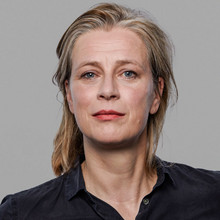
Werdegang
Dr. Vera Tollmann ist seit Oktober 2021 Gastwissenschaftlerin am Institut für Kultur und Ästhetik digitaler Medien (ICAM) der Leuphana Universität. Sie studierte Angewandte Kulturwissenschaften an der Universität Hildesheim und Cultural Studies an der John Moores University Liverpool. Als Stipendiatin im Graduiertenkolleg Ästhetiken des Virtuellen an der Hochschule für bildende Künste Hamburg promovierte sie zur Bildpolitik der Vertikalität (2020). Zwischen Studium und Dissertation arbeitete sie unter anderem als Redaktionsassistenz des Kunstmagazins Springerin in Wien, der Kulturstiftung des Bundes in Halle und als kuratorische Assistenz für das Medienkunstfestival transmediale. Sie war wissenschaftliche Mitarbeiterin an der Leuphana Universität (2012-2013), und der Universität der Künste Berlin (2015.2017) und an der Universität Hildesheim (2019-2022). Lehraufträge hatte sie an der Universität Basel am Institut für Medienwissenschaften und am Leonardo Zentrum der Technischen Hochschule und der Akademie der bildenden Künste Nürnberg.
Publikationen
Bücher und Anthologien
- Sicht von oben: Powers of Ten und Bildpolitiken der Vertikalität
Vera Tollmann (Autor*in) , 2022 Leipzig , 358 S.Publikation: Bücher und Anthologien › Monografien › Forschung
- Proxy Politics: Power and Subversion in a Networked Age
Vera Tollmann (Herausgeber*in) , Boaz Levin (Herausgeber*in) , 2017 Berlin , 256 S.Publikation: Bücher und Anthologien › Sammelwerke und Anthologien › Forschung
Beiträge in Zeitschriften
- Ground Truthing in Digital Technoculture
Vera Tollmann (Autor*in) , 23.08.2024 , in: Nordic Journal of Aesthetics, 33, 67 , S. 214-230 , 17 S.Publikation: Beiträge in Zeitschriften › Zeitschriftenaufsätze › Forschung › begutachtet
- Krisen und Diskurse - das Kunstjahr 2023 aus Berliner Sicht
Vera Tollmann (Autor*in) , 01.08.2024 , in: POP. Kultur und Kritik, 13, 1 , S. 46-57 , 12 S.Publikation: Beiträge in Zeitschriften › Zeitschriftenaufsätze › Forschung › begutachtet
- Ein Forschungsstand: Bildbegriffe, Bildpolitiken, Bildpraktiken
Vera Tollmann (Autor*in) , 01.01.2024 , in: Zeitschrift für Medienwissenschaft, 16, 31 , S. 148-153 , 6 S.Publikation: Beiträge in Zeitschriften › Rezensionen › Forschung
- Skin in the Game: Ästhetik der Dis/Korrelation: Über Shane Densons "Post-Cinematic Bodies“
Vera Tollmann (Autor*in) , 01.09.2023 , in: CARGO Film/Medien/Kultur, 15, 59 , S. 71-73 , 3 S.Publikation: Beiträge in Zeitschriften › Zeitschriftenaufsätze › Forschung › begutachtet
- The Smartness Mandate: Orit Halpern/Robert Mitchell. Cambridge/London (The MIT Press) 2022
Vera Tollmann (Autor*in) , 01.01.2023 , in: Springerin : Hefte für Gegenwartskunst, 29, 2 , S. 75 , 1 S.Publikation: Beiträge in Zeitschriften › Rezensionen › Lehre
Beiträge in Sammelwerken
- Eye Contact with the Machine: Gaze Correction in Video Conferencing
Vera Tollmann (Autor*in) , Robert Rapoport (Autor*in) , 01.11.2023 Bielefeld , S. 209-231 , 23 S.Publikation: Beiträge in Sammelwerken › Aufsätze in Sammelwerken › Forschung › begutachtet
- Protokoll 28: Quatschmaschine macht Quatsch. Oder auch nicht
Jan Müggenburg (Autor*in) , Martin Warnke (Autor*in) , Vera Tollmann (Autor*in) , 01.09.2023 , S. 246-254 , 9 S.Publikation: Beiträge in Sammelwerken › Aufsätze in Sammelwerken › Forschung › begutachtet
- Proxies
Wendy Hui Kyong Chun (Autor*in) , Boaz Levin (Autor*in) , Vera Tollmann (Autor*in) , 02.02.2021 Cambridge MA , S. 419-425 , 7 S.Publikation: Beiträge in Sammelwerken › Aufsätze in Sammelwerken › Forschung › begutachtet
- Jon Rafman
Vera Tollmann (Autor*in) , 01.05.2018 Köln , S. 166-171 , 6 S.Publikation: Beiträge in Sammelwerken › Aufsätze in Sammelwerken › Forschung
- Powers of Abstraction: Ein Interview mit der Künstlerin Judith Hopf
Vera Tollmann (Autor*in) , 01.12.2017 Hamburg , S. 60-85 , 26 S.Publikation: Beiträge in Sammelwerken › Aufsätze in Sammelwerken › Forschung
Aktivitäten
-
Jurymitglied für das Berliner Programm Künstlerische Forschung
Vera Tollmann (Berater*in)
Aktivität: Beratende Tätigkeit ›
-
Mitglied der Jury für den Call Artistic Research, Kulturabteilung der Stadt Wien
Vera Tollmann (Berater*in)
Aktivität: Beratende Tätigkeit ›
-
Mitglied der Jury für die Vergabe des Recherchestipendiums Bildende Kunst, Senatsverwaltung für Kultur und Gesellschaftlichen Zusammenhalt, Berlin
Vera Tollmann (Berater*in)
Aktivität: Beratende Tätigkeit ›
Presse / Medien
-
Interview on View from Above for net critique (blog by Geert Lovink)
1 InterviewPresse/Medien: Presse / Medien
-
Artpop: Pharrell schreibt seinen offenen Brief an die Frauen in der Pariser Gruppenausstellung »GIRL« weiter
1 eigener MedienbeitragPresse/Medien: Presse / Medien
Lehrveranstaltungen
Diesem Anspruch gerecht zu werden, wird in digitalen Kulturen komplizierter. Daten, Interfaces, Algorithmen und operative Bilder liegen nicht einfach da, um gelesen zu werden; sie prozessieren, sie handeln, sie entziehen sich einer hermeneutischen Nahsicht. Das Seminar fragt deshalb, wie sich die klassischen Verfahren – von der Diskursanalyse über die Bildanalyse bis zur Ethnografie – verändern müssen, um ihre Gegenstände zu begreifen. Denn die Digitalisierung fügt den Kulturwissenschaften nicht nur neue Objekte hinzu, sondern verschiebt auch die Bedingungen des Lesens, Schreibens und Denkens selbst. An konkretem Material erproben wir, wie man von einem Gegenstand zu einer wissenschaftlichen Fragestellung gelangt und welche Zugänge sich dafür eignen. Denn Kulturwissenschaften untersuchen digitale Kulturen nicht von außen, sondern mit Mitteln, die selbst Teil dieser Kulturen sind (Datenbanken, Suchmaschinen, Profile) und geraten damit in eine Lage, in der sich Gegenstand und Methode nicht mehr so eindeutig trennen lassen.
In each session of the seminar, we focus on one method. These include inter alia: object analysis; the use of AI-tools for studies and research; qualitative interviews; participant observations, visual methods and digital ethnography. Each method will be introduced and discussed based on short presentations and shared readings. Based on these readings and discussions, there will be micro-exercises allowing students to gain an understanding of a method via the experience of performing it.
In each session of the seminar, we will focus on one method. These include inter alia: object analysis; the use of AI-tools for studies and research; qualitative interviews; participant observation, visual methods and digital ethnography. Each method will be introduced and discussed based on short presentations and shared readings. Based on these readings and discussions, there will be micro-exercises allowing students to gain an understanding of a method via the experience of performing it.