
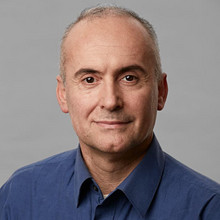
Prof. Dr.-Ing. Paolo Mercorelli
Werdegang
- Aufgeführt in beiden Ranglisten von World’s Top 2% Scientists 2025 (lange Karriere als auch für seine Jahresleistung) aus Elsevier Database und gekennzeichnet von Stanford University
- Summer 2025- Vorlesung durch the University Studies Abroad Consortium (USAC) an der University of North Caroline at Wilmington, (USA) im Summersemester 2025
- Summersemeter 2025 Visiting Professor an der Technische Universität Lublin (Poland) of Technology und verantwortlich für den Kurs "Kalman Filters and its Applications".
- Aufgeführt in beiden Ranglisten von World’s Top 2% Scientists 2024 (lange Karriere als auch für seine Jahresleistung) aus Elsevier Database und gekennzeichnet von Stanford University
- Wintersemeter 2024/2025 Visiting Professor an der Technische Universität Lublin (Poland) of Technology und verantwortlich für den Kurs "Control Systems".
- Frühling 2024 - Visiting Professor at the University of Miskolc in the context of the PhD School. Department of Automation and Communication Technology, Miskolc (Hungary)
- Aufgeführt in beiden Ranglisten von World’s Top 2% Scientists 2023 (lange Karriere als auch für seine Jahresleistung) aus Elsevier Database und gekennzeichnet von Stanford University
- Summer 2023- Vorlesung durch the University Studies Abroad Consortium (USAC) an der National Public Research Universtiy of Kentucky, Kentucky, (USA)
- Visiting Professor at Chandigarh University (India) und verantwortlich für den Kurs "Control of Nonlinear Systems", 13th Februar-5th Mai 2023
- Aufgeführt in beiden Ranglisten von World’s Top 2% Scientists 2022 (lange Karriere als auch für seine Jahresleistung) aus Elsevier Database und gekennzeichnet von Stanford University
- Editor-in-Chief für die Section „Engineering Mathematics“ in „Mathematics“, Open Access Journal von MDPI, Basel, Switzerland
- Aufgeführt in beiden Ranglisten von World’s Top 2% Scientists 2021 aus Elsevier Database und gekennzeichnet von Stanford University
- Summer 2021- Vorlesung durch the University Studies Abroad Consortium (USAC) an der National Public Research Wright Universtiy (Ohio State University)
- Aufgeführt in beiden Ranglisten von World’s Top 2% Scientists 2020 (lange Karriere als auch für seine Jahresleistung) aus Elsevier Database und gekennzeichnet von Stanford University
- Summer 2020- Vorlesung durch the University Studies Abroad Consortium (USAC) an der Nevada Universität (Las Vegas und Reno) und and Arkansas Universität (Fayetteville)
- Wintersemester 2020 - Visiting Professor at the University of Craiova in the context of 1st International Doctoral Workshop on Advanced Approaches in Robotics, Control and Computing of the Faculty of Automation, Computers and Electronics, Craiova (Romania)
- Aufgeführt in beiden Ranglisten von World’s Top 2% Scientists 2019 (lange Karriere als auch für seine Jahresleistung) aus Elsevier Database und gekennzeichnet von Stanford University
- Der Zahlendreher: Article in PRISE - Das Lifestylemagazin
- Herbst 2019 - Visiting Professor at the University of Miskolc in the context of the PhD School. Department of Automation and Communication Technology, Miskolc (Hungary)
- seit Wintersemester 2017/2018 - International Distinguished Visiting Professor Fellowship at institute of Automatic Control of Lodz University of Technology (Poland). Er ist Verantwortlicher für den Kurs „Modelling of Industrial Control Systems“ und für den Kurs “Modeling Methods of Analog Circuits” am Master Course in Automatic Control and Robotics.
- seit 2018 International Visiting Scientist Fellowship at Academic of Science of Prague (Czech Republic)
- seit 01.03.2012 W3-Professor (Lehrstuhlinhaber) für "Regelungs- und Antriebstechnik" an der Leuphana Universität Lüneburg (Deutschland)
- 2011 Gastprofessor für System Dynamics der Villanova University (Pennsylvania, USA)
- 2011 Ruf für Full Professor für System Dynamics an der Villanova University (Pennsylvania, USA). Der Ruf wurde in eine Gastprofessur umgewandelt um in Deutschland zu bleiben.
- In 2010 im dem "short list" und am zweite Platz für Associate Professor in Electrical and Hybrid Drive Systems, VL-2010-0004 of the KTH Royal Institute of Technology of Stocholm
- 2009 Gastprofessor für Mechatronik an der German University in Kairo (Egypt)
- 2009 Ruf für Full Professor für Mechatronics an der German University in Kairo (Egypt). Der Ruf wurde in einer Gastprofessur umgewandelt um in Deutschland zu bleiben.
- 01.03.2005 - 29.02.2012 W2-Professor für "Prozessinformatik" an der Ostfalia Hochschule für angewandte Wissenschaften in Wolfsburg (Deutschland)
- 01.03.2002-28.02.2005 Leiter der Regelungstechnik-Gruppe an der IAI GmbH (Institut für Automatisierung und Informatik, Zentrum für Industriellen Forschung und Entwicklung) Wernigerode (Deutschland)
- 01.04.2001-29.02.2002 wissenschaftlicher Mitarbeiter an der Uni-Siena (Italien)
- 20.07.1998-31.03.2001 Post Doctoral Fellowship durch European Commission (Marie-Skłodowska-Curie Program/wissenschaftlicher Mitarbeiter), ABB (Asea Brown Boveri) Corporate Research AG in Heidelberg (Deutschland). Damit werden europäische Doktoranden und Postdocs gefördert, die außerhalb ihres Heimatlands forschen möchten. Es handelt sich dabei gleichzeitig um eine der begehrtesten und renommiertesten Auszeichnungen der EU für interdisziplinäre Forschung und internationale Kollaboration.
- 01.01.1997-30.11.1997 wissenschaftliche Tätigkeit an der Universität von Santa Barbara (California) (USA) entsprechend dem Promotionsprogramm
- 01.11.1994-31.12.1998 wissenschaftliche Tätigkeit an der Alma Mater Studiorum Universität von Bologna entsprechend dem Promotionsprogramm
- 1992 Diplomingenieur an der Universität von Florenz (Italien)
Publikationen
Beiträge in Sammelwerken
- A sufficient asymptotic stability condition in generalised model predictive control to avoid input saturation
Paolo Mercorelli (Autor*in) , 01.01.2019 , S. 251-257 , 7 S.Publikation: Beiträge in Sammelwerken › Aufsätze in Konferenzbänden › Forschung › begutachtet
- Model predictive control for switching gain adaptation in a sliding mode controller of a DC drive with nonlinear friction
Jan Hendrik Röhl (Autor*in) , Paolo Mercorelli (Autor*in) , Harald Aschemann (Autor*in) , Benedikt Haus (Autor*in) , 01.11.2018 Piscataway , S. 765-770 , 6 S.Publikation: Beiträge in Sammelwerken › Aufsätze in Konferenzbänden › Forschung › begutachtet
- Observer Strategies for Virtual Sensing of Embroidered Metal-Polymer Heater Structure
Florian Poschke (Autor*in) , Horst Schulte (Autor*in) , Paolo Mercorelli (Autor*in) , Manuel Schimmack (Autor*in) , 08.10.2018 , S. 887-892 , 6 S.Publikation: Beiträge in Sammelwerken › Aufsätze in Konferenzbänden › Forschung › begutachtet
Lehrveranstaltungen
This course explores the theoretical foundations and algorithmic approaches for identifying and controlling discrete-time dynamical systems. Emphasis is placed on the modeling, estimation, and control of linear and nonlinear systems using data-driven and model-based techniques. Starting from the concept of transfer function in Z-domain, the direct and idirect method to design a controller are considered. Nonlinear anylysis based on the consinuous and discrete sliding Mode Control are proposed. The course will also address challenges such as system uncertainty, limited observability, noise, and computational constraints. Key topics include system identification, optimal control, adaptive control, and learning-based methods.
Das Modul bietet eine Einführung in die Elektrotechnik und vermittelt die Grundlagen der Gleichstromtechnik (Grundbegriffe, Grundgrößen, Modelle der Elektrotechnik und Berechnungsmethoden elektrischer Stromkreise bei Gleichstromtechnik). Weitere Themen sind das magnetische Feld (Feldgrößen, Kenngrößen magnetischer Kreise, Kraftwirkung und Erscheinungen bei zeitlicher Änderung, exemplarische Systemanwendungen) sowie das Messen elektrischer und magnetischer Größen.
This course is designed to provide a foundational understanding of statistics with a particular focus on applying statistical concepts to the Kalman filter, which is widely used in fields like signal processing, control systems, and machine learning. The course will cover essential statistical methods and their applications, culminating in the introduction of the Kalman filter and its mathematical framework.Applications for technical, economical and biological systems.
Das Modul thematisiert die Grundlagen der Ingenieurmathematik wie z.B. Differenzialgleichungen (lineare und nichtlineare) und ihre Anwendung in den Ingenieurwissenschaften.
Das Lehrforschungsprojekt ist für Studierende des Minor ING-Vertiefung als Pflichtmodul und für Studierende des Minor ING-Grundlagen als Wahlmodul konzipiert. Die möglichen Themenbereiche und Projektthemen werden wir zum Start am 03.11. vorstellen. Die Projekte sind sehr unterschiedlich angelegt und z.T. auch noch durch die Studierenden zu formen. Ebenfalls wird die Struktur der Veranstaltung und die Prüfungsleistung erläutert und die Gruppeneinteilung vorgenommen. Wir treffen uns dazu zur Einführungsveranstaltung am 03.11. in C12.002 in Präsenz. Die weiteren Termine finden dann in Absprache der jeweiligen Projektgruppe und des betreuenden Lehrenden statt.
Wir freuen uns auf die Projektarbeit!
Paolo Mercorelli, Andreas Zedler, Jannis Dethmann
Wir freuen uns auf die Projektarbeit!
Paolo Mercorelli, Andreas Zedler, Jannis Dethmann
The course is structured in three parts:
- Kalman Filters: the linear case, the nonlinear case (extended and augmented Kalman filters), cascaded Kalman Filters, Dual Kalman Filters
- Recursive Least Squares Methods System Identification
- Introduction to Wavelets packets: Data Analysis and Reconciliation
The topics mentioned above are developed using Matlab/Simulik directly in the Computers Room together with the teacher.
- Kalman Filters: the linear case, the nonlinear case (extended and augmented Kalman filters), cascaded Kalman Filters, Dual Kalman Filters
- Recursive Least Squares Methods System Identification
- Introduction to Wavelets packets: Data Analysis and Reconciliation
The topics mentioned above are developed using Matlab/Simulik directly in the Computers Room together with the teacher.
The course is structured in three parts:
- Kalman Filters: the linear case, the nonlinear case (extended and augmented Kalman filters), cascaded Kalman Filters, Dual Kalman Filters
- Recursive Least Squares Methods System Identification
- Introduction to Wavelets packets: Data Analysis and Reconciliation
The topics mentioned above are developed using Matlab/Simulik directly in the Computers Room together with the teacher.
- Kalman Filters: the linear case, the nonlinear case (extended and augmented Kalman filters), cascaded Kalman Filters, Dual Kalman Filters
- Recursive Least Squares Methods System Identification
- Introduction to Wavelets packets: Data Analysis and Reconciliation
The topics mentioned above are developed using Matlab/Simulik directly in the Computers Room together with the teacher.