
Art on Campus: Street Art, Pulque, and Graffiti Artists
2026-11-18 With wheat-paste installations and large-format photographs on aluminum, ARTotale is extending its run. Art will be on display on campus through the end of February.
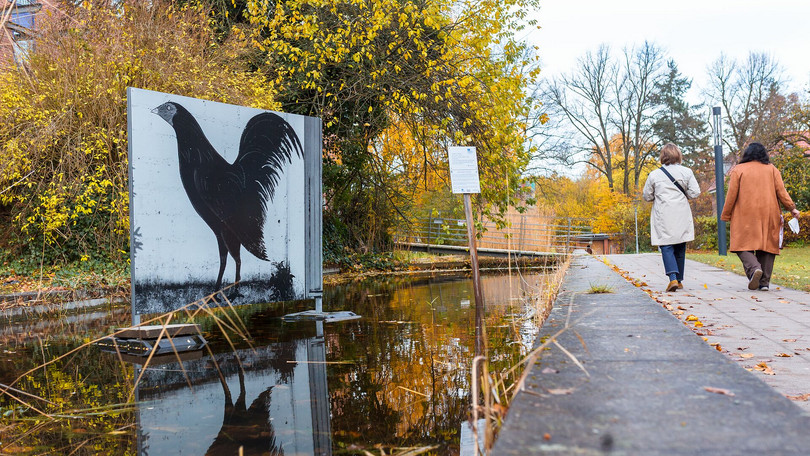
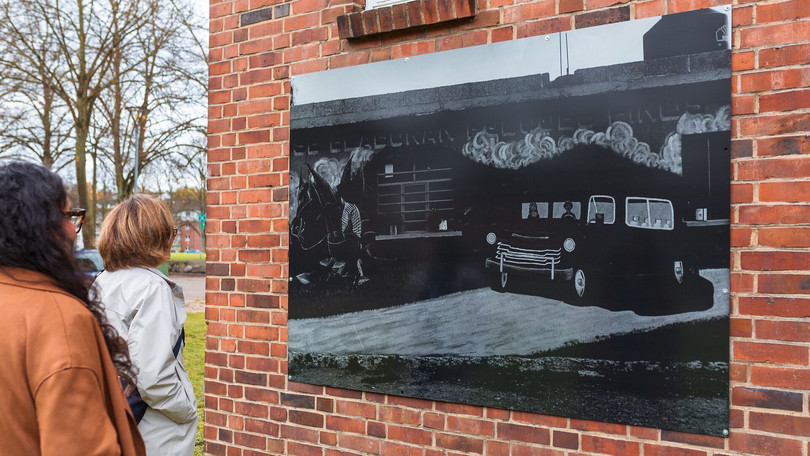
Pulque is a traditional Mexican beverage made from fermented agave juice, with a history dating back to pre-Hispanic times. However, in a photograph by Mexican-American artist Mariana Yampolsky (1925–2002)—which is on display near Building 4, close to the cafeteria—the focus is not on the beverage itself, but on a painted advertising sign. It is one of four images in the exhibition Seeing Mexico, in which Yampolsky documented street art and other forms of everyday visual culture in Mexico.
Yampolsky moved from the United States to Mexico in 1945 and joined the politically active artists’ collective Taller de Gráfica Popular. Her photographic work focuses in particular on everyday life, architecture, and popular culture in Mexico. Her photographic estate has been included in the Mexican register of the UNESCO Memory of the World program.
The exhibition was curated by art historian Dr. Veronica Bremer in collaboration with the Centro de la Imagen in Mexico City and grew out of her postdoctoral research within the DFG research group TransExil. “I’m interested in the various levels of representation: the original images in public spaces, Yampolsky’s photographic perspective on them, and finally our current presentation on campus,” explains Bremer.
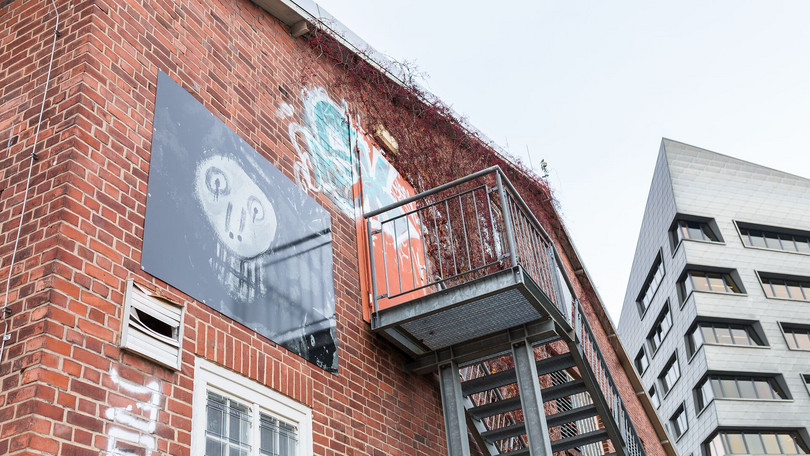
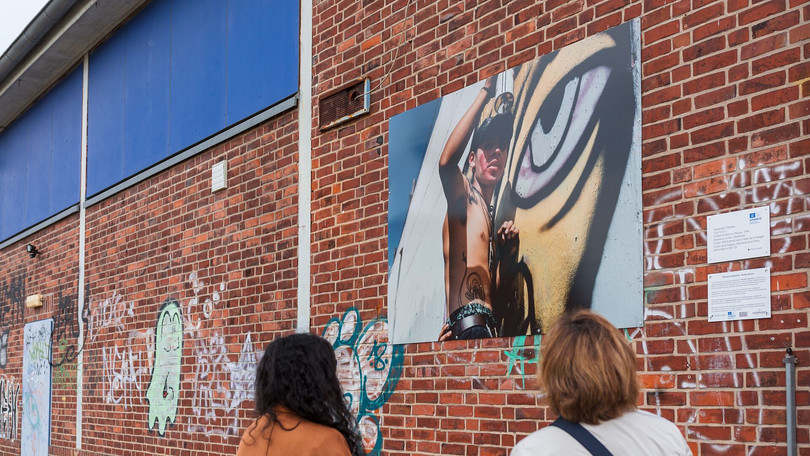
A total of four works by the Mexican photographer are on display as part of the open-air exhibition Seeing Mexico on the Leuphana campus. They depict street art in public spaces in Mexico. On the back of the former Vamos building, for example, Yampolsky’s photograph ¡Ojo! can be seen, depicting a person with a spray can next to a painted eye. The facade at the exhibition site also bears traces of graffiti. This raises the question of which interventions in public space are recognized as art and which are not.
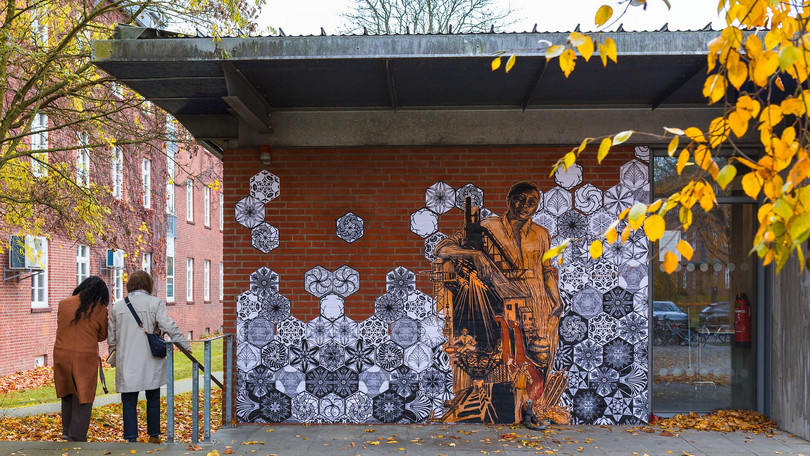
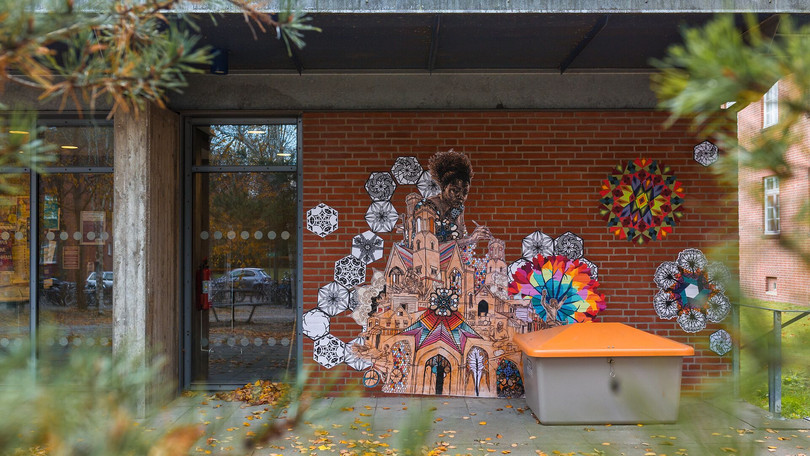
For the opening week, large-format paper panels were printed, cut to size, and installed as wheat-paste installations in Lecture Hall 5 in collaboration with students and the ARTotale team. SWOON is the artist behind these works: “Caledonia Dance Curry, an American artist, is one of the first women to gain international recognition in street art,” explains Bremer. The portraits depict people from Braddock, Pennsylvania, a former steel-making town whose history is marked by industrial decline, racism, and the struggle of Black steelworkers for recognition. Through this work, Swoon addresses issues of discrimination and the often one-sided portrayal of industrial history.
“Our goal wasn’t just to bring art to campus, but also to raise questions: What happens to these images when they are shown in a different social and cultural context? And what can they tell us about our own university and society?” explains Bremer.
The paper installations will be on view until the end of the year, while the replicas of the photographs will remain on display on campus until the end of February 2027.