
Dr. Maren Wesselow
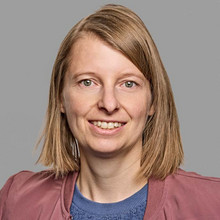
Vita
Dr. Maren Wesselow is a researcher specializing in participatory governance and the development of sustainable and social innovations in the energy and agricultural sectors. Her work combines transdisciplinary research with participatory, interactive, and co-creative methods to support societal transformation processes in a practice-oriented way.
Throughout her career, she has worked on a range of research and applied projects addressing topics such as sustainable land use, urban agriculture, mobility, and energy-efficient neighborhood development. A key focus of her work has been the involvement of diverse societal actors and the co-development of innovative solutions in international contexts, particularly in Sub-Saharan Africa and Europe.
At Leuphana University Lüneburg, she is currently working on a collaborative project focused on innovation processes in the field of community energy.
Projects
-
Innovations-Ökosysteme für gemeinschaftsgetragene Energieversorgung
Maren Wesselow (Project staff)
→Project: Research
Publications
Journal contributions
- Opening up and closing down citizen participation in the development of a sustainable neighborhood energy system
Maren Wesselow (Author) , Torsten Grothmann (Author) , Bernd Siebenhüner (Author) , 01.12.2025 , in: Energy, Sustainability and Society, 15, 1 , 16 p.Research output: Journal contributions › Journal articles › Research › peer-review
- Green means go: The effect of a visualization tool towards increased use of renewable energy in households
Mathias Lanezki (Author) , Maren Wesselow (Author) , Antonieta Alcorta de Bronstein (Author) , Ernst Schäfer (Author) , Frederic Urbschat (Author) , Julia Ingensiep (Author) , Jessica Foppe (Author) , Jan Henrik Bruhn (Author) , 01.12.2024 , in: Energy Research and Social Science, 118 , 14 p.Research output: Journal contributions › Journal articles › Research › peer-review
- Not All Social Capital Is Equal: Conceptualizing Social Capital Differences in Cities.
Maren Wesselow (Author) , 01.06.2023 , in: Urban Science, 7, 2 , 14 p.Research output: Journal contributions › Journal articles › Research › peer-review
- Integrating knowledge within and between knowledge types in transdisciplinary sustainability research: Seven case studies and an indicator framework
Leena Karrasch (Author) , Torsten Grothmann (Author) , T. A. Michel (Author) , Maren Wesselow (Author) , Henner Wolter (Author) , Alexandra Unger (Author) , Alkje Wegner (Author) , Diana Giebels (Author) , Bernd Siebenhüner (Author) , 01.05.2022 , in: Environmental Science and Policy, 131 , p. 14-25 , 12 p.Research output: Journal contributions › Journal articles › Research › peer-review
- “Who needs money if you got hands, if you got plants” Forming community resilience in two urban gardening networks in South Africa
Maren Wesselow (Author) , N'wa Jama Mashele (Author) , 01.12.2019 , in: Human Ecology, 47, 6 , p. 855-864 , 10 p.Research output: Journal contributions › Journal articles › Research › peer-review
Contributions to collected editions/anthologies
- The Role of Citizen Participation in Developing a New Energetically Efficient Quarter – Limitations and Success Factors
Maren Wesselow (Author) , Torsten Grothmann (Author) , Bernd Siebenhüner (Author) , Ulrich Scheele (Author) , Ernst Schäfer (Author) , 31.12.2023 , p. 91 – 107 , 17 p.Research output: Contributions to collected editions/anthologies › Chapter › Research › peer-review
- Urban Agriculture: Challenges and Opportunities in Urban Water Management and Planning
Maren Wesselow (Author) , Christina Kifunda (Author) , Raymond Auerbach (Author) , Bernd Siebenhüner (Author) , 26.12.2019 UK , p. 327-336 , 10 p.Research output: Contributions to collected editions/anthologies › Contributions to collected editions/anthologies › Research › peer-review