
Prof. Dr. Valentin Schatz
Institute of Sustainability Governance
Associated member, Center for European and International Law
Associated member, Leuphana Center for Cooperative Security (LCCS)
Vita
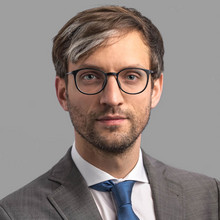
Prof. Dr. Valentin Schatz is Junior Professor of Public Law, European Law and Public International Law, in particular Environmental Law and the Law of the Sea at the School of Sustainability and the Institute of Sustainability Governance (INSUGO). His research focuses on international, European and domestic environmental law and the law of the sea.
You can find his current list of publications and presentations here.
Prof. Dr. Valentin Schatz’s external functions include Vice-Chair of the Board of Directors of the International Foundation for the Law of the Sea (IFLOS), member of the IUCN World Commission on Environmental Law (Ocean Law Specialists Group), and German delegate at the International Law Association (ILA) Committee on Protection of People at Sea.
Prof. Dr. Valentin Schatz attaches particular importance to knowledge and science transfer. As part of his research focus, he advises NGOs (e.g., in the field of marine environmental law, sustainable fisheries or civil search and rescue), governmental authorities (e.g., in the field of offshore wind energy or environmentally sound shipping) and think tanks (e.g., on hybrid threats to maritime security) and regularly prepares legal opinions and expert reports.
Click here to visit the pages of the Junior Professorship.
Curriculum vitae
- June 2025 – today: Junior Professor (W1 with Tenure Track to W2) of Public Law, European Law and Public International Law, in particular Environmental Law and the Law of the Sea, Leuphana University of Lüneburg
- September 2022 – June 2025: Junior Professor (W1 with Tenure Track to W2) of Public Law and European Law with a Focus on Sustainability, Leuphana University of Lüneburg
- 2021 – 2022: Post-Doctoral Researcher, Faculty of Law, University of Hamburg
- 2020 – 2022: Legal Clerk, Hanseatic Higher Regional Court, 2nd State Examination
- 2021: Doctoral degree (Dr. iur., topic of thesis: "Access to Fisheries within National Jurisdiction") from the Faculty of Law, University of Hamburg (summa cum laude)
- 2018 – 2021: Research Associate and Ph.D. Researcher, Chair of the International Law of the Sea and International Environmental Law, Public International Law and Public Law (Prof. Alexander Proelß) & Institute for the Law of the Sea and Maritime Law, University of Hamburg
- April 2017 and March 2018: Visiting Researcher, University of Adelaide, Australia
- December 2016 – February 2017: Visiting Researcher, Max Planck Institute Luxembourg for International, European and Regulatory Procedural Law
- 2016 – 2018: Research Associate and Ph.D. Researcher, Chair of Public Law, Public International Law and European Union Law (Prof. Alexander Proelß), University of Trier
- 2012 – 2013: ERASMUS Programme, University of Dundee, Scotland
- 2010 – 2016: Undergraduate Studies in Law, University of Passau, 1st State Examination
Projects
-
Integrative Mapping and Prioritization of Atlantic Protection Areas - Guidelines for Balancing Conservation Priorities with Economic and Legal Interests in the High Seas
Valentin J. Schatz (Project manager, academic) , Alice Bertram (Project staff)
→Project: Research
Publications
Books and anthologies
- Workshop on impacts of the EU-UK Trade and Cooperation Agreement on fisheries and aquaculture in the EU: Part I: Legal aspects
Valentin J. Schatz (Author) , Alexander Proelss (Author) , 2021 Brüssel , 72 p.Research output: Books and anthologies › Compendium/lecture notes › Transfer
- Rechtliche Vorgaben zum Umgang mit Schiffsabwasser: Völker-, unions- und nationalrechtliche Anforderungen an Einleitungen von Scrubber-Abwasser, Ballastwasser und häuslichem Abwasser durch Schiffe
Alexander Proelss (Author) , Valentin J. Schatz (Author) , 2019 Dessau-Roßlau , 129 p.Research output: Books and anthologies › Compendium/lecture notes › Transfer
Journal contributions
- Review of Objections to RFMO Conservation and Management Measures under EU Law: Bloom v. Commission
Valentin J. Schatz (Author) , 01.06.2026 , in: International Journal of Marine and Coastal Law, 41, 2 , p. 472-483 , 12 p.Research output: Journal contributions › Journal articles › Research › peer-review
- International regulation of commercially exploited sharks: challenging the notion of shark “bycatch” in tuna RFMOs
Valentin J. Schatz (Author) , Daniel Kachelriess (Author) , 01.03.2026 , in: International Environmental Agreements: Politics, Law and Economics, 26, 1 , p. 1-18 , 18 p.Research output: Journal contributions › Journal articles › Research
- Potential and Pitfalls of the Advisory Function of ITLOS under the BBNJ Agreement
Alice Bertram (Author) , Valentin J. Schatz (Author) , Johannes Ipsen (Author) , 01.01.2026 , in: Leiden Journal of International Law, 39, 3Research output: Journal contributions › Journal articles › Research › peer-review
- Leugnung des Existenzrechts Israels: Zur Verfassungsmäßigkeit einer potenziellen Verschärfung des § 130 StGB
Valentin J. Schatz (Author) , Alice Bertram (Author) , Emma Bartmann (Author) , 01.12.2025 , in: Recht und Politik , 11 p.Research output: Journal contributions › Journal articles › Research
- Die unionsrechtliche Regulierung von Hafenauffangeinrichtungen für Schiffsabfälle durch die PRF-Richtlinie
Valentin J. Schatz (Author) , Laura Wanner (Author) , 01.01.2025 , in: Natur und Recht, 47, 1 , p. 13-19 , 7 p.Research output: Journal contributions › Journal articles › Research › peer-review
Contributions to collected editions/anthologies
- The procedure for the prompt release of vessels and crews: Pragmatic? Predictable? Passé?
Camille Goodman (Author) , Valentin J. Schatz (Author) , 12.02.2026 , p. 330-355 , 26 p.Research output: Contributions to collected editions/anthologies › Chapter › Research › peer-review
- Decolonizing RFMOs: The Case of The United Kingdom’s IOTC Membership on Behalf of the Chagos Archipelago
Valentin J. Schatz (Author) , 14.10.2024 London , p. 17-33 , 17 p.Research output: Contributions to collected editions/anthologies › Chapter › Research › peer-review
- Seeanlagengesetz (SeeAnlG)
Valentin J. Schatz (Author) , Emma Bartmann (Author) , 01.09.2024 1 ed. Baden-BadenResearch output: Contributions to collected editions/anthologies › Contributions in collection of commentaries › Research
- Artikel 9 Umweltziele
Valentin J. Schatz (Author) , Miriam Köster (Author) , 01.01.2024 1 ed. München , p. 165-174 , 10 p.Research output: Contributions to collected editions/anthologies › Contributions in collection of commentaries › Research
- Planung/Zulassung von Energieanlagen Seeanlagengesetz (Rn 1-17) Einführung
Valentin J. Schatz (Author) , Emma Bartmann (Author) , 01.01.2024 MünchenResearch output: Contributions to collected editions/anthologies › Contributions in collection of commentaries › Research
Activities
-
“Legal Implications of the Designation of Area-Based Management Tools under the BBNJ Agreement in High Seas Areas above Extended Continental Shelves of Coastal States”
Valentin J. Schatz (Speaker) , Alice Bertram (Speaker)
Activity: Conference Presentations › Research
-
Opinion on the Conformity of the European Union’s Position with the UNFSA concerning the Conservation and Management of North Atlantic Shortfin Mako Shark at ICCAT
Mercedes Rosello (Reviewer) , Valentin J. Schatz (Reviewer) , Eva van der Marel (Reviewer)
Activity: Academic Consultant › Transfer
Prizes
-
Promotionspreis 2020-2022
(Recipient) ,Prize: external Prizes, scholarships, distinctions, appointments › Research
Courses
This lecture series explores the relationship between security, international law, and power in the 21st century. As states increasingly perceive a wide range of developments as security challenges and geopolitical power relations continue to shift, this triangular relationship calls for its rethinking. Therefore, across different fields of international law, the lecture series examines how these changes shape the development and application of international law and how international law, in turn, affects security and power.
Bringing together scholars and practitioners, the lecture series covers topics including collective and regional peace and security, peacemaking, maritime security, international criminal accountability, international trade and investment, counter-terrorism, and environmental security.
The seminar begins by providing a general introduction to the main pillars and tenets of the global order of the oceans (particularly the 1982 United Nations Convention on the Law of the Sea (UNCLOS) as well as the concepts of ocean governance and ocean sustainability. Thereafter, the seminar analyzes specific persistent and/or contemporary challenges and recent or ongoing developments with respect to sustainable ocean governance. These topical sessions and the examples and/or case-studies examined in them highlight the importance not only of international law and institutions but also of its implementation through the prescription and enforcement of regional (for example, European) and domestic (for example, German) law.