
PD Dr. Timur Sevinçer
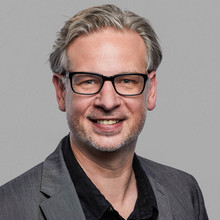
Vita
Timur Sevincer is a motivation and social psychologist. His main area of research is motivation and self-regulation. In particular, he examines future-oriented self-regulation strategies – their spontaneous use and effects on behavior change - in various domains, including promoting sustainable behavior and fostering positive intergroup relationships. His research involves a wide variety of research questions and designs as well as diverse methods such as physiological measures, implicit measures, cognitive measures, ecological momentary assessment, behavioral observations in the field, large-scale surveys, and analyses of population-level data, and archival records.
ACADEMIC POSITIONS
- 2025-today: Research Associate, Institute of Sustainability Psychology
- 2025: Interim Professorship, Institute of Sustainability Psychology, Psychology in particular Sustainable Behavior
- 2024-2025: Research Fellow, Hanse-Wissenschaftskolleg Delmenhorst, Institute for Advanced Study
- 2023-2024: Interim Professorship, Institute of Sustainability Psychology, Psychology and Transformation
- 2022-2023: Interim Professorship, Institute of Psychology, Motivation and General Psychology, Leuphana University Lüneburg
- 2022: Interim Professorship, Faculty of Psychology, Chair of Social Psychology, TU Dresden
- 2018-2021: Research Associate, Institute of Psychology, University of Hamburg
- 2018-2020: Part-Time Lecturer in Psychology, Leuphana University Lüneburg
- 2017-2018: Part-Time Lecturer in Psychology, New York University Berlin
- 2010-2018: Interim Professorship/Research Associate, Institute of Psychology, Educational Psychology and Motivation, University of Hamburg
- 2008-2010: Post-doctoral Research Fellow, Institute of Psychology, University of Hamburg
- 2004-2008: Doctoral student, Institute of Psychology, University of Hamburg
EDUCATION
- 2015: Venia Legendi, University of Hamburg, Psychology
- 2015: Habilitation, University of Hamburg, Psychology
- 2008: Ph.D., Summa cum laude, University of Hamburg, Psychology
- 2004: Magister Artium (M.A. equivalent), University of Hamburg, Philosophy (Minors: Psychology and American Studies)
Projects
-
Using Self-Affirmation to Reduce Intergroup Hostility and Facilitate Intergroup Contact in the Israel-Palestinian Conflict
A. Timur Sevincer (Project manager, academic) , Eran Halperin (Project manager, academic) , Tim Müller (Partner) , David Shermann (Project manager, academic)
→Project: Research
Publications
Books and anthologies
- The Psychology of Thinking about the Future
Gabriele Oettingen (Editor) , A. Timur Sevincer (Editor) , Peter M. Gollwitzer (Editor) , 2018 New York , 554 p.Research output: Books and anthologies › Book › Research
Journal contributions
- Public support for climate action is underestimated in the German political domain
A. Timur Sevincer (Author) , Luisa Hostlowsky (Author) , Fenja Styhler (Author) , Wilhelm Hofmann (Author) , 01.12.2026 , in: Communications Earth and Environment, 7, 1 , 9 p.Research output: Journal contributions › Journal articles › Research › peer-review
- Mental contrasting and problem-solving in romantic relationships: A dyadic behavioral observation study
Henrik Jöhnk (Author) , Gabriele Oettingen (Author) , Kay Brauer (Author) , A. Timur Sevincer (Author) , 01.07.2026 , in: Journal of Social and Personal Relationships, 43, 7 , p. 1982-2006 , 25 p.Research output: Journal contributions › Journal articles › Research › peer-review
- Negotiating With Yourself and Winning: The Dual Commitment Model for Intrapersonal Sustainability Goal Conflicts
A. Timur Sevincer (Author) , Johann M. Majer (Author) , Roman Trötschel (Author) , 01.06.2026 , in: Motivation Science, 12, 2 , p. 184-195 , 12 p.Research output: Journal contributions › Journal articles › Research › peer-review
- From physiology to policy: Understanding and promoting sustainable behavior.
A. Timur Sevincer (Author) , Johann M. Majer (Author) , 01.06.2026 , in: Motivation Science, 12, 2 , p. 147-151 , 5 p.Research output: Journal contributions › Journal articles › Research › peer-review
- Putting sustainable human resource management and workplace eudaimonic well-being into cross-cultural context
Agnieszka Wojtczuk-Turek (Author) , Dariusz Turek (Author) , Paweł Jurek (Author) , Fiona Edgar (Author) , Belgin Okay-Somerville (Author) , Nataliya Podgorodnichenko (Author) , Na Fu (Author) , Maria Järlström (Author) , Boris Popov (Author) , Paul Hutchings (Author) , Katie Sullivan (Author) , Marius Duhović Hafstad (Author) , Tetiana Shkoda (Author) , Oleksandr Savych (Author) , Sabine Raeder (Author) , Howard J. Klein (Author) , Janine Bosak (Author) , Anna Lupina-Wegener (Author) , Zuzana Dvorakova (Author) , Francisca Gutiérrez-Crocco (Author) , Aleksandra Kekkonen (Author) , Pedro I. Leiva (Author) , Lenka Mynaříková (Author) , Mercedes Sánchez-Apellániz (Author) , Imran Shafique (Author) , Bassam Samir Al-Romeedy (Author) , Serena Wee (Author) , Patrick Dunlop (Author) , Florence Stinglhamber (Author) , Gaëtane Caesens (Author) , Adriana Caldana (Author) , Marina Greghi Sticca (Author) , Valentin Vasilev (Author) , Martin Lauzier (Author) , Guillaume Desjardins (Author) , Gangfeng Zhang (Author) , Le Tan (Author) , Lady Brigitte Galvez-Sierra (Author) , Erico Rentería Pérez (Author) , Srećko Goić (Author) , Ivana Tadić (Author) , Dagmar Charvátová (Author) , Marek Botek (Author) , Dorthe Høj Jensen (Author) , Dayamy Lima Rojas (Author) , Segundo Gonzalo Pazmay-Ramos (Author) , Piret Masso (Author) , Nicolas Gillet (Author) , Tiphaine Huyghebaert-Zouaghi (Author) , A. Timur Sevincer (Author) , 30.03.2026 , in: European Management Journal , 15 p.Research output: Journal contributions › Journal articles › Research › peer-review
Contributions to collected editions/anthologies
- Lernzielorientierung: Learning goal orientation
Veronika Job (Author) , A. Timur Sevincer (Author) , Gabriele Oettingen (Author) , 24.11.2021Research output: Contributions to collected editions/anthologies › Articles for encyclopedia › Research
- Teaching mental contrasting to facilitate educational attainment across sociocultural contexts
A. Timur Sevincer (Author) , Gabriele Oettingen (Author) , 01.01.2020 , p. 201-227 , 27 p.Research output: Contributions to collected editions/anthologies › Chapter › Research › peer-review
- The modern land of opportunity: Cosmopolitan cities attract independent immigrants
A. Timur Sevincer (Author) , Michael E.W. Varnum (Author) , Shinobu Kitayama (Author) , 29.05.2019 , p. 27-47 , 21 p.Research output: Contributions to collected editions/anthologies › Chapter › Research › peer-review
- Wenn-Dann Pläne und mentale Kontrastierung als Strategien zur Förderung der Selbstregulation
Ulrike Schwarz (Author) , A. Timur Sevincer (Author) , Caterina Gawrilow (Author) , 01.01.2019 , p. 193-205 , 13 p.Research output: Contributions to collected editions/anthologies › Chapter › Research › peer-review
- Kosmopolitismus
A. Timur Sevincer (Author) , 01.01.2019Research output: Contributions to collected editions/anthologies › Articles for encyclopedia › Research
Activities
-
Voluntary migration to cosmopolitan cities and risk-taking
A. Timur Sevincer (Speaker) , Jung Yul Kwon (Coauthor) , Michael E.W. Varnum (Coauthor) , Shinobu Kitayama (Coauthor)
Activity: Conference Presentations › Research
-
Fantasizing now, feeling disappointed later. Positive fantasies and negative emotions in soccer fans
Greta Wagner (Speaker) , A. Timur Sevincer (Coauthor) , Gabriele Oettingen (Coauthor)
Activity: Conference Presentations › Research
-
Alcohol myopia and gambling behavior
Jennifer Brinkmann (Speaker) , A. Timur Sevincer (Coauthor) , Gabriele Oettingen (Coauthor) , Graciela Garibay (Coauthor)
Activity: Conference Presentations › Research
-
Substance use without a substance: The risk factors and mechanisms of gambling
A. Timur Sevincer (Speaker)
Activity: Conference Presentations › Research
-
Performance resource depletion influence on performance: Advancing concepts and findings
A. Timur Sevincer (Speaker)
Activity: Conference Presentations › Research
Press / Media
-
Haunted – living with unusual experiences
Interviewed oncePress/Media: Press/Media
-
Empathy towards refugees
Interviewed oncePress/Media: Press/Media
-
The strategy that turns daydreams into reality
1 time citedPress/Media: Press/Media
-
Idealistic Thinking linked with Economic Slump
1 time citedPress/Media: Press/Media
-
Rose-Colored Words, but Gray Outcomes
1 time citedPress/Media: Press/Media
Prizes
-
Fellowship for exceptional international scientists.
(Recipient) ,Prize: external Prizes, scholarships, distinctions, appointments › Research
-
Outstanding teaching award
(Recipient) ,Prize: external Prizes, scholarships, distinctions, appointments › Research
-
Postdoctoral fellowship
(Recipient) ,Prize: external Prizes, scholarships, distinctions, appointments › Research
-
Stipend for continuing scientific education 2007-2008
(Recipient) ,Prize: external Prizes, scholarships, distinctions, appointments › Research
-
Doctoral Fellowship 2005 - 2007
(Recipient) ,Prize: external Prizes, scholarships, distinctions, appointments › Research
Courses
This course introduces students to the central concepts, findings, and debates within psychology. It will begin with an overview of the science of psychology and the scientific method, highlighting how psychological knowledge is built through empirical research. From there, we will examine the genetic and evolutionary roots of behavior, the basic building blocks of perception and consciousness, and the processes of learning, memory, thinking, and intelligence. Students will also explore topics related to motivation and emotion, as well as the patterns of growth and change emphasized in developmental psychology. The course will then turn to the study of social psychology and personality, before addressing the nature of mental disorders and their treatment. By engaging with these topics, students will gain a broad understanding of the major perspectives, methods, and applications of contemporary psychology.
The seminar will focus in particular on evolved psychological sex differences. We will ask which sex differences have been documented, in which domains they occur, and how large they are compared with other psychological effects and with sex differences in other species. We will also discuss the origins of these differences, including the relative contributions of evolution, socialization, and the interaction between the two. We will compare these insights with commonly held beliefs about where sex differences originate from.
A further focus will be on interpersonal and societal implications of this knowledge. We will discuss risks of both exaggerating and downplaying psychological sex differences, for example by drawing parallels to medicine, where ignoring sex differences can cause harm. Finally, we will discuss how a more accurate understanding of the nature and origins of human sex differences can help women and men understand each other better and take each other’s perspectives in areas where they come into conflict, while also helping us build societies that are in line with widely shared values such as equality, fairness, and tolerance of different preferences and life plans.