
Perpetrators are becoming increasingly creative, so economic forensics must do the same.
2026-02-27 Wirecard, Cum-Ex and Dieselgate – what do these cases have in common? They are among the most prominent cases of white-collar crime in Germany and have had far-reaching social consequences. In the digital age, white-collar crime is more complex than ever. To meet these challenges, we need experts who operate at the interface between business, law and IT forensics. This is precisely where the Leuphana Professional School and Mittweida University of Applied Sciences are coming in with a new MBA in Business Forensics starting in the summer semester of 2027.
The Wirecard scandal cost many people a great deal of money. Private investors were hit hardest, some of whom invested their entire savings in the German ‘wunderkind’ of the digital economy and lost everything. Germany's reputation as a financial centre suffered serious damage, laws were tightened as a result, and a reform of the financial supervisory authority BaFin was initiated. Cum-Ex, on the other hand, is not an isolated case involving a single company, but rather a systematic raid on the state coffers by banks, stock traders and lawyers. Although the facts of the case have been investigated by German public prosecutors and the perpetrators convicted, critics believe that the majority of cases remain unsolved and that the systematic plundering of the state budget through Cum-Ex and similar mechanisms has not yet come to an end. Unlike Wirecard, Volkswagen is still on the market today; however, the group has radically changed course – among other things, with a view to expanding and professionalising its compliance structures, including the creation of the position of Group Chief Compliance Officer.
Of course, not every act of white-collar crime is on this scale, but the damage caused by this type of crime remains enormous overall – as demonstrated not least by the annual report on white-collar crime published by the Federal Criminal Police Office (BKA). And there is often a lack of qualified personnel to detect and investigate these cases in a timely manner.
The new part-time MBA in Business Forensics is therefore being developed at the interface between business, law and IT forensics. ‘With the joint MBA in Business Forensics, we are combining Leuphana's expertise in business education with the forensic expertise of Mittweida University of Applied Sciences to create an interdisciplinary continuing education programme with high practical relevance,’ says Prof. Dr. Markus Reihlen, Vice President for Professional School, Internationalisation, Entrepreneurship and Transfer at Leuphana University Lüneburg.
‘The programme responds to the growing demand for specialists who can identify and manage economic crime risks in an increasingly regulated and digitalised environment,’ emphasises Prof. Dr. Matthias Heckel, economic forensic expert with over 15 years of professional experience and professor of digital and general forensics at Mittweida University of Applied Sciences.
Prof. Dr. Dirk Labudde, head of the Forensics Department at Mittweida University of Applied Sciences, provides a brief preview of the course content: ‘A central element of the programme will be the use of artificial intelligence, whose increasing importance in both the commission of economic crimes and their detection and investigation cannot be overestimated.’
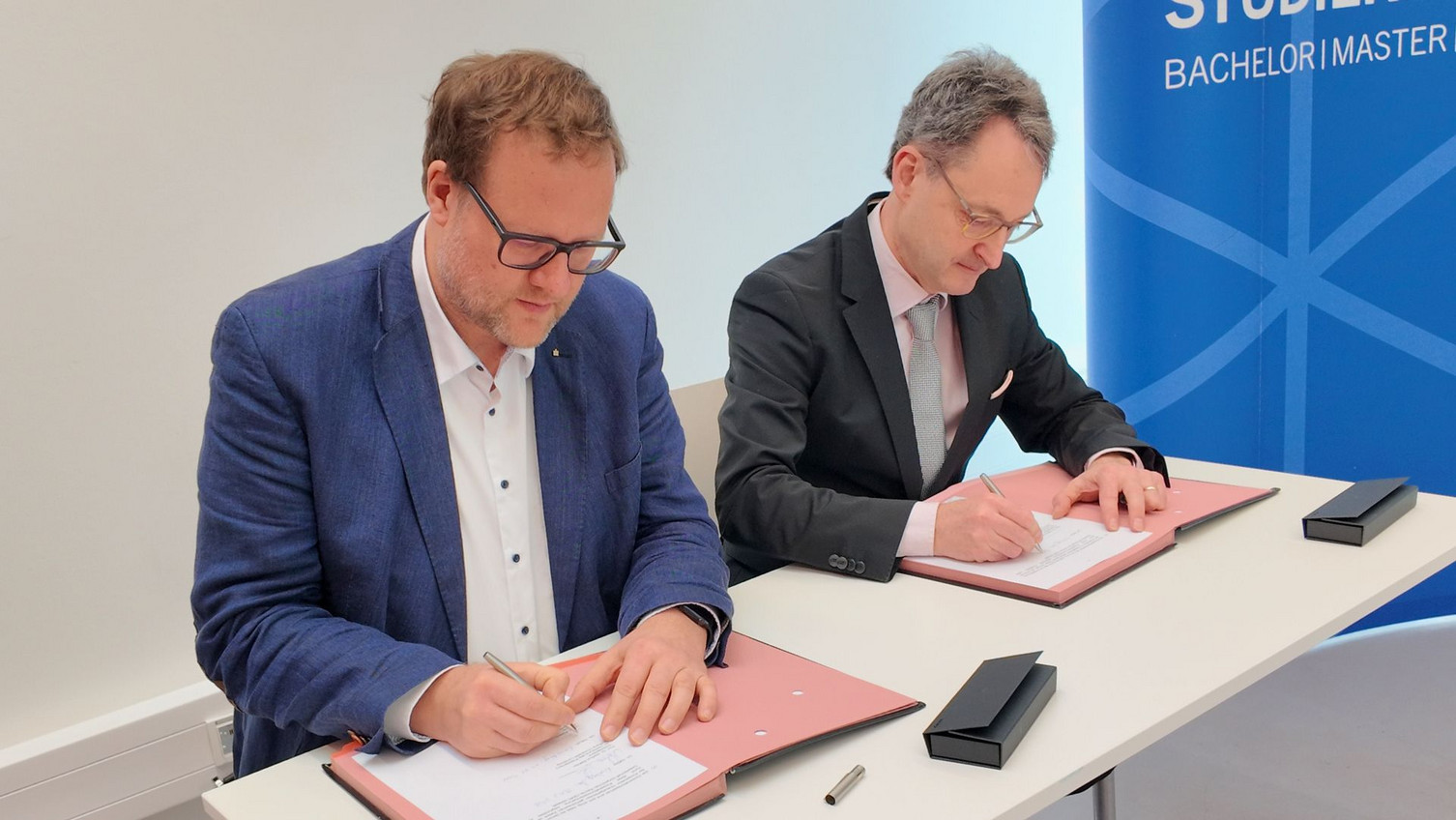
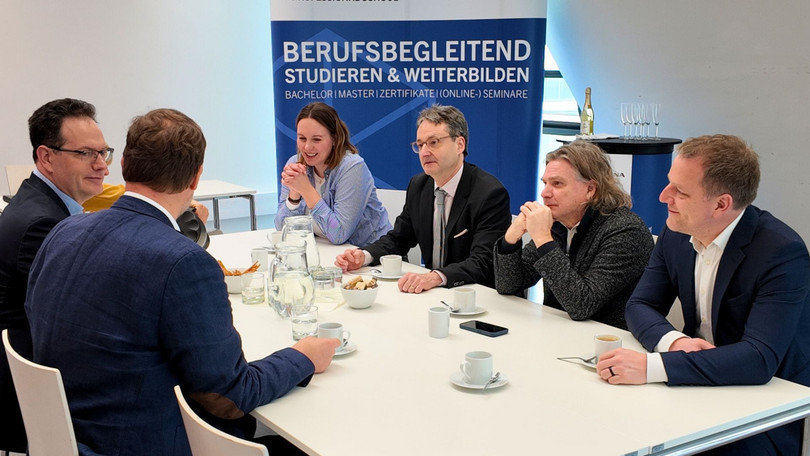
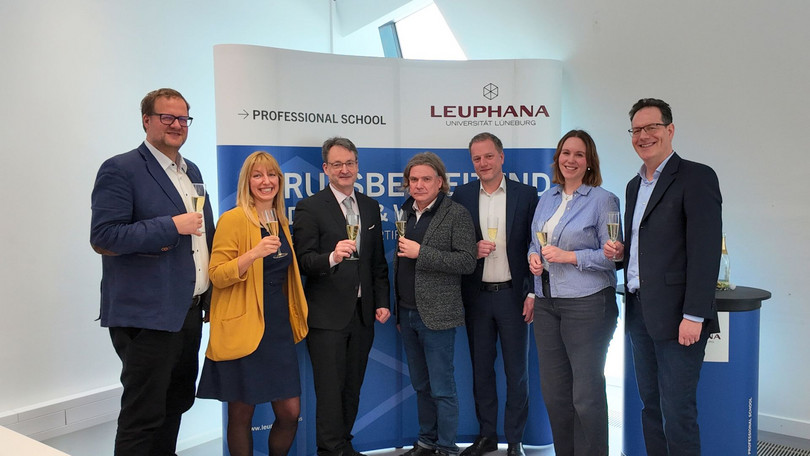
The corresponding cooperation agreement between Leuphana University Lüneburg and Mittweida University of Applied Sciences was signed last week by Ulrich Pietsch, Chancellor of Mittweida University of Applied Sciences, and Markus Reihlen. Also present were Prof. Dr. Matthias Heckel, Prof. Dr. Dirk Labudde, Christof Schmidt and Maria Schloßstein (management of the Leuphana Professional School) as well as Elske Ruge (Leuphana University), who will be involved in designing the content of the degree programme.
 ©Leuphana/Schwalbach
 ©Leuphana/Schwalbach