
From plant app to mindful fork. The first Minor AI Conference
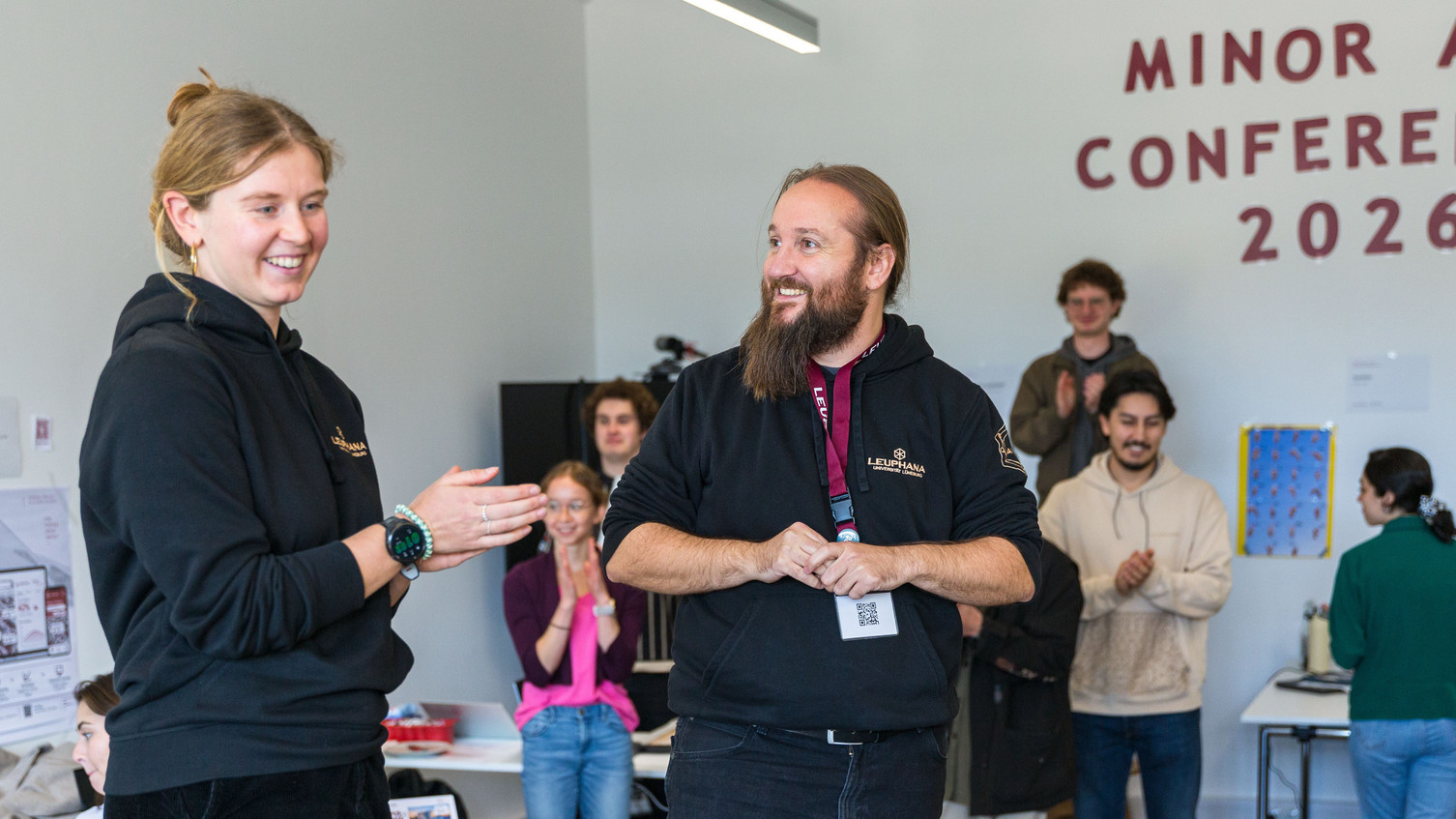
2026-10-08 On 25 September 2026, the new Artificial Intelligence degree programme hosted the first Minor AI Conference. On campus, students presented AI projects they had developed themselves, including a plant app and a fork designed to promote mindful eating. The conference brought together students, teachers and experts from various fields of AI.
 ©Leuphana/Tengo Tabatadze
 ©Leuphana/Tengo Tabatadze
 ©Leuphana/Tengo Tabatadze
 ©Leuphana/Tengo Tabatadze
Following a welcome address by the programme director, Professor Ricardo Usbeck, guests had the opportunity to exchange ideas at around ten stands in the Trafos. AI projects were presented in the fields of image recognition, language models and recommendation systems.
Not only for computer scientists
The remarkable thing about this was that many of the students had no technical background and study a non-technical subject as major, such as environmental sciences, cultural studies or management. “Many of them aren’t computer scientists,” noted Anna Ehrenberg. The research assistant at the Chair of Artificial Intelligence and Explainability supported the students in developing their AI projects. She emphasised that the students had made great progress by working on their own models. “I’m actually very proud of that,” she summarised.
Apple trees and cakes with AI
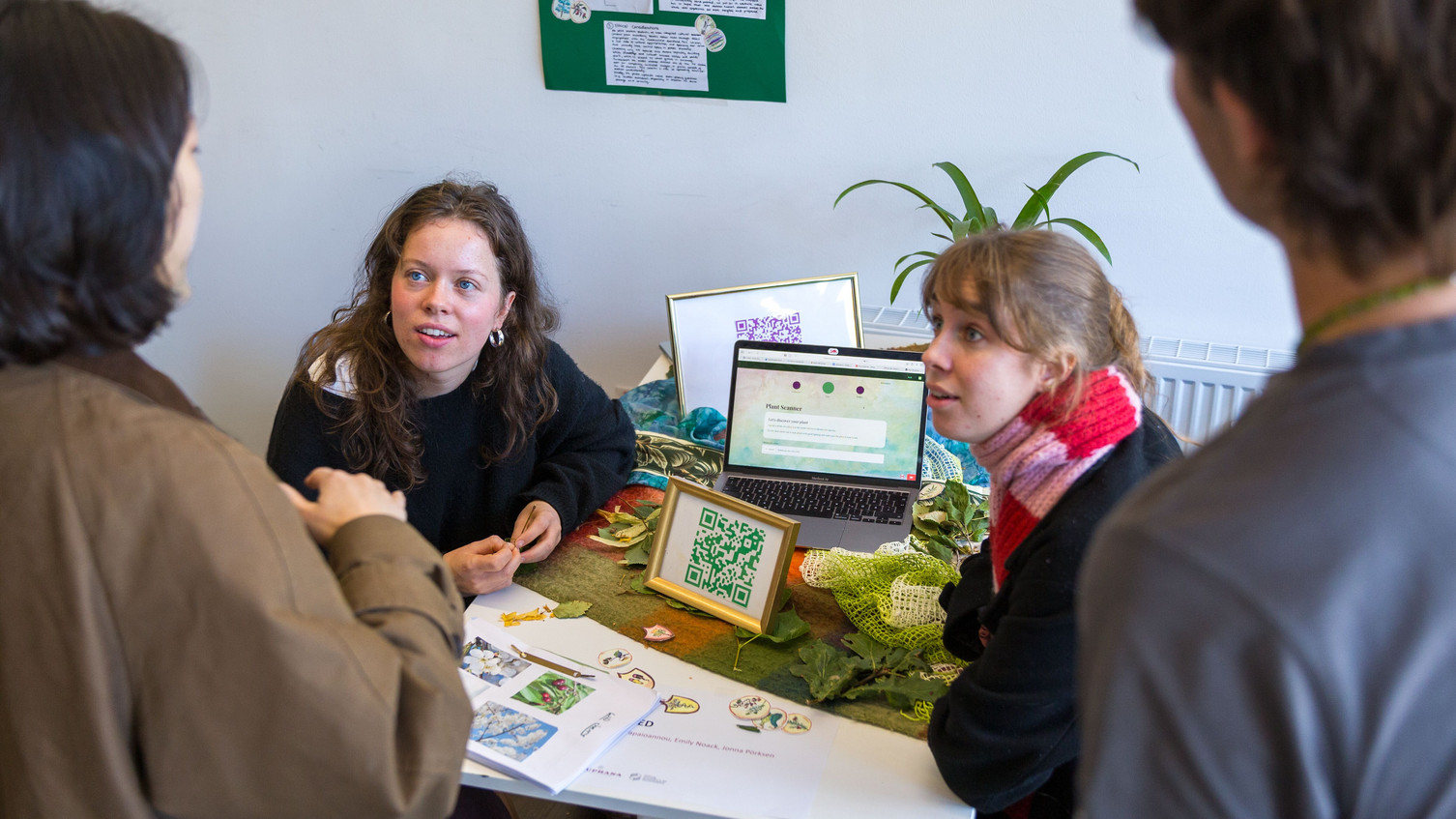
“We didn’t go into this as coding pros,” explained Emily Noack. She studies environmental sciences as her main subject and artificial intelligence as a minor. Together with her fellow students Medea Papaioannou and Jonna Pörksen, she has developed the Rooted app. The app combines Emily’s interest in environmental science with Jonna’s interest in cultural studies. The idea is that when users scan a plant with the app, they receive information about the cultural and mythological connections that different societies relate to these plants. The entire app is presented in a playful way. For example, users can earn badges that unlock further information. “Whilst we were working on our model, it really brought a lot of the technical content from the lecture to life,” explained Jonna, who is majoring in cultural studies. For her, working on the app also provided a good foundation for the coming semesters.
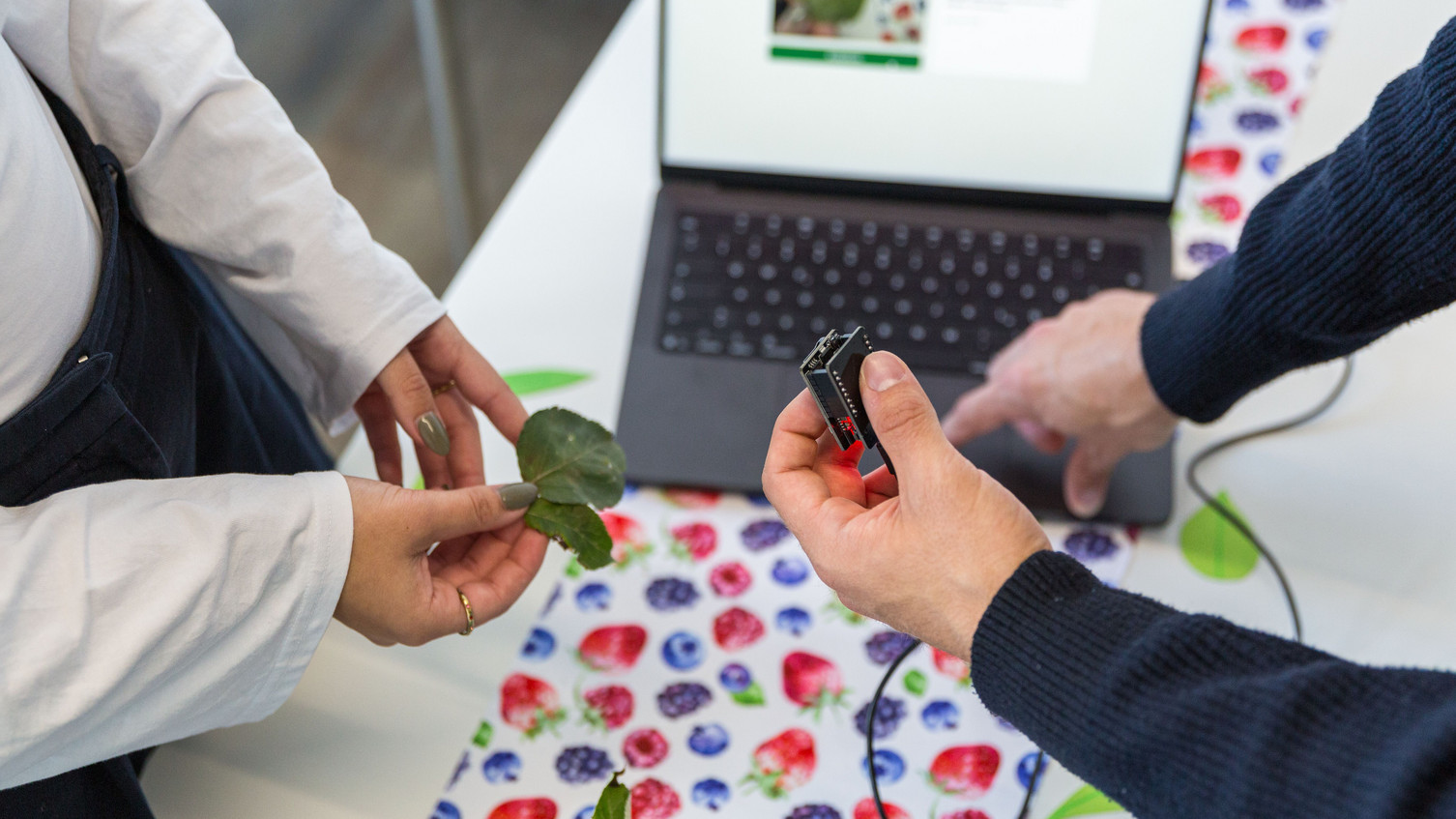
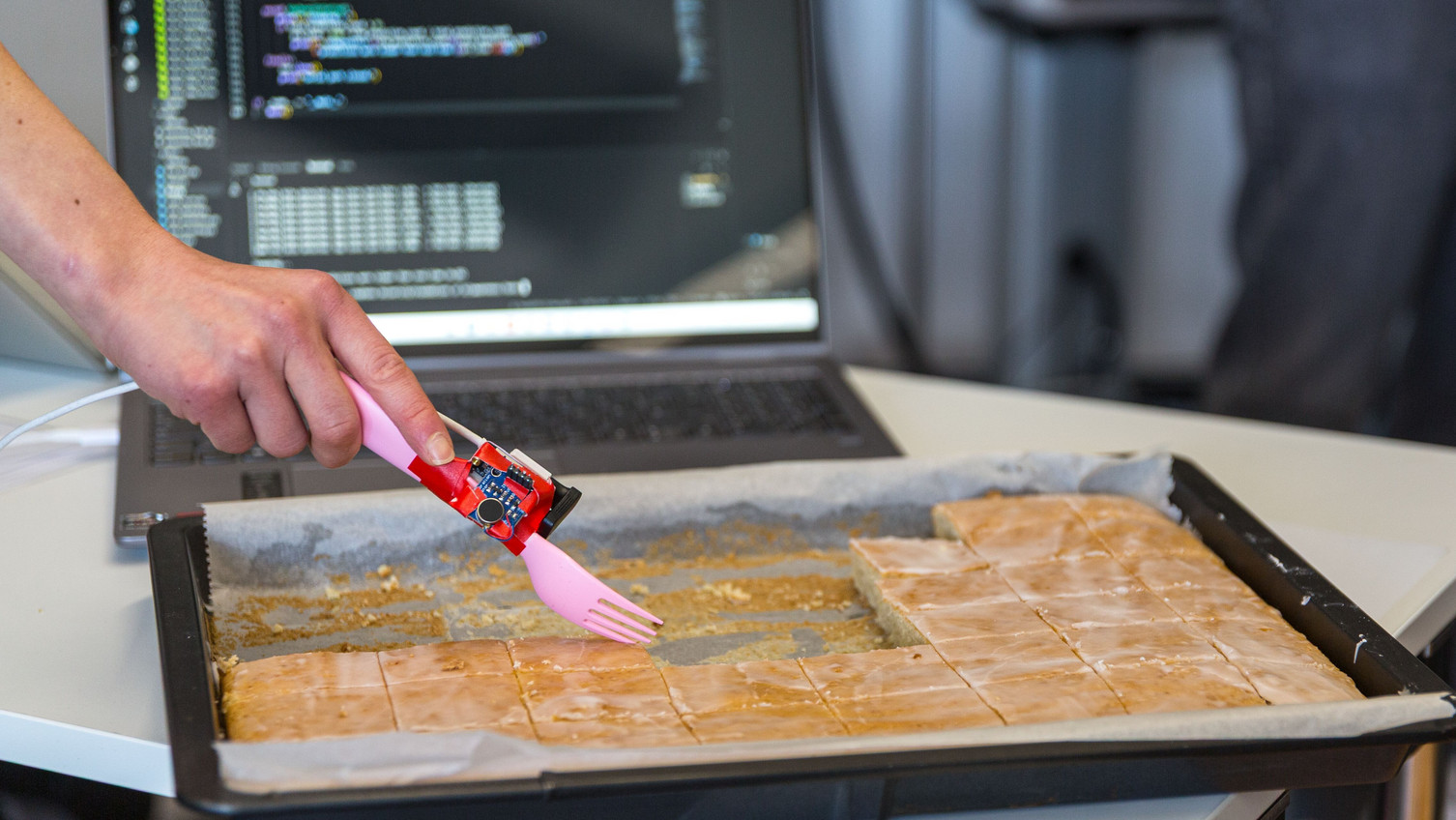
Students Justus Haag and Anna Wabnitz were also sitting at a stand with plant leaves, along with a small apple tree. They had developed the Demeter app, which can identify plants and their diseases. They envisaged one possible use case as the more targeted – and therefore reduced – use of herbicides. Paula Heide and Lars Mahlberg, meanwhile, invited visitors to their stand to enjoy a slice of cake using a very special fork. The Awareness Fork could help users to eat more mindfully and slowly.
Active participation rather than rote learning
The semester projects also count towards students’ assessment. At a time when AI has become part of everyday life, the minor Artificial Intelligence focuses on innovative teaching and assessment formats that encourage active participation. The programme is offered by the Faculty of Management and Technology and is part of the Leuphana AI Campus, which is funded by the Foundation for Innovation in Higher Education. Overall, the first Minor AI Conference demonstrated that AI competence can be demonstrated beyond written exams, and across a wide variety of projects.
More practical AI experience for all students
At the AI Campus, students from other disciplines can also try out artificial intelligence in practice. The Creative Space on the ground floor of the library is the perfect place for this. On Wednesday, 21 October 2026, students are invited to attend the Salon of Digital Affairs from 6 pm to 9 pm. Together with the Brazilian architect and Emerging Tech Fellow Viktor Sardenberg, World Making using Extended Reality is on the programme.