
Entrepreneurship and Motherhood
An interview study aims to examine the phase in which (expectant) mothers act as founders—a topic that has received little research attention to date
2026-10-13 Training is over, I’ve gained the most important work experience, but my own project ideas and the dream of self-employment keep coming to the forefront. Eventually, the decision is made: I want to start a business.
However, the years when women make this decision often coincide with the years when family planning and motherhood come into play. Prof. Dr. Pauline Reinecke, together with Dr. Nadine Albrecht from the Technical University of Munich, aims to explore how these phases of “becoming” can be reconciled through a qualitative interview study.
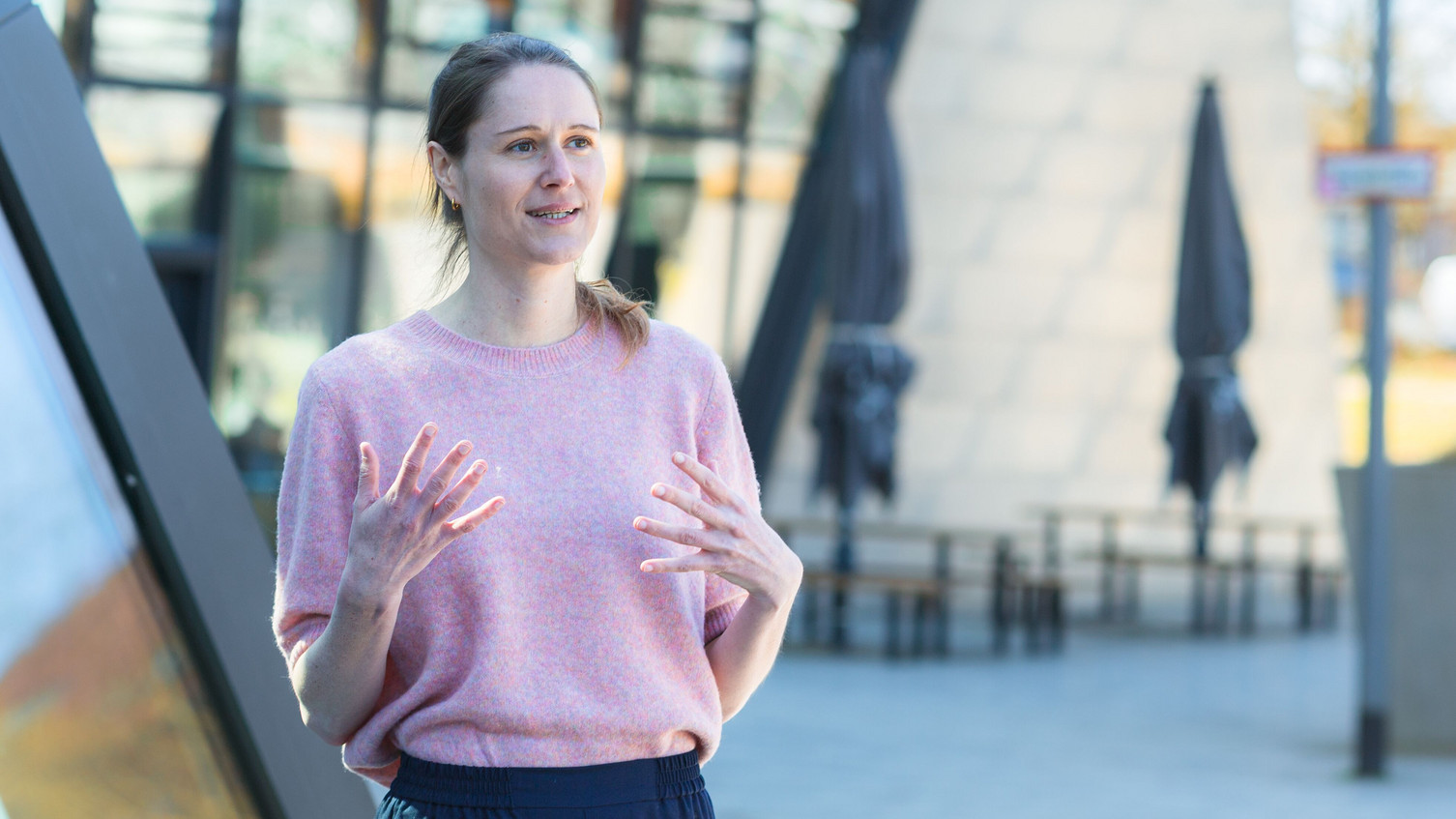
We spoke with Pauline Reinecke, assistant professor of business administration—specializing in strategic entrepreneurship—about her research project on a topic that is highly relevant both socially and academically.
What motivated you to explore the topic of pregnancy and entrepreneurship?
Our previous collaboration on the topic of hybrid entrepreneurship—and the resulting joint publication “Perceived Pain or Gain: Role Identity, Gratification, and the Well-Being of Hybrid Entrepreneurs” (Albrecht, Reinecke, Baum, Isidor & Boddington, 2026, Entrepreneurship Theory and Practice)—has shown that family and starting a business are often considered together. In this context, we have noticed that there are different patterns in how hybrid founders manage multiple roles simultaneously and either combine family and entrepreneurship or keep them separate. Studies also show that the timing of starting a business often overlaps with that of starting a family. We want to examine this connection more closely.
Why is it important to specifically examine the experiences of mothers who are building a business—rather than just those of “parents” or “founders” in general?
Mothers face a unique challenge, as the window of opportunity for starting a family is more biologically limited. This time constraint has a direct impact on both the planning involved in starting a family and the physical changes a woman experiences during pregnancy. We want to gain a deeper understanding of this interplay..
What challenges do you see in conducting research on this sensitive topic—for example, regarding participants’ willingness to take part or their openness?
We were surprised by the extremely positive response and openness of the study participants. We received numerous comments about how important this topic is, how little it has been discussed so far, and how one-sided the existing discourse can be at times. Many participants also expressed delight at being able to share their experiences. One challenge for us, however, is recruiting female founders while they are still pregnant, since—if they are starting a business while pregnant—their time is more limited. Our interviews with women to date have therefore primarily focused on looking back at the time of founding their businesses during pregnancy or parental leave. We would like to recruit additional female founders for our study who are willing to share their experiences with us while they are still pregnant, as we aim to compare their experiences before and after childbirth—particularly with regard to motivations, planning, and expectations at the time of pregnancy.
What do you hope to achieve by the end of your study—and what would be a “good” starting point for sustainable change?
Through this qualitative, longitudinal research approach, we hope to gain deeper insights into the experiences and coping strategies involved in dealing with the challenges mentioned, as well as into the underlying patterns of success. In particular, we aim to identify the different trajectories that female entrepreneurs and mothers follow, while taking into account the diversity of these trajectories—that is, not treating all cases as identical, but rather recognizing recurring patterns so that our findings can provide guidance to as many (future) female entrepreneurs and mothers as possible as they navigate their respective paths. In addition, we are considering developing a policy position paper that addresses the specific institutional framework and societal perceptions, highlights both the opportunities and challenges of the German system, and derives potential areas for improvement. The overarching goal is to contribute to an increase in the number of businesses founded by women in Germany and to identify ways in which family planning and starting a business can be reconciled.
Thank you for this insight!