
Whose expertise in sustainability matters on the board of directors?
2026-11-03 Companies play a crucial role in bringing about significant environmental and social change. The fact that this is a Europe-wide consensus is demonstrated not least by the EU requirements for sustainability reporting, the Corporate Sustainability Reporting Directive (CSRD), and the associated European Sustainability Reporting Standards (ESRS).
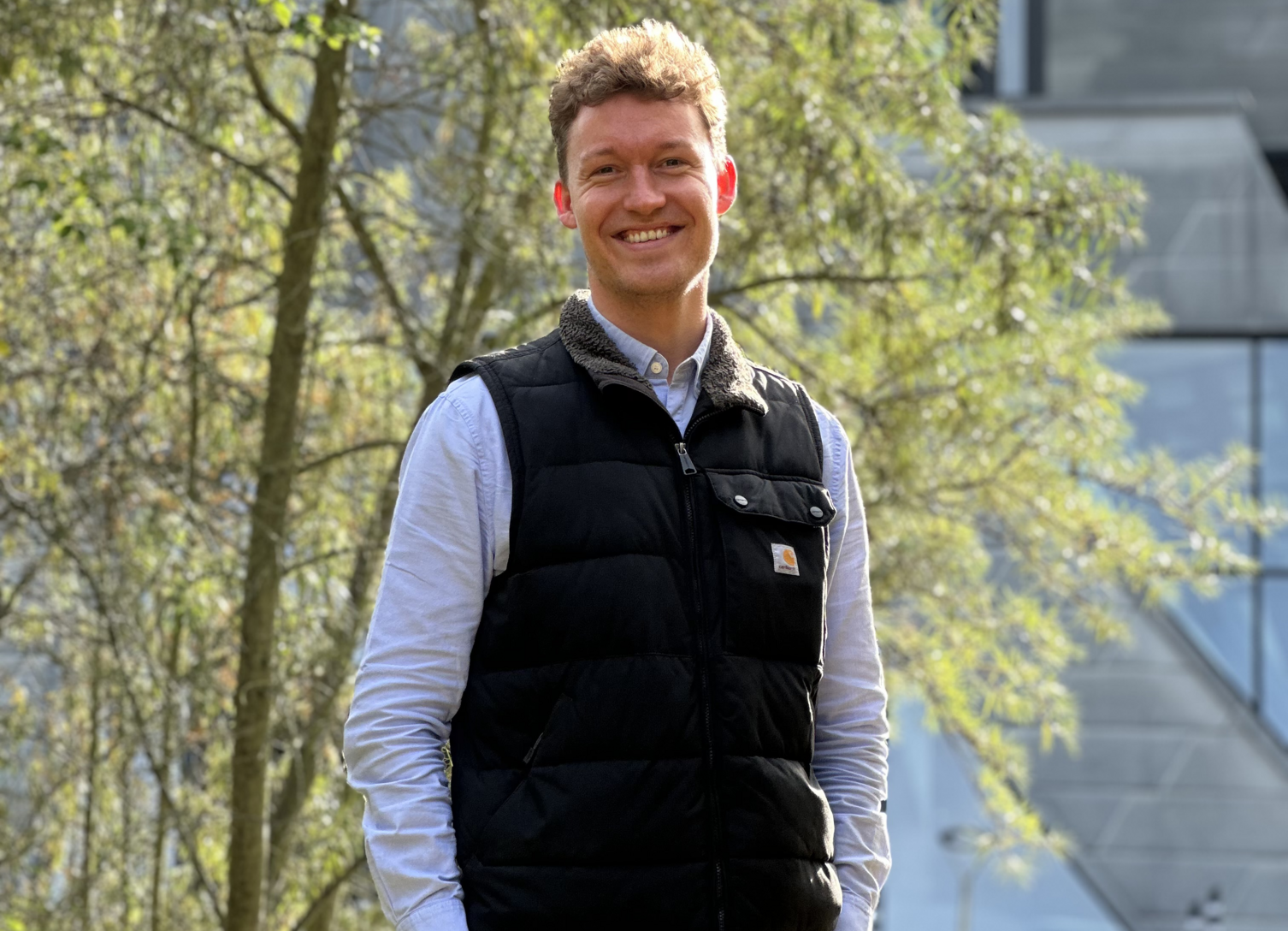
Jan Marvin Apel, a PhD at the Institute of Management, Accounting & Finance (IMAF) under Prof. Dr. Patrick Velte, is investigating how (cognitive) diversity in the management and supervisory boards of European companies affects their commitment to sustainability.
He recently published a paper titled “Board sustainability expertise: how shareholder and employee representatives shape supervisory board practice in codetermined German firms” in the renowned Accounting, Auditing & Accountability Journal (Vol. 39, No. 9, 2026). An earlier version had already been awarded the Best Paper prize at the 2026 Academy of Management Annual Meeting in Philadelphia and published in an abridged form in the Academy of Management Proceedings. In 36 interviews, Mr. Apel spoke with supervisory board members at German publicly traded companies with equal representation on the supervisory board about the development and distribution of sustainability expertise among shareholder and employee representatives, as well as how this expertise exerts influence through formal and informal governance channels.
We asked Jan Apel about the progress of his interview study:
How did you come across this topic, and how does the paper fit into your dissertation?
The idea for this topic came from my doctoral advisor when we were discussing sustainability expertise, and he noted that in Germany, due to the system of co-determination on the supervisory boards of large companies, we have—by law—two groups of equal size: shareholders and employee representatives. That immediately caught my attention because this structure is unique in Germany when viewed from an international perspective.
Prior to this paper, I conducted systematic literature reviews to better orient myself within my line of research. One of these has already been published in the *Journal of Accounting Literature*. Following this interview study, several projects are currently underway. Currently, I’m focusing on a content analysis of corporate reporting by the largest European companies with regard to sustainability expertise within their governing bodies. This builds directly on the interview study: In that study, I asked how supervisory boards understand and utilize sustainability expertise internally. Now I’m examining how companies present this expertise externally and how broadly it is distributed across various sustainability topics.
What is the theoretical basis for your study?
I combine two theories that are usually treated separately in corporate governance research: resource dependence theory and the resource-based view. The first examines how companies manage their dependencies on external stakeholders—such as capital providers, regulators, or the public. From this perspective, sustainability expertise helps the board of directors understand requirements such as the CSRD and present a credible image to investors and auditors.
The resource-based approach, on the other hand, looks inward: expertise is a capability that creates value, for example, because it helps assess whether a transformation is even feasible within the company. This becomes particularly evident in a co-determined supervisory board, because both perspectives are literally seated at the table: the shareholder side tends to bring an outside perspective, while the employee side tends to bring inside knowledge. My thesis is that only the interplay of both perspectives explains what constitutes sustainability expertise on the supervisory board.
Why did you decide to use an interpretive interview approach?
To understand how sustainability expertise actually develops and functions on a supervisory board, you have to talk to the people who sit on it. Most studies measure expertise from the outside—for example, through résumés, previous positions, or committee memberships—and then correlate it with metrics such as ESG ratings. What happens within the board itself remains a black box. That’s exactly what interested me: Who is considered an expert on the supervisory board, whose arguments prevail, and why? Such questions cannot be answered by consulting databases, but only through the experiences and interpretations of those involved.
The real hurdle was gaining access, since supervisory board members are a small and tightly-knit group. In addition to my network, direct inquiries, and LinkedIn, the Hans Böckler Foundation helped me establish contact with employee representatives. In the end, I conducted 36 interviews, half with members representing shareholders and half with members representing employees.
Were you surprised by the results of the interviews?
To some extent. For example, I don’t think it’s particularly surprising that employee representatives focus primarily on social issues when it comes to sustainability—above all, on their own workforce.
What was surprising, however, was that it is precisely the social aspect—that is, the strength of the employee side—that is often treated as a secondary concern in supervisory board work. CO2 emissions can be measured and compared with other companies, but this is much more difficult when it comes to working conditions or the consequences of a site closure. What can be easily captured in key performance indicators is given more weight, even though everyone emphasizes how important the “S” in ESG is. I was also surprised by how little formalization there is regarding the expertise itself: In the competency matrices that companies publish, members usually check the boxes themselves to indicate where they consider themselves competent. This is rarely verified. In contrast, one supervisory board spent about three months discussing what should even count as sustainability expertise. And finally: Expertise alone achieves little. It only gains influence when it is incorporated into the company’s decisions through a committee, the chair of the supervisory board, or informal coordination between the two sides.
What happens next?
Over the past few weeks, I was a visiting scholar at INSEAD’s Corporate Governance Center in Fontainebleau, near Paris, where I helped conduct a global corporate governance survey. I returned to Lüneburg at the end of October—on Halloween, of all days. Fortunately, the train ride was less spooky than I’d feared. Now the final phase of my doctoral dissertation is beginning, and I’m feeling very optimistic about it!
Thank you very much for the interview!